


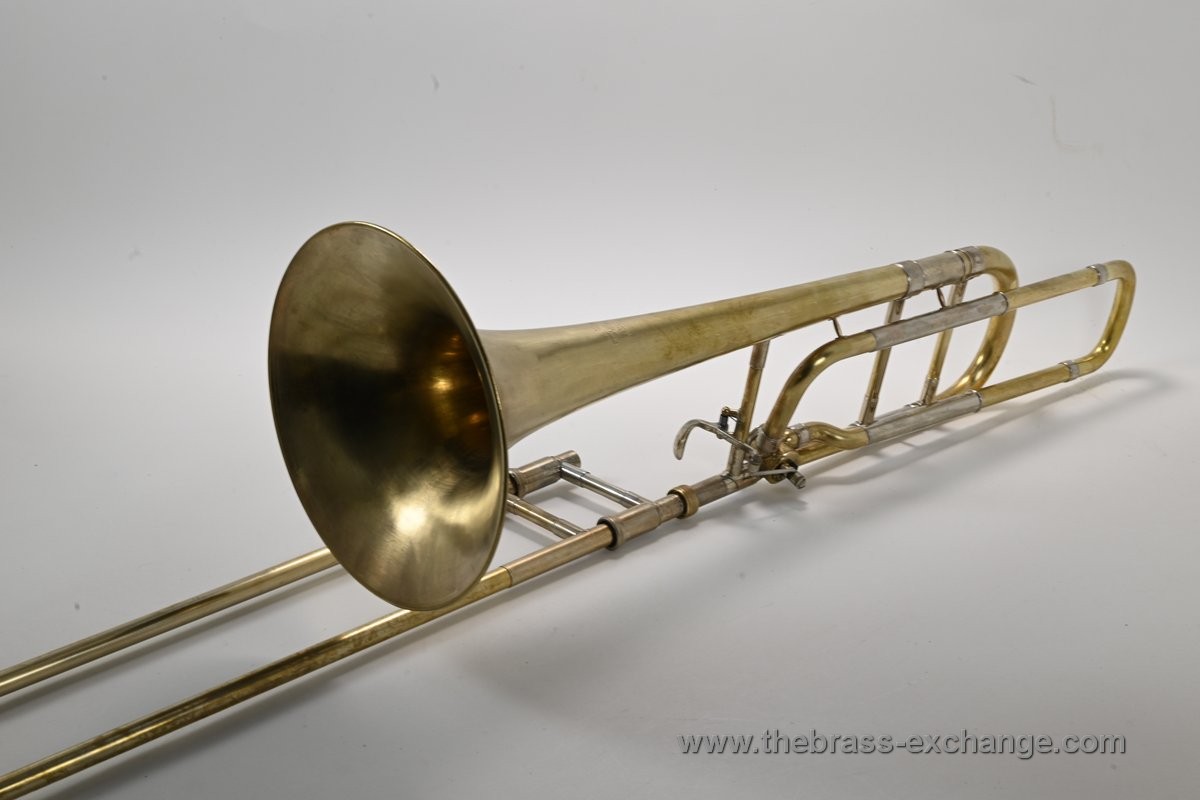
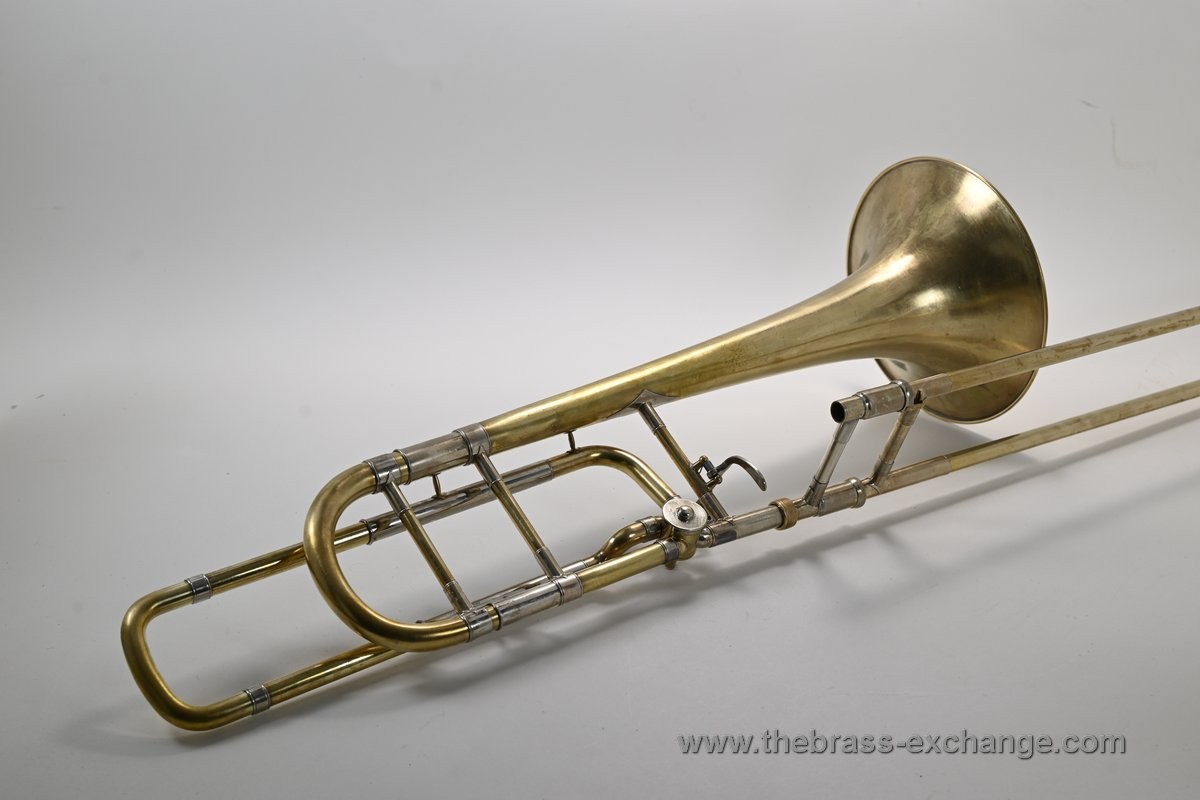
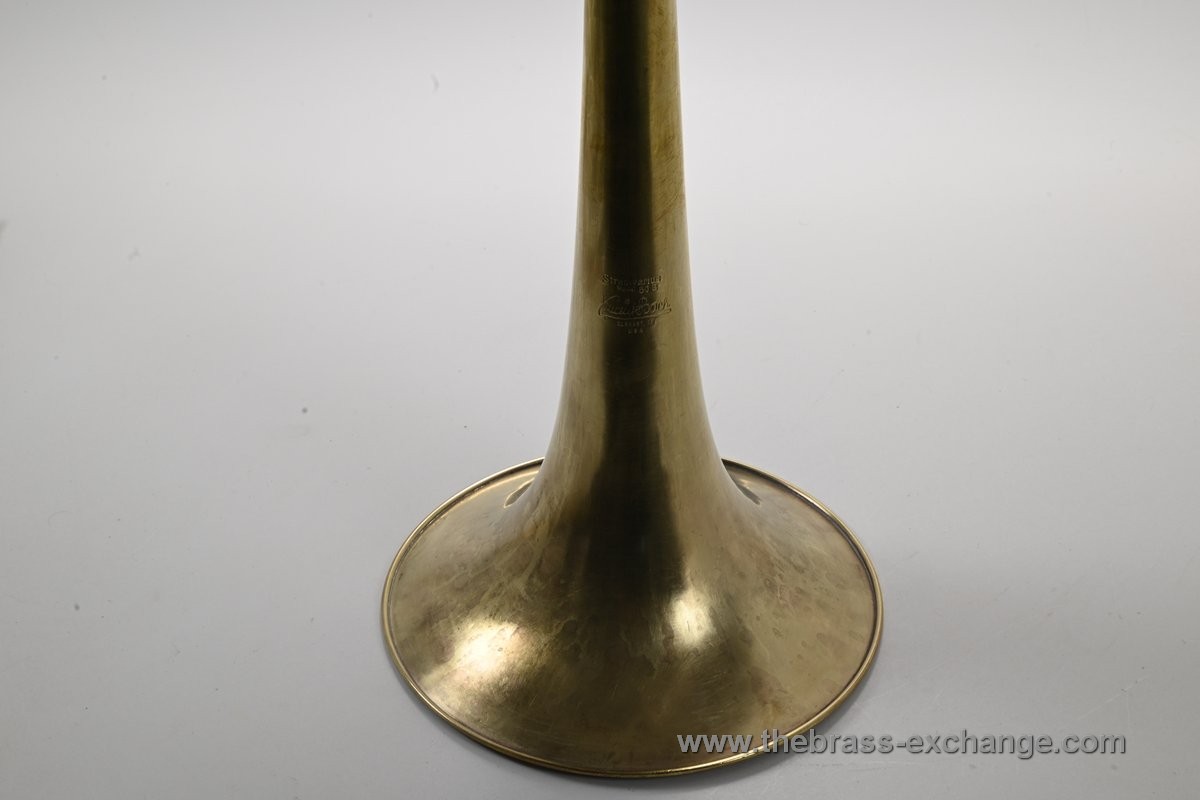
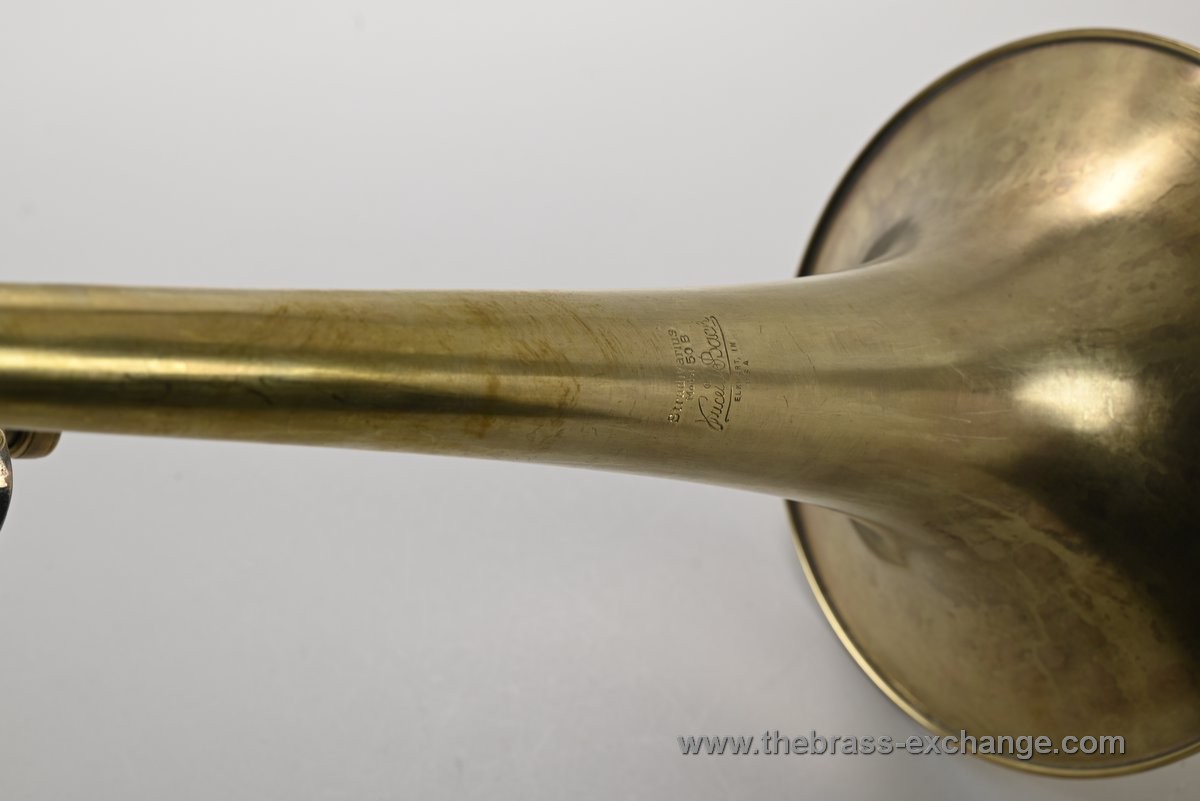
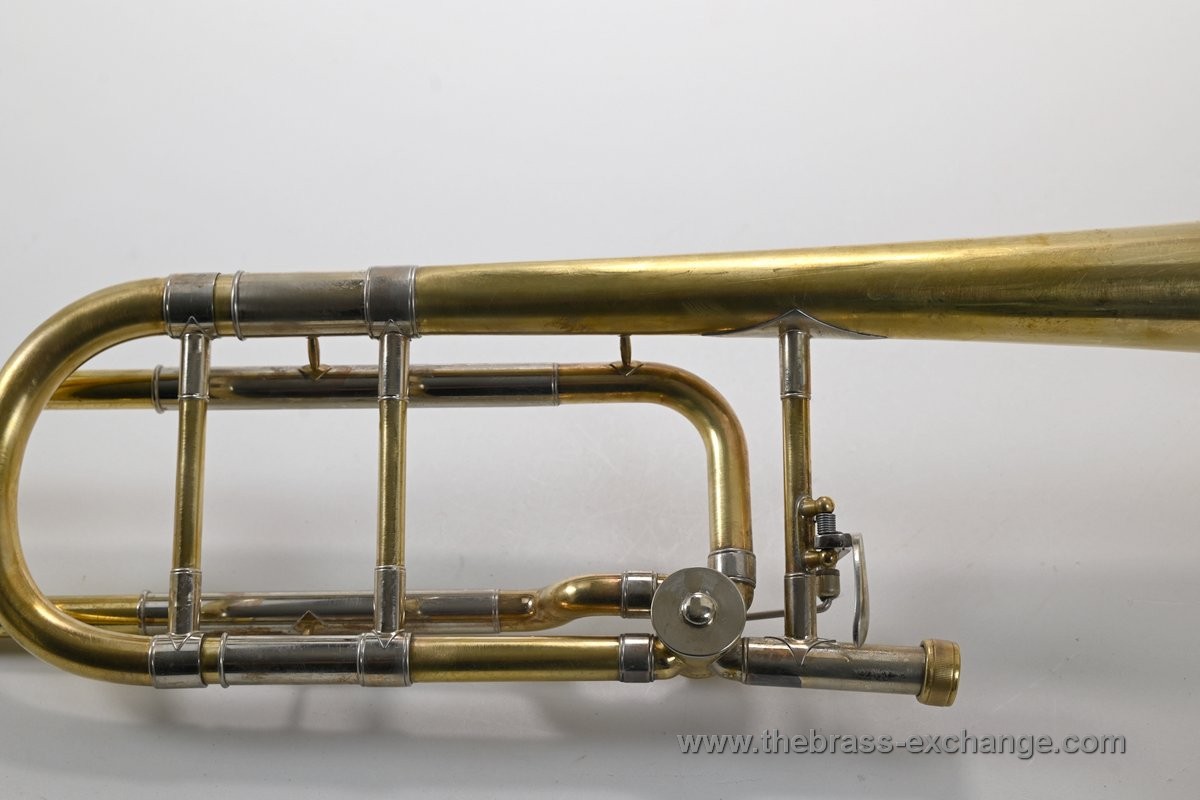



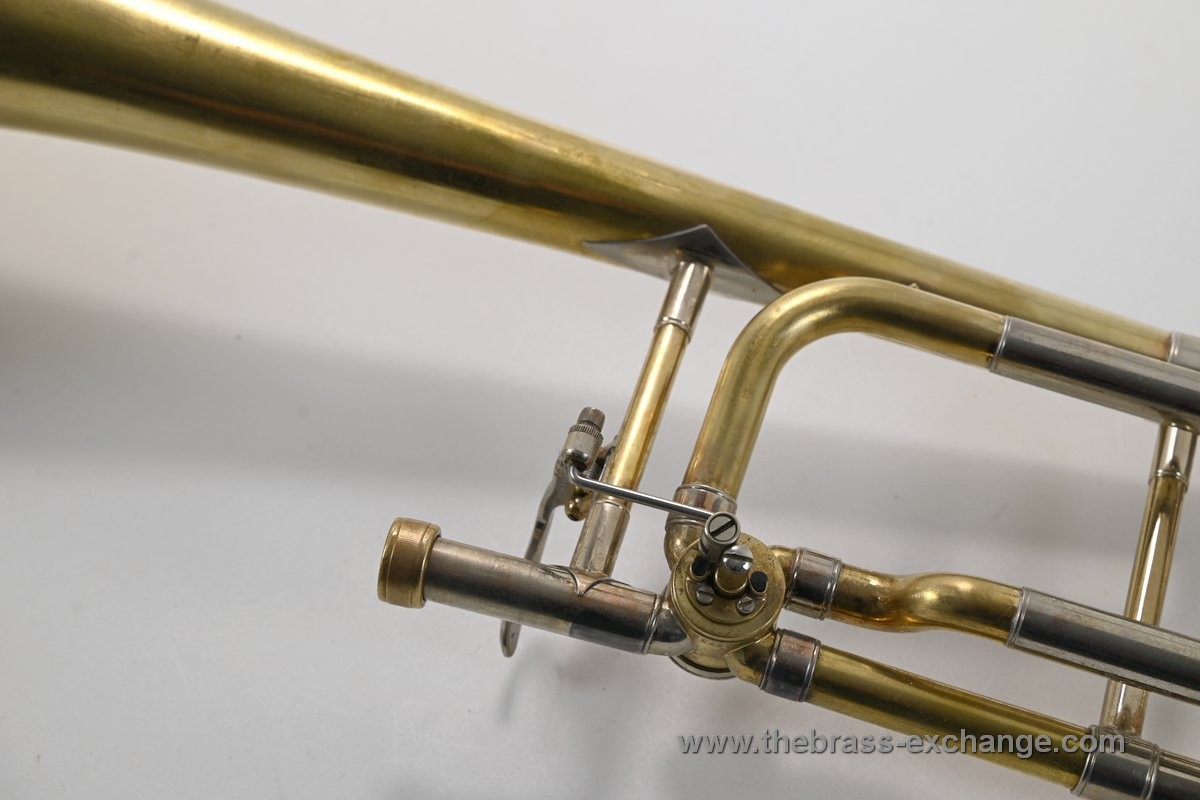
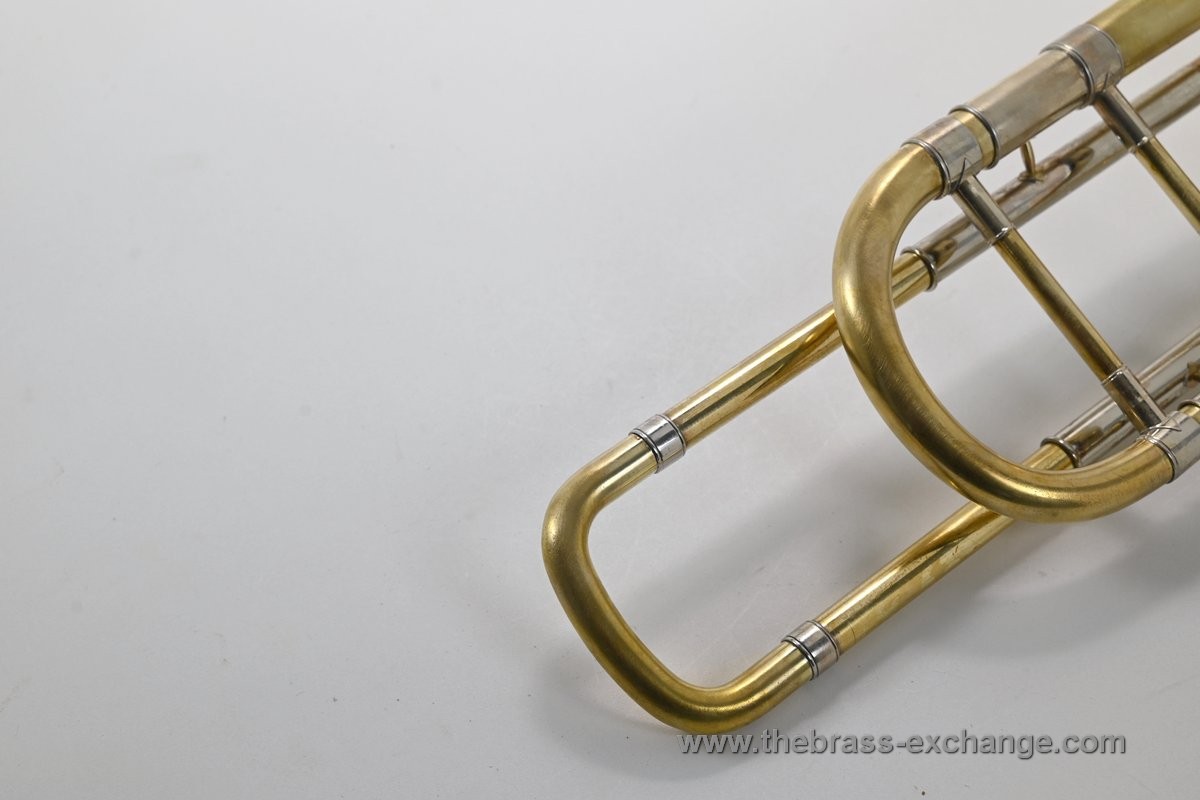
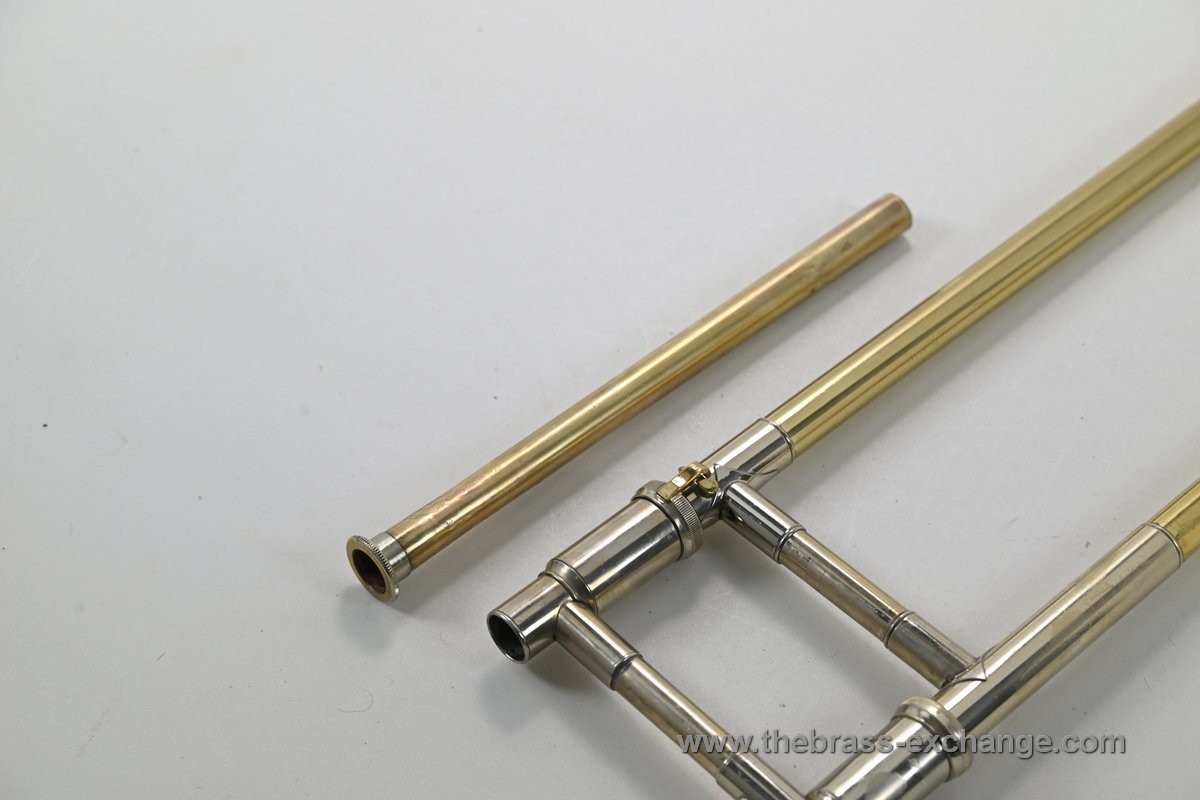
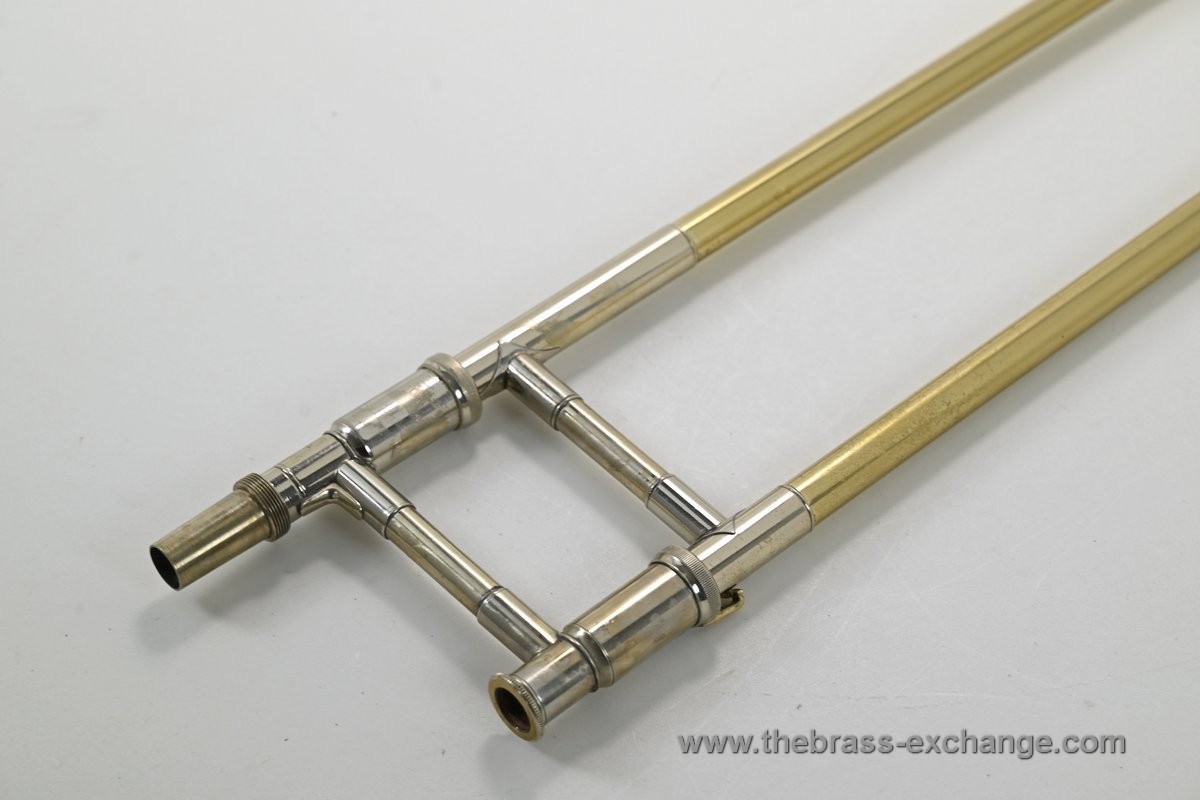
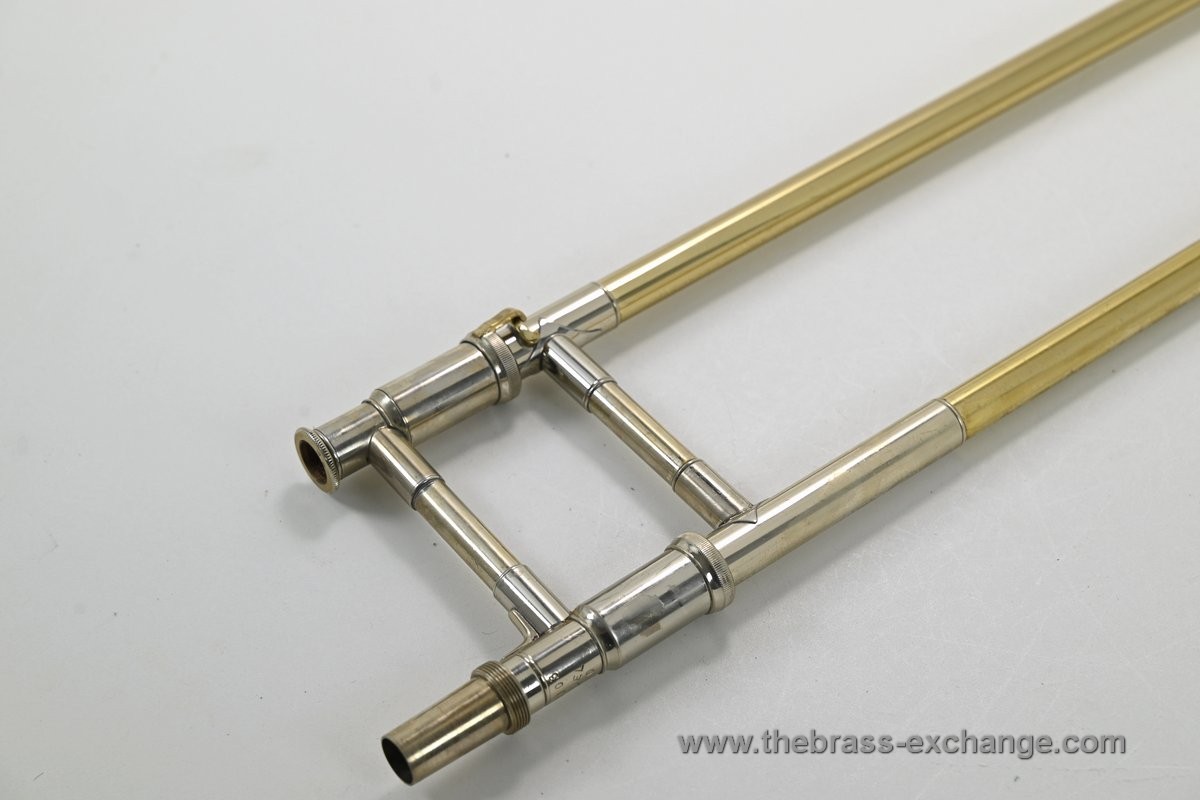
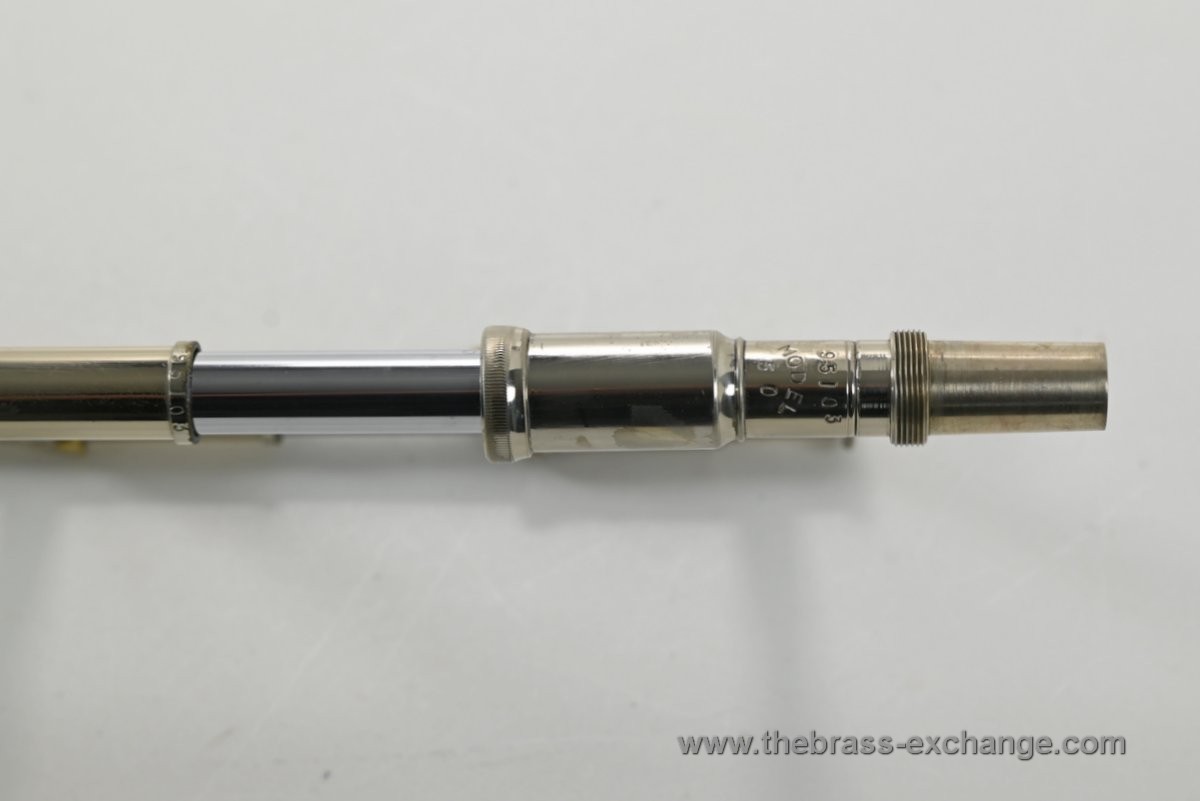
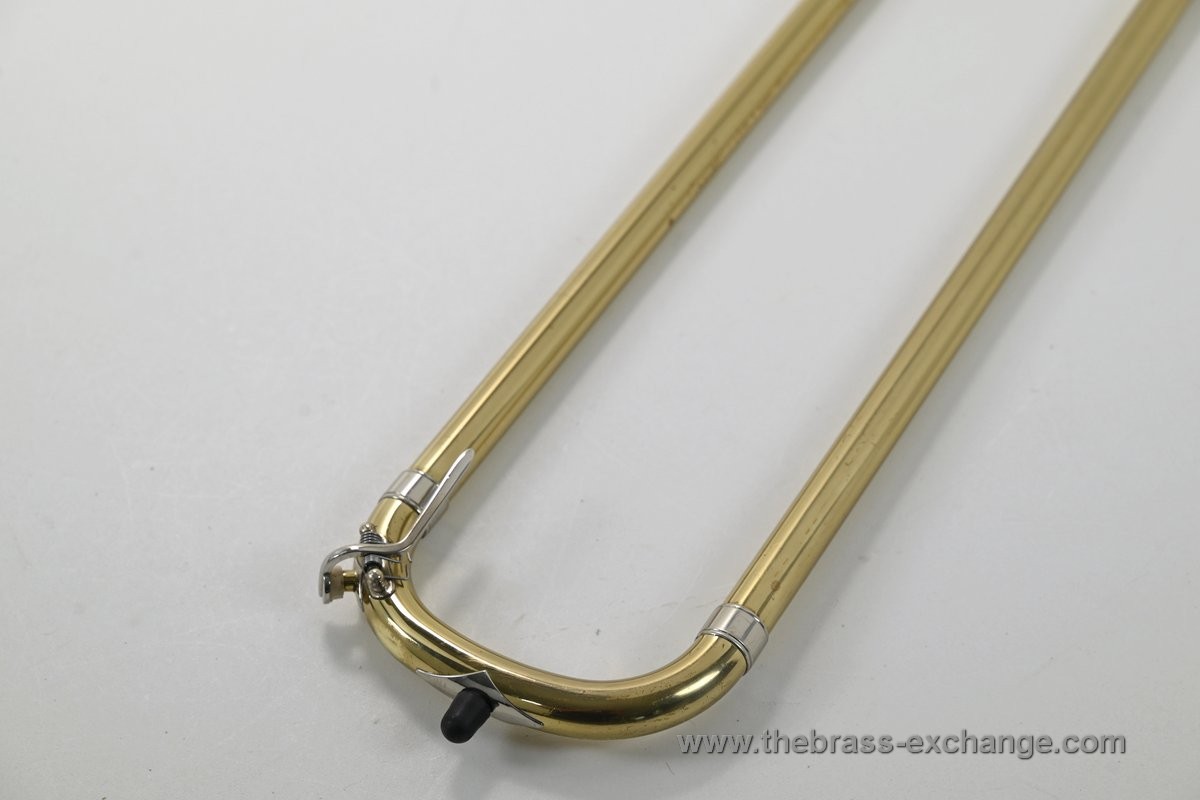
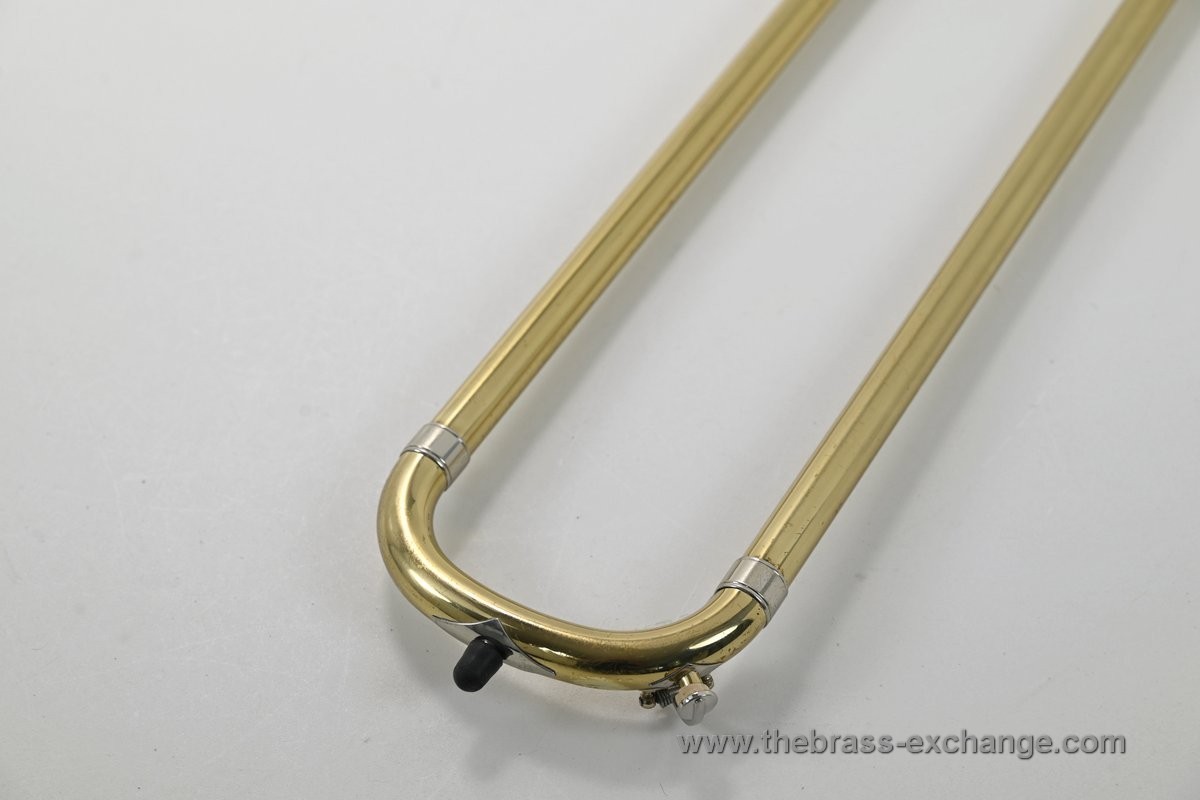
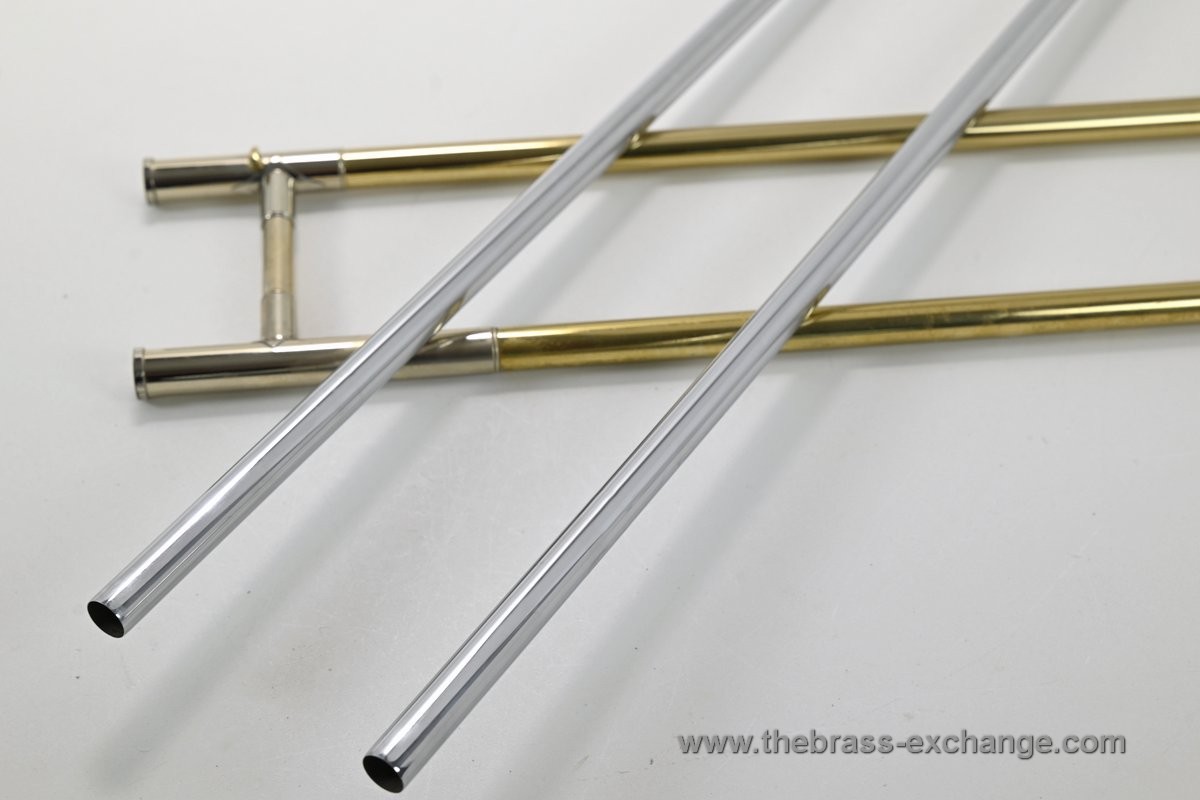
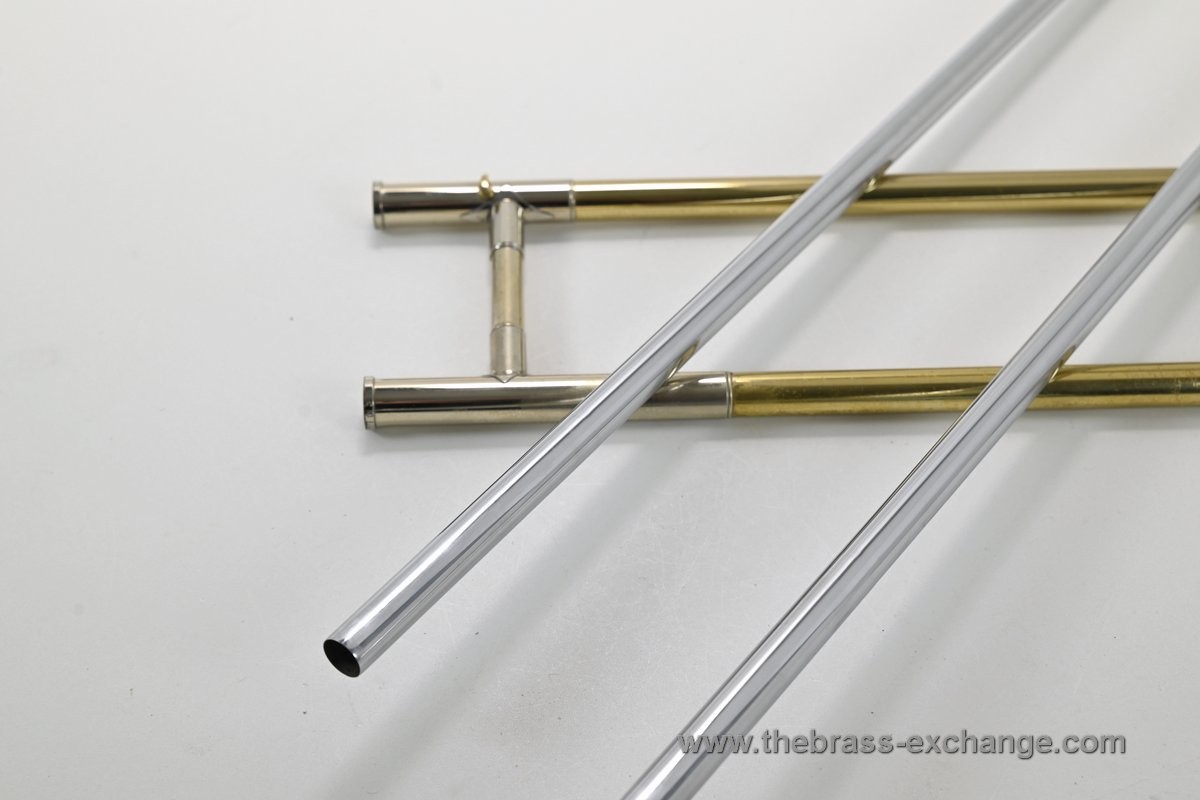
This Bach 50BO bass trombone, serial #95103, dates to the early 1990’s, shortly after Bach introduced the popular open-wrap (O-wrap) F-attachment to their large-bore models.
Key Specs
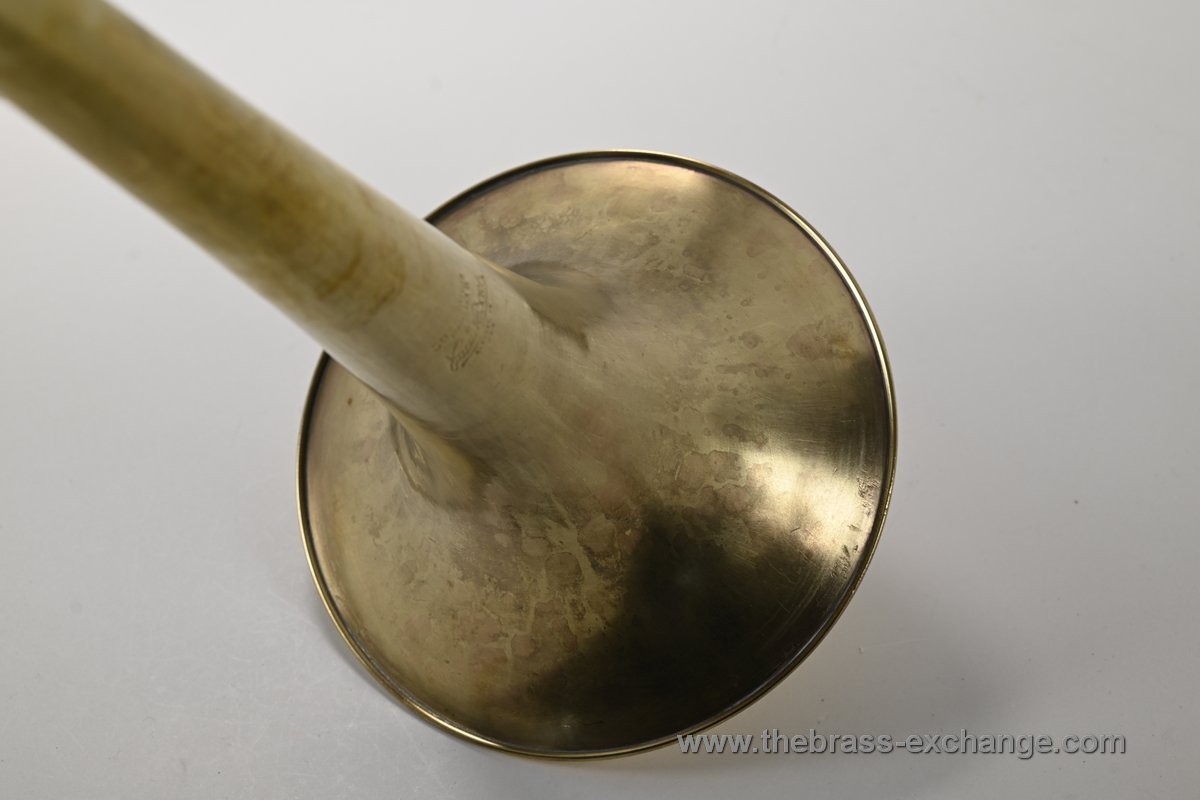
9.5" one-piece yellow-brass bell — unlacquered finish for a free, resonant response
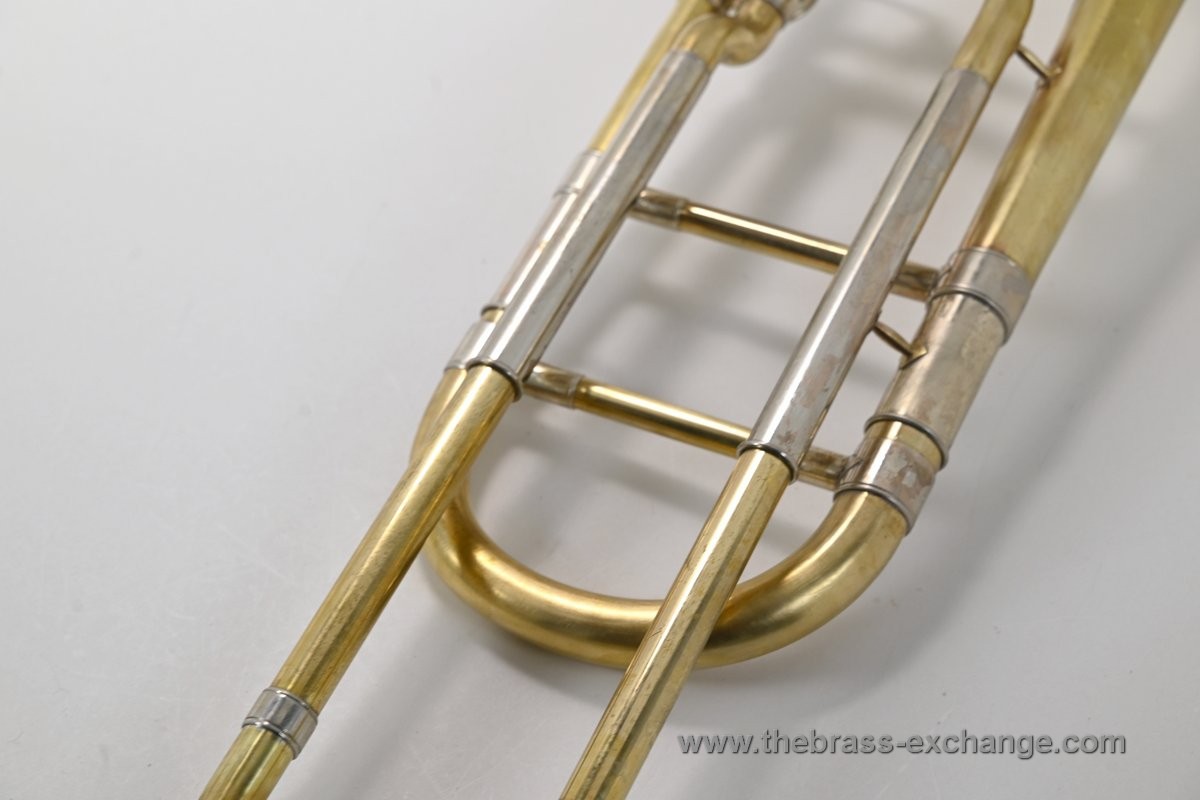
Standard-weight .562-bore bass slide with press-fit removable leadpipe
Single rotary-valve F-attachment — lighter, more compact feel than today’s common double-valve setups
Includes older-style Protec poly-foam black-nylon zipper case, in good condition
Mouthpiece not included
We performed full shop service, including chemical bath, precision slide alignment, and full valve teardown / clean / re-lube.
The slide action is pro-level smooth, and the F-valve is fast, quiet, and well-sealed.
The instrument shows no history of major damage or repair — it’s a clean, solid example of an early open-wrap Bach 50.
Players seeking a reliable, great-sounding single-valve bass will find this horn covers nearly all standard ensemble needs — from orchestral and band literature to jazz-big-band work.
A brand-new Bach 50B single-valve today sells for over $4,900 (2025 pricing); this vintage, pro-serviced example delivers excellent performance at roughly a third of that cost.
Common Questions:
When did open-wrap bass trombones appear, and what were the early models?
The open-wrap F-attachment became popular in the late 1970’s and 1980’s as manufacturers such as Conn (88HO) and Bach (42BO / 50BO) refined rotor placement for freer airflow.
This 1990’s Bach 50BO represents one of the early-generation production open-wrap bass trombones.
Can a single-valve bass trombone handle today’s music?
Yes.
A single-valve bass easily covers all core low-register notes down to low C, which satisfies most ensemble requirements.
The low B-natural below that is more challenging — it requires pulling the F-slide to extend the length of the tubing.
Notably, the legendary George Roberts — the LA studio great and longtime Frank Sinatra bass trombonist — built his career on a single-valve bass trombone.
When asked late in life why he never switched to a double-valve, he simply said he had always “gotten along fine with a single” and saw no reason to change.
His example remains a reminder that musical results depend more on the player than on having two valves.
Is a single-valve bass a good choice for students beginning bass trombone?
Often yes.
Because the slide positions and F-valve positions match those of a large-bore tenor, it’s a natural progression for a tenor player moving into the bass role.
Many teachers recommend starting with a slightly smaller mouthpiece (e.g., 2G) before moving up to the typical larger 1-½ G for comfort during the transition.
How does an unlacquered bell affect the sound?
Removing lacquer typically allows the bell to vibrate more freely, giving a more immediate response and a slightly livelier resonance.
It also develops a natural patina over time that many brass players find appealing.
This Bach 50BO Bass Trombone from the early 1990s has been sold and now appears here as part of our Archive of Sold Instruments, serving as a reference for collectors and players researching authentic Bach craftsmanship from this era.
Explore authentic historical Bach trombones and learn how their designs evolved over the decades — from early New York builds to the Elkhart and modern-era Stradivarius series. 📖
Looking for something similar in stock now?
Browse available bass trombones 🔎 or Contact us for a valuation and explore your options ✍️