


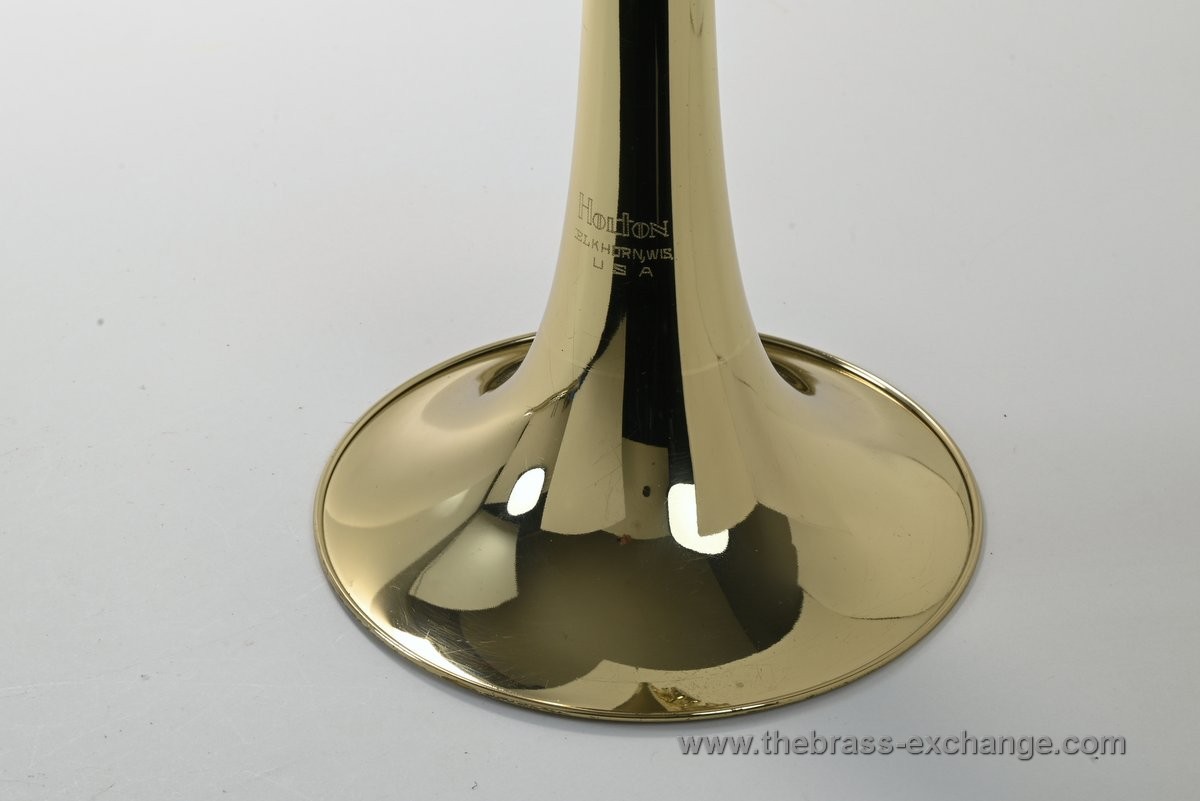
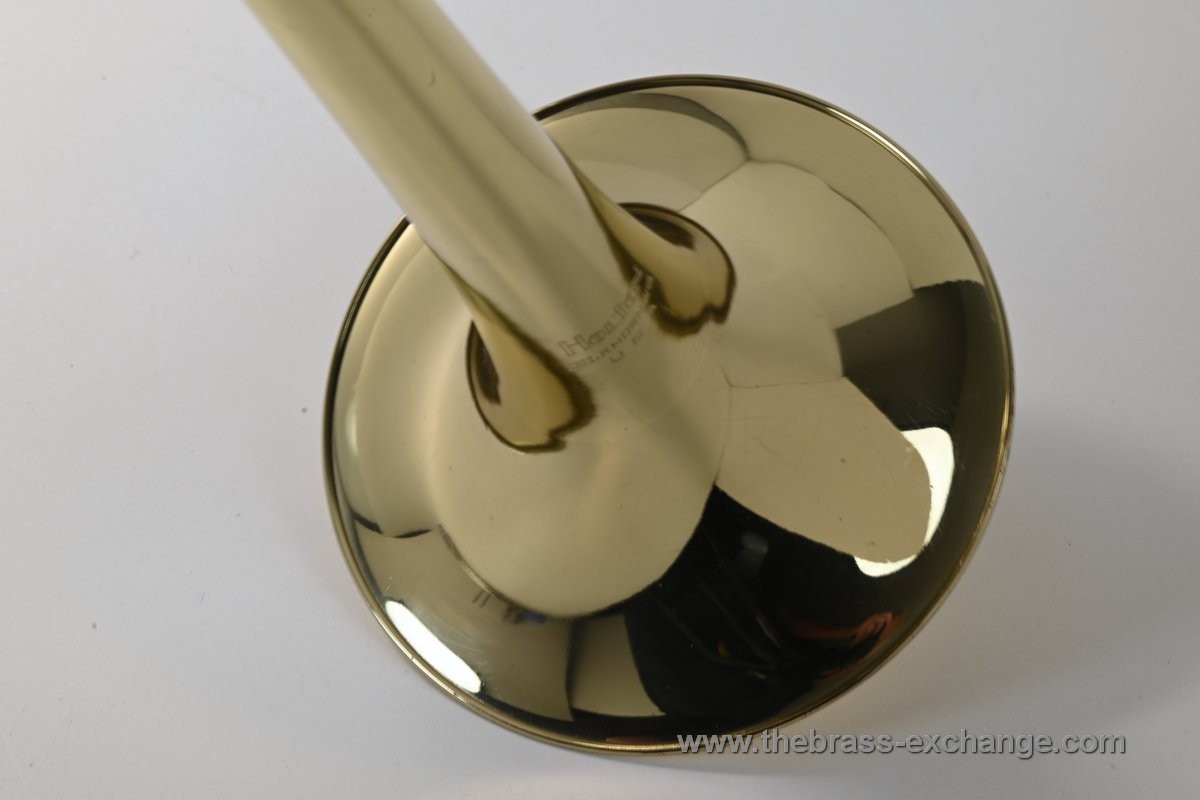
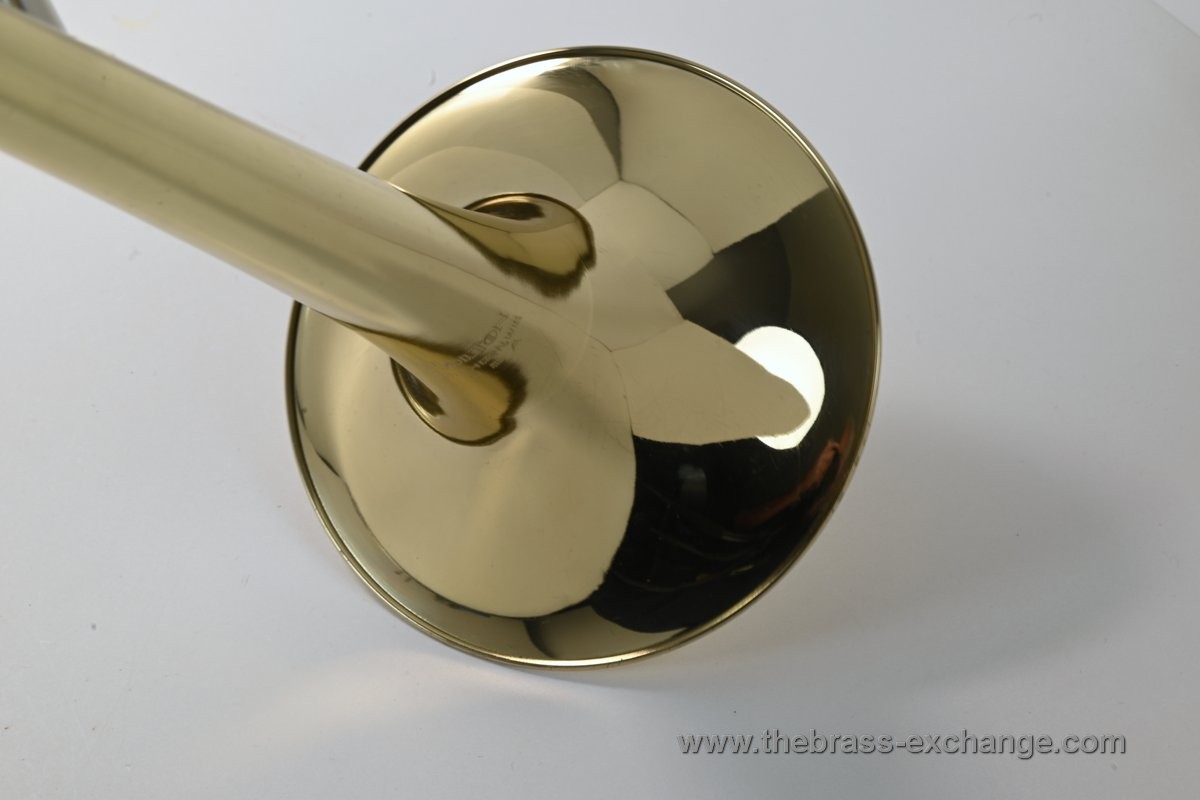




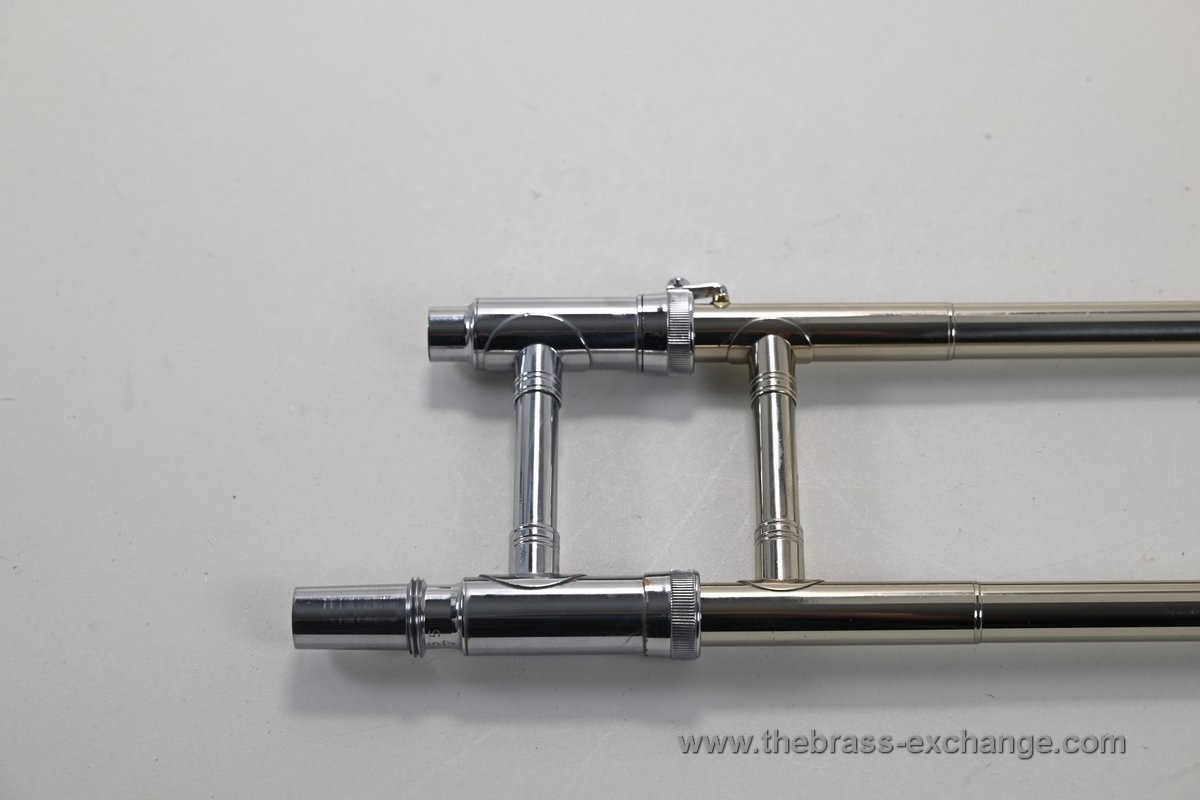
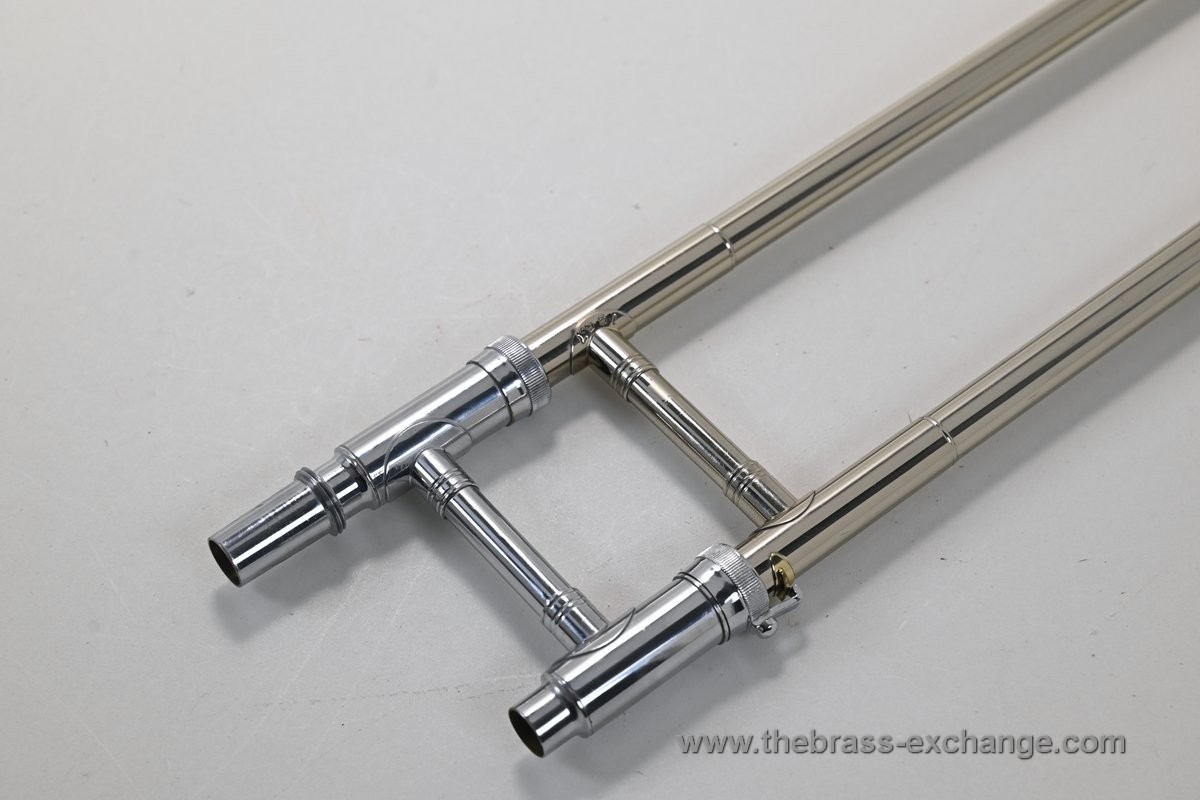
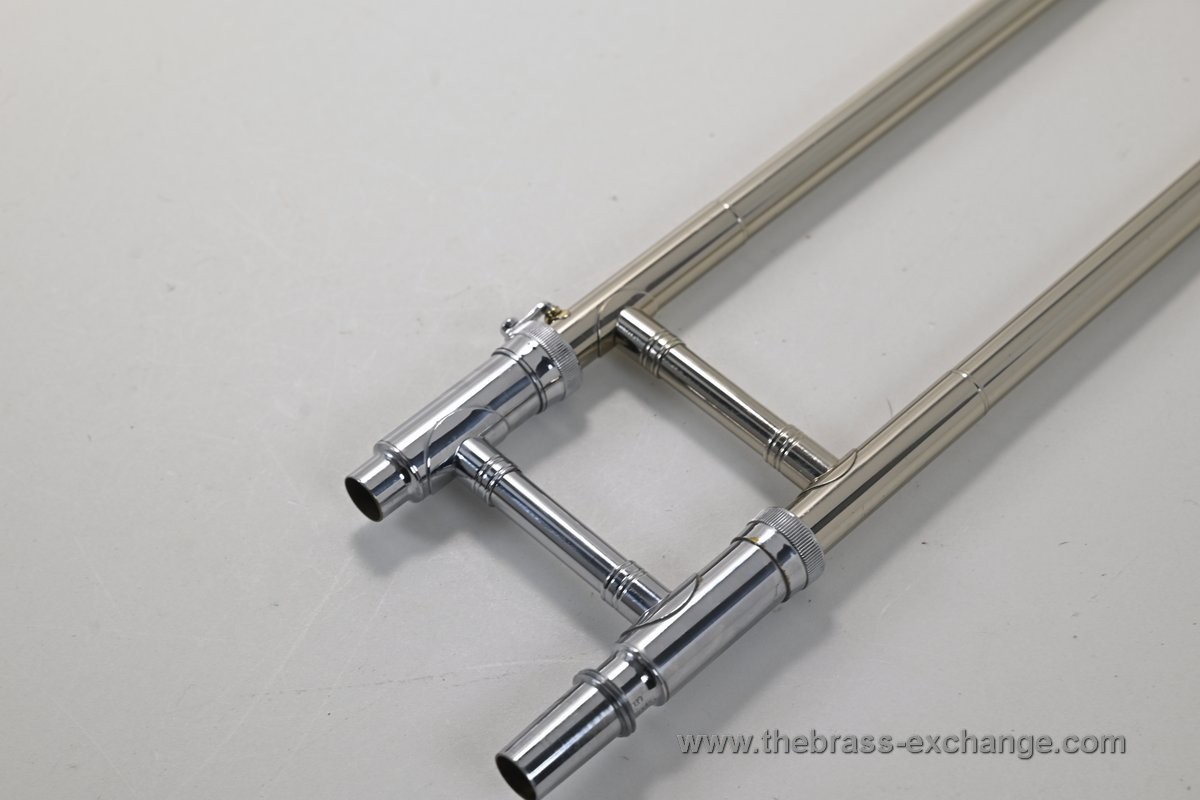
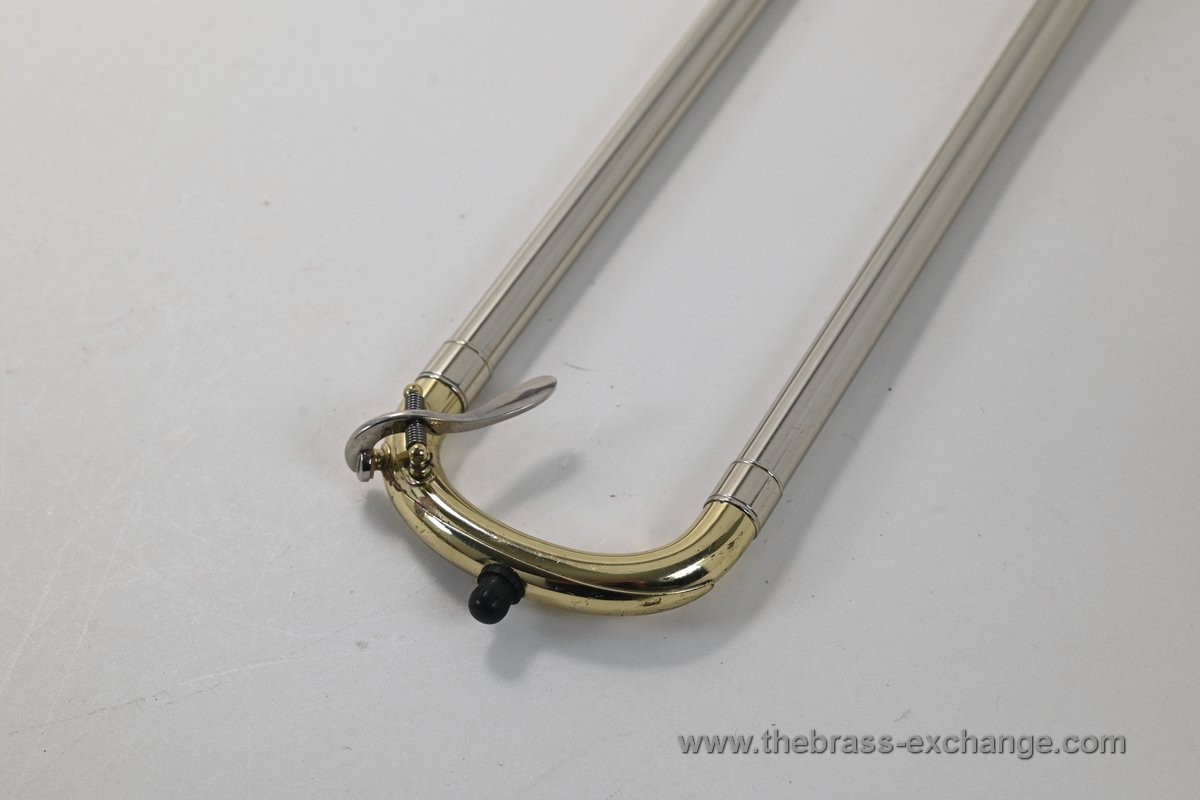
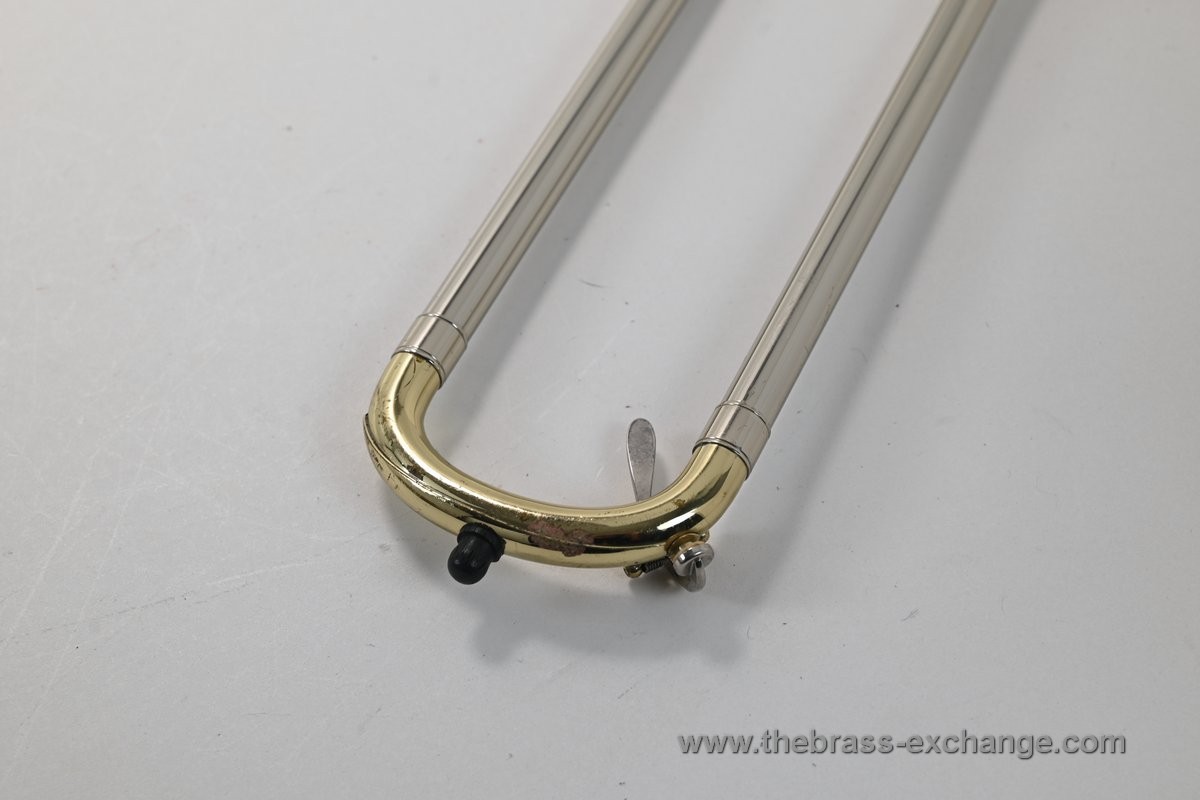
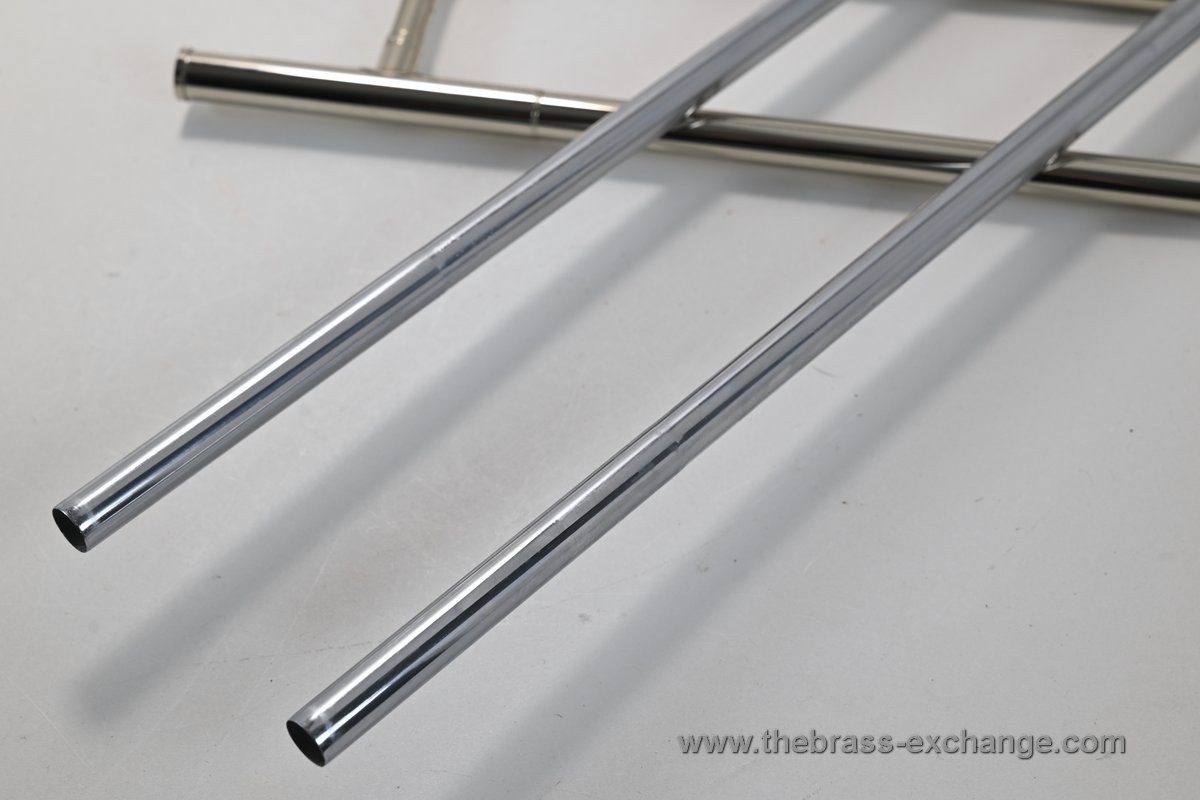
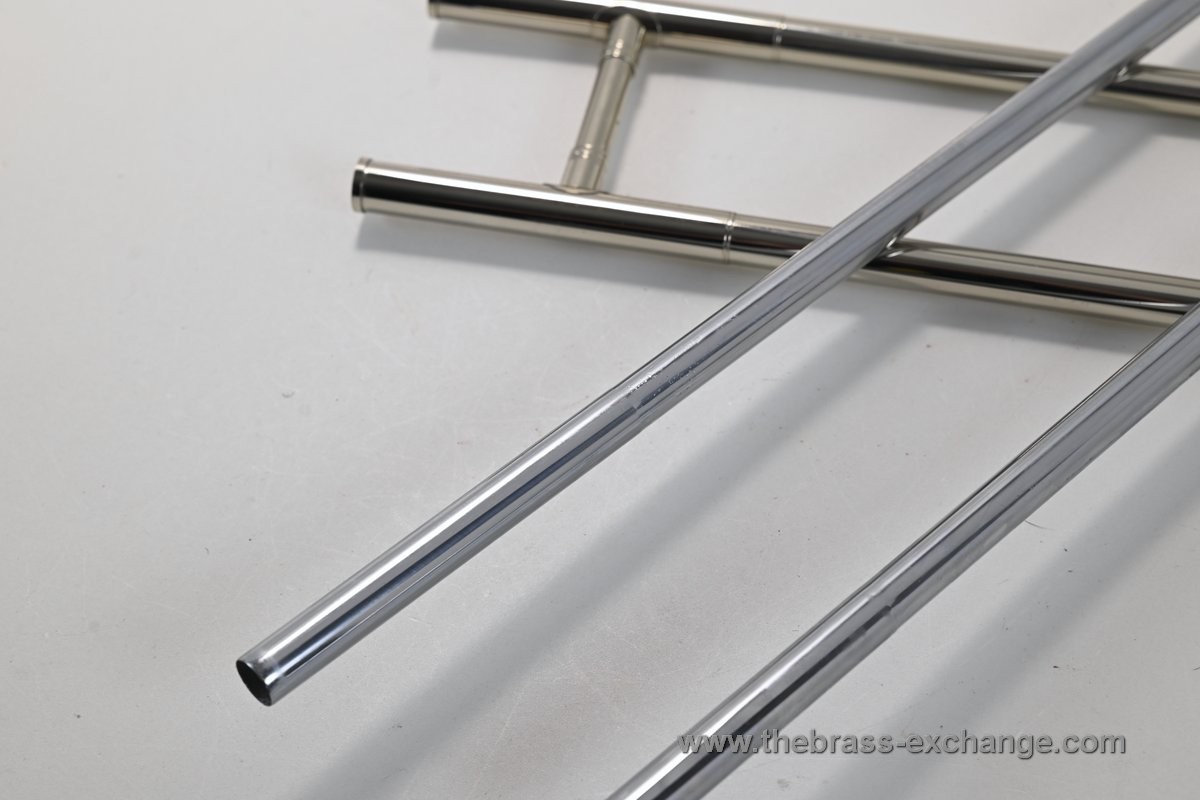
This Holton TR150 large bore symphonic tenor trombone was made in 1970, serial number 496278, during the Leblanc era before Holton was acquired by Conn-Selmer in 2004. It is a true single-owner horn and comes to us from the original buyer, who selected it under the guidance of his teacher—Frank Crisafulli.
Crisafulli served in the Chicago Symphony Orchestra starting in 1938, holding the principal chair for many years, and taught for decades at Northwestern University. I’ve personally known many students of Frank over the years—they were all exceptional players. This horn carries some of that legacy.
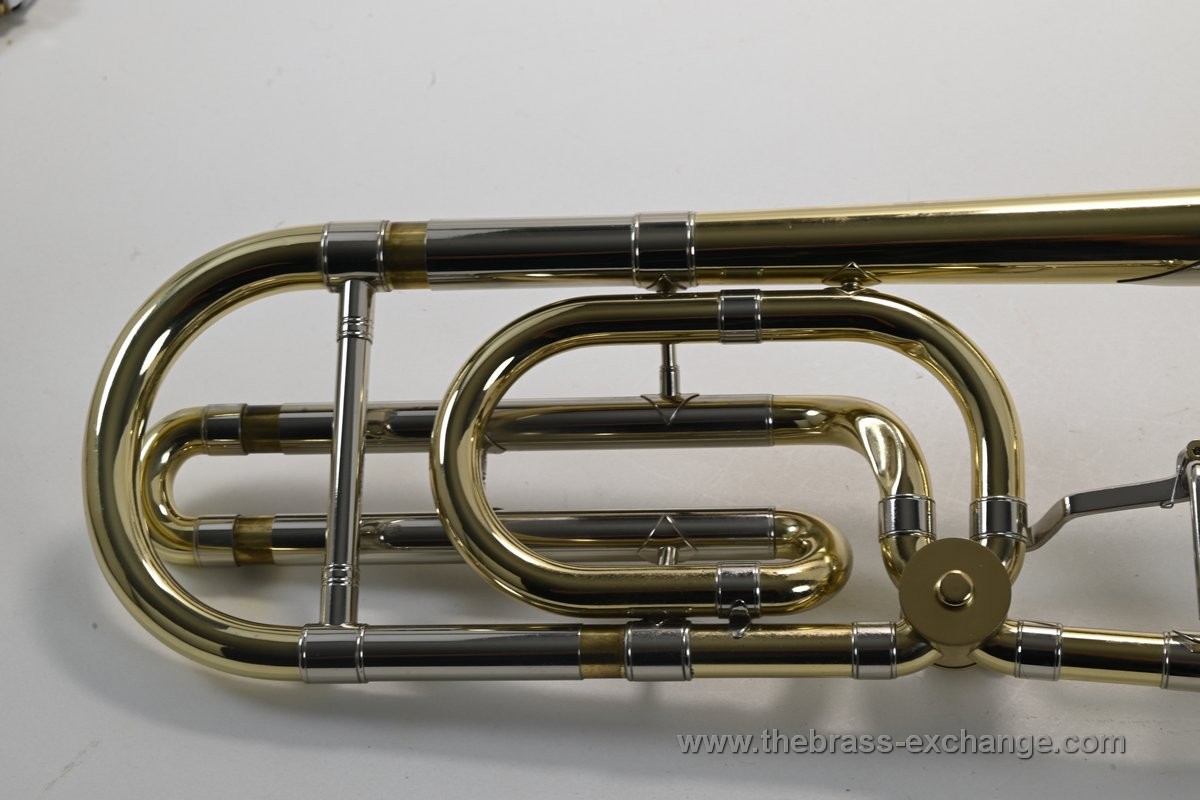
The bell is 8.75" in diameter, made of medium-heavy gauge yellow brass, and paired with a .547 bore handslide—ideal for orchestral use and wide dynamic range. The classic Holton wrap on the F-attachment gives it a free-blowing, open feel with a slightly darker tonal character compared to other American brands. It delivers exactly the kind of bold, centered sound that players associate with the Chicago brass sound from that legendary era.
Condition is excellent throughout. This instrument has never seen major damage or repair. It still has all original parts and lacquer. The rotor valve is quiet and fast. The handslide shows no plating loss or red rot and aligns very well—it plays evenly and effortlessly across the full range. The only cosmetic issue worth mentioning is a dent in one section of the F-wrap tubing just after the top port. It doesn’t affect playability—in fact, the horn plays exceptionally well as-is—but we’re happy to remove the dent prior to shipping if preferred.
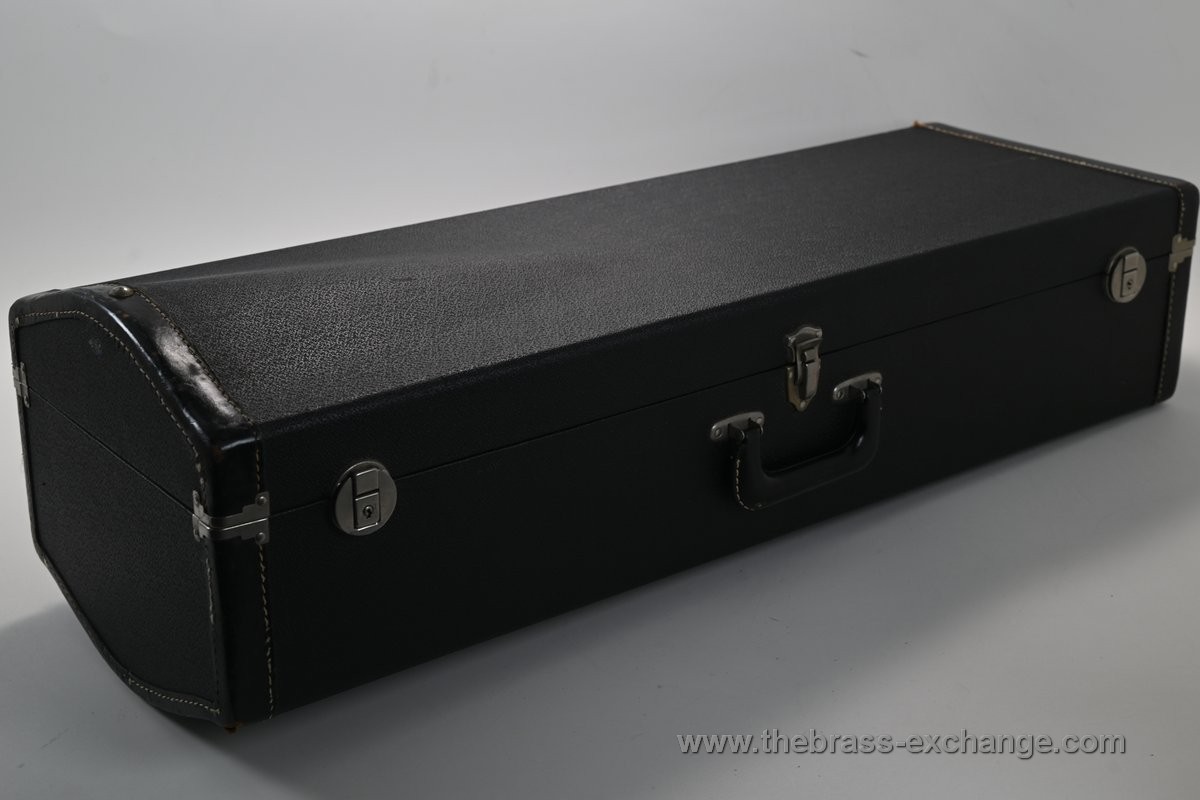
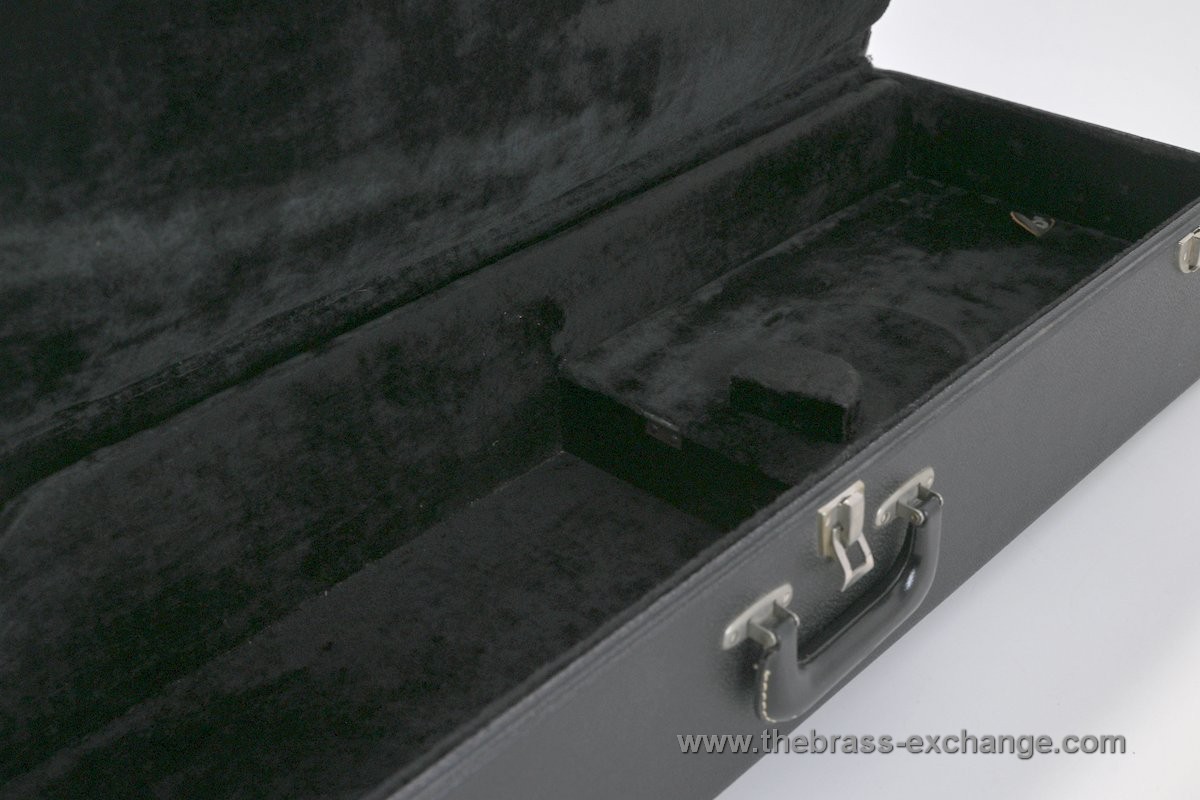
Includes a mouthpiece and original case. An outstanding professional-level tenor trombone for any player seeking a classic, vintage Holton with history and character.
🛠️ Sold and preserved in our archive as a resource for players and collectors. See our active trombone inventory for models ready to ship👉
✅ What’s the difference between vintage Holton trombones and modern orchestral models?
Vintage Holton trombones like the TR150 were built with heavier bell gauges and more rigid construction, contributing to a rich, centered orchestral tone that modern lightweight models don’t always replicate. They also often featured unique wrap designs and larger bells, making them ideal for players seeking bold projection and darker timbre in symphonic settings.