


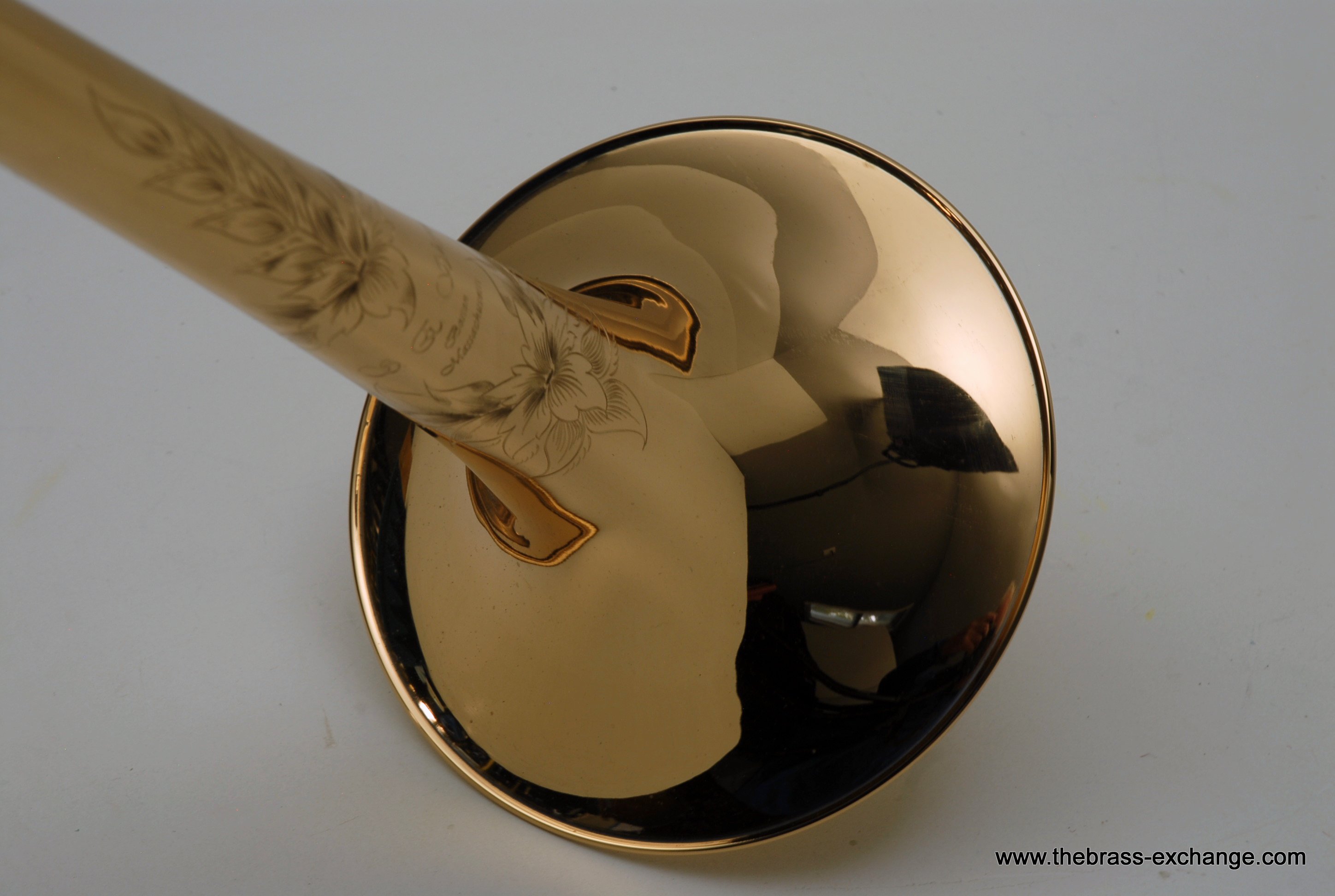
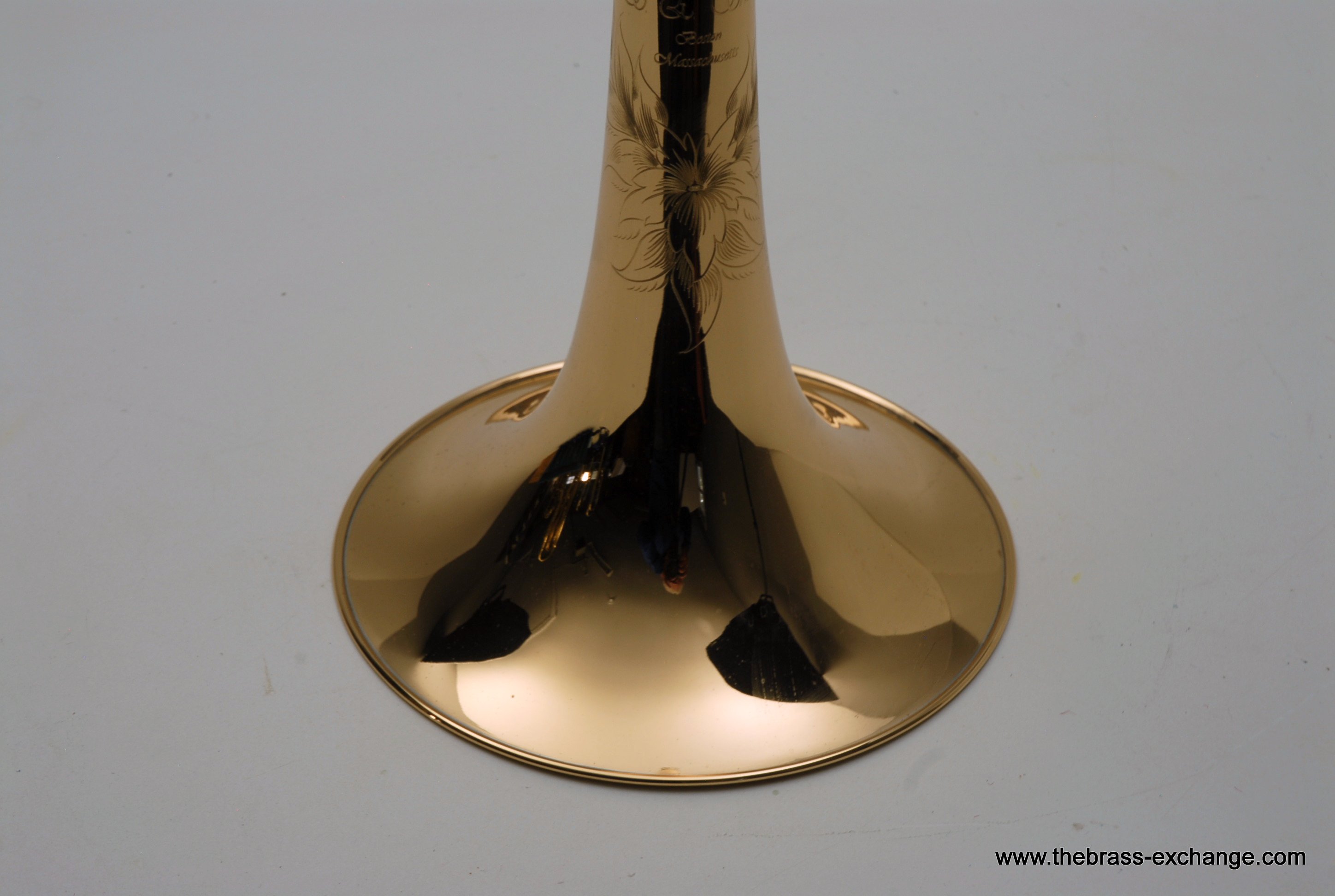
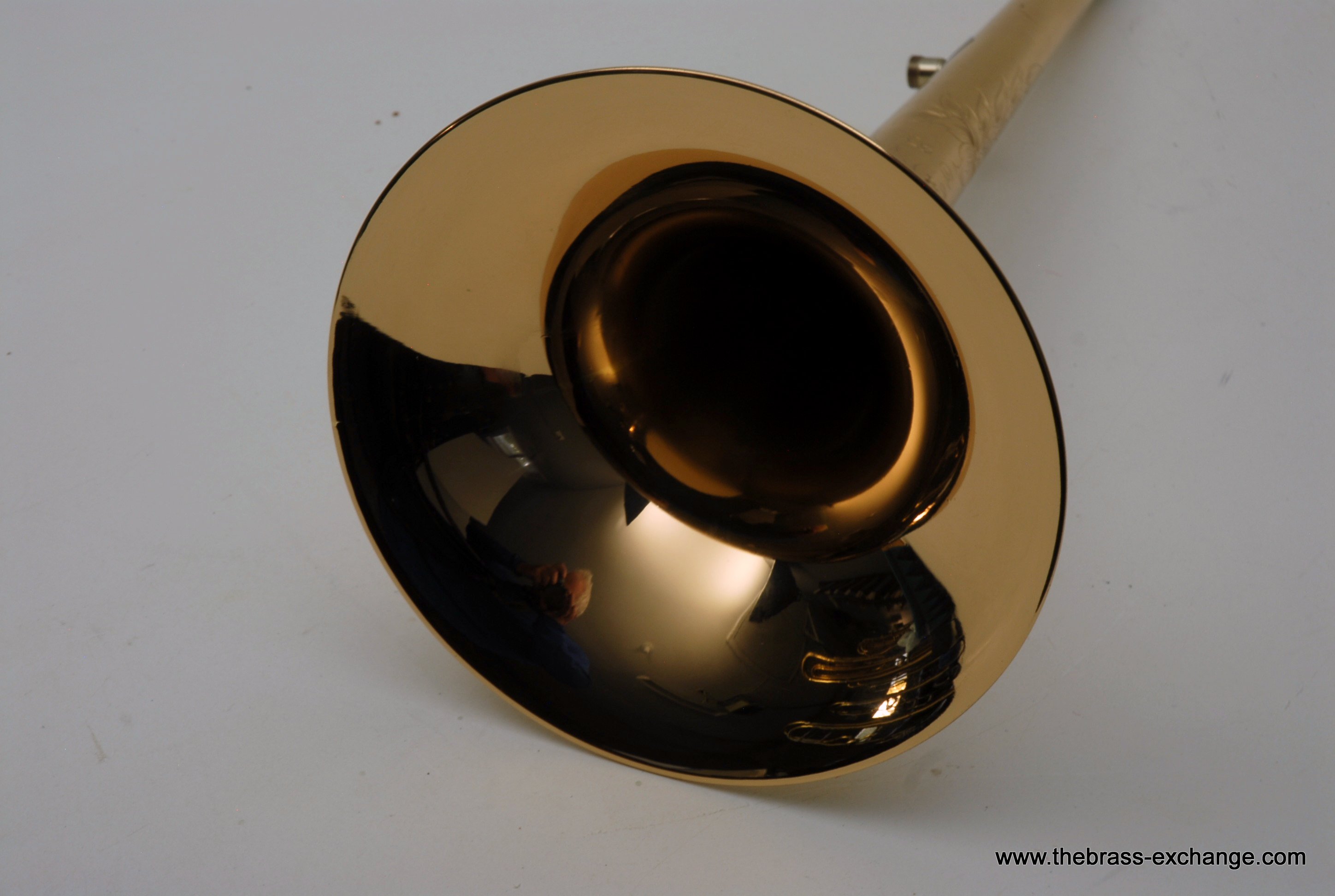
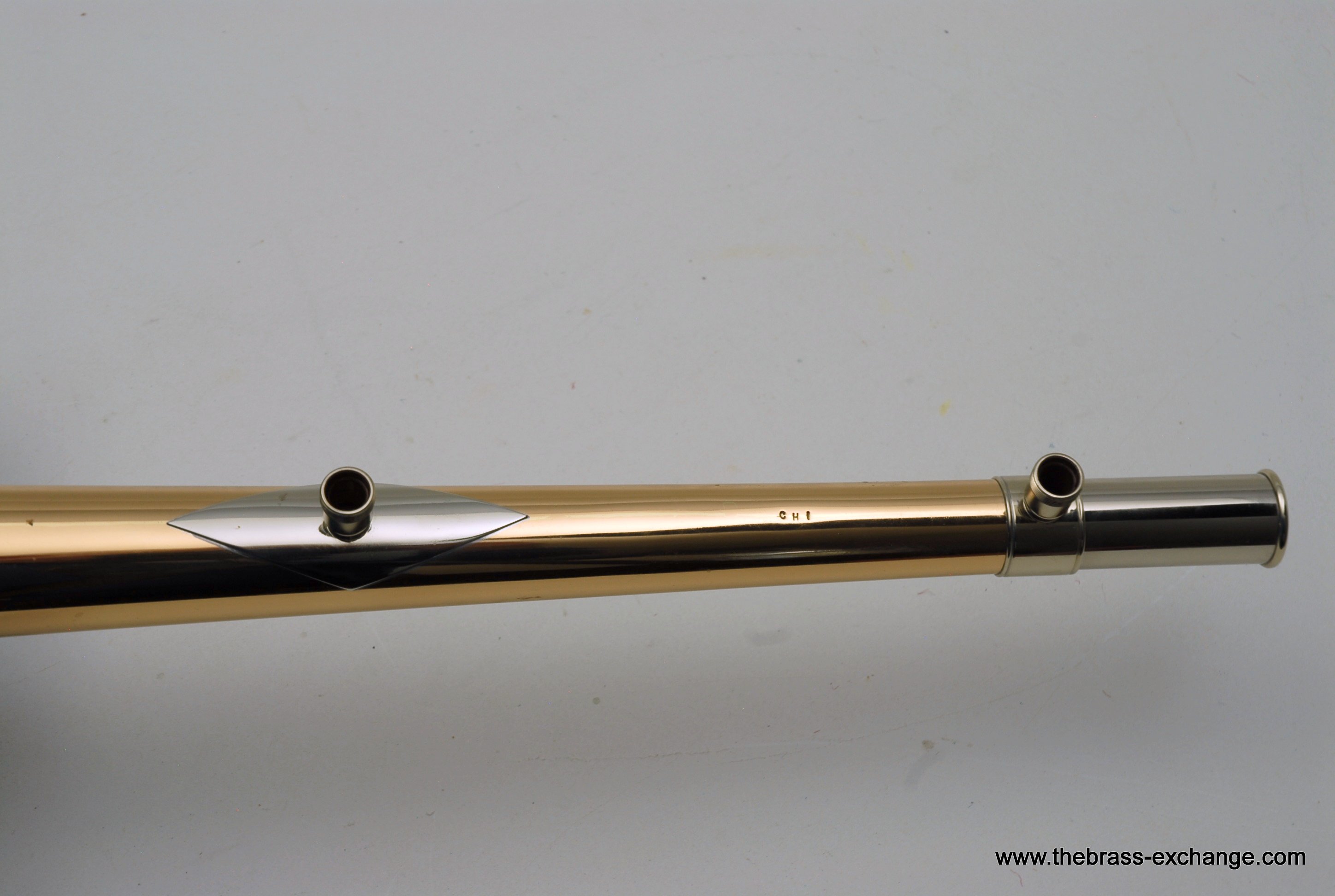
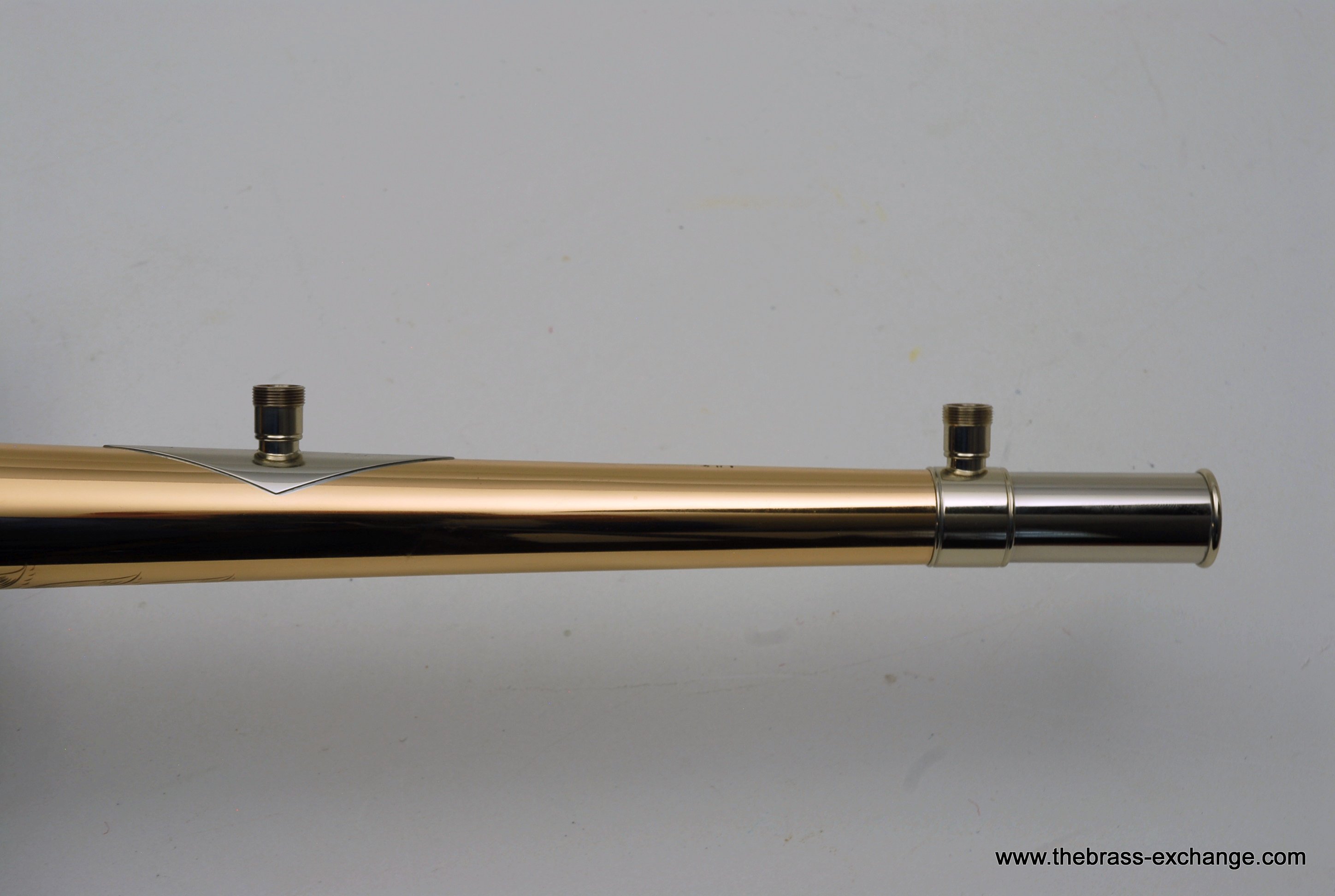
This S.E. Shires Chicago Model gold-brass tenor trombone bell section is shown here in our Archive of Sold Instruments as a reference for musicians and collectors.
The bell was slightly used but in perfect condition when sold, with no flaws or signs of wear.
It featured an 8.5" flare, compatible with all Shires large-bore tenor valve sections, and paired especially well with the X-taper tuning slide.
When new, a Shires modular tenor bell like this is priced around $1,550 (2025 pricing), making pre-owned components an excellent value for players seeking professional-grade equipment at a reduced cost.
Founded by Steve Shires in Boston in the mid-1990s, S.E. Shires Co. quickly became known for hand-crafted, modular trombones.
The Chicago Model series was designed in collaboration with leading orchestral players, aiming for the warm, vibrant sound associated with classic American large-bore tenors of the mid-20th century.
Shires’ modular approach lets players mix and match bells, slides, and valves to create a setup perfectly tailored to their playing style and ensemble needs.
What makes the Shires Chicago Model bell unique?
The Chicago bell design is inspired by vintage American symphonic trombones.
Its gold-brass alloy (≈85% copper / 15% zinc) produces a richer, slightly darker and broader tone compared to standard yellow-brass bells, while the hand-hammered one-piece construction gives it superb projection and resonance.
What’s the difference between Shires bell alloys (Yellow, Gold, Rose)?
Yellow Brass (~70% copper): Quick response, brilliant attack, bright upper partials.
Gold Brass (~85% copper): Warmer, broader, rounder tone — a favorite for orchestral work.
Rose/Red Brass (~90%+ copper): Even darker, smoother tone, often chosen for soloistic or lush orchestral roles.
Many advanced players keep more than one bell to suit different ensembles or repertoire.
What is a “Custom Shires fitting,” and where can I get one?
A custom fitting is a guided session where the player tries different Shires bells, slides, valves, and leadpipes to find the ideal combination.
At the Boston factory, by appointment, players can try the widest range of new components in one place.
At dealers like The Brass Exchange, fittings are often more flexible in terms of trade-in options and the ability to mix both new and pre-owned components, which can reduce overall cost.
Since 2012, The Brass Exchange has helped over 1,000 players with fittings, including many who combined factory-new and lightly used components to achieve their best setup.
Why consider pre-owned Shires bells or components?
Shires’ modular design and consistent build quality mean that well-maintained pre-owned parts deliver the same level of performance as new ones.
Buying pre-owned often makes it easier to experiment with different bell alloys and tapers without committing to new-component prices.
Can I mix new and used Shires components?
Absolutely.
Many players combine a used bell with a new slide or valve section, or vice versa, achieving the desired sound while keeping costs under control.
Both factory-new and pre-owned components fit seamlessly together thanks to Shires’ standardized modular interface.
Do Shires bells require special care?
Not especially.
As with any brass instrument, regular cleaning, prompt removal of moisture, and occasional professional servicing help maintain finish and resonance.
Gold-brass and rose-brass bells often show slight color variation or patina over time, which does not affect playability.
This Shires Chicago Model gold-brass tenor bell was a prime example of Boston-built craftsmanship and remains a valuable reference for players comparing Shires bell types and alloys.
👉 Browse our current inventory of Shires components
📌 Explore more archived Shires instruments
✍️ Interested in a custom fitting or trading in your equipment?