


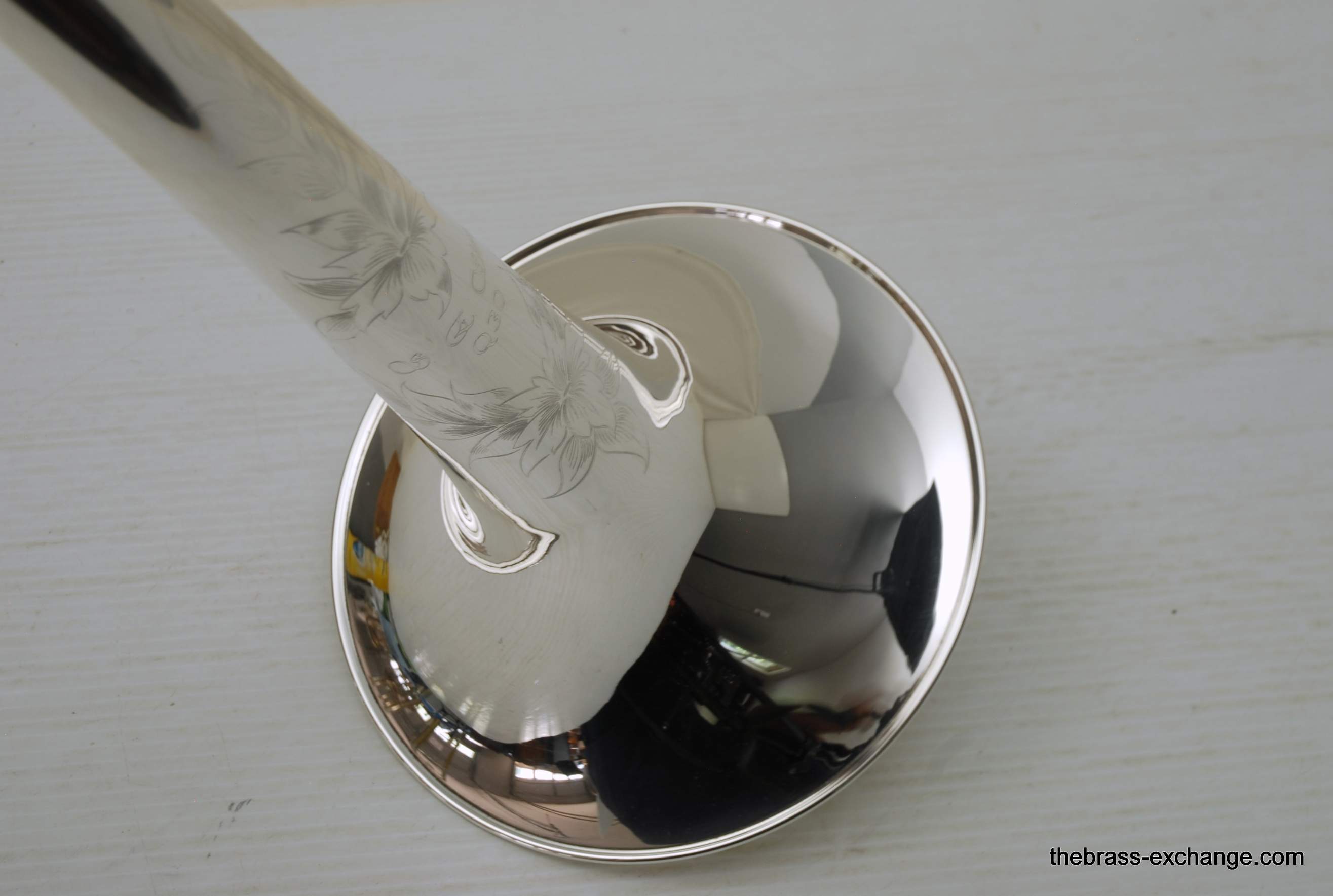
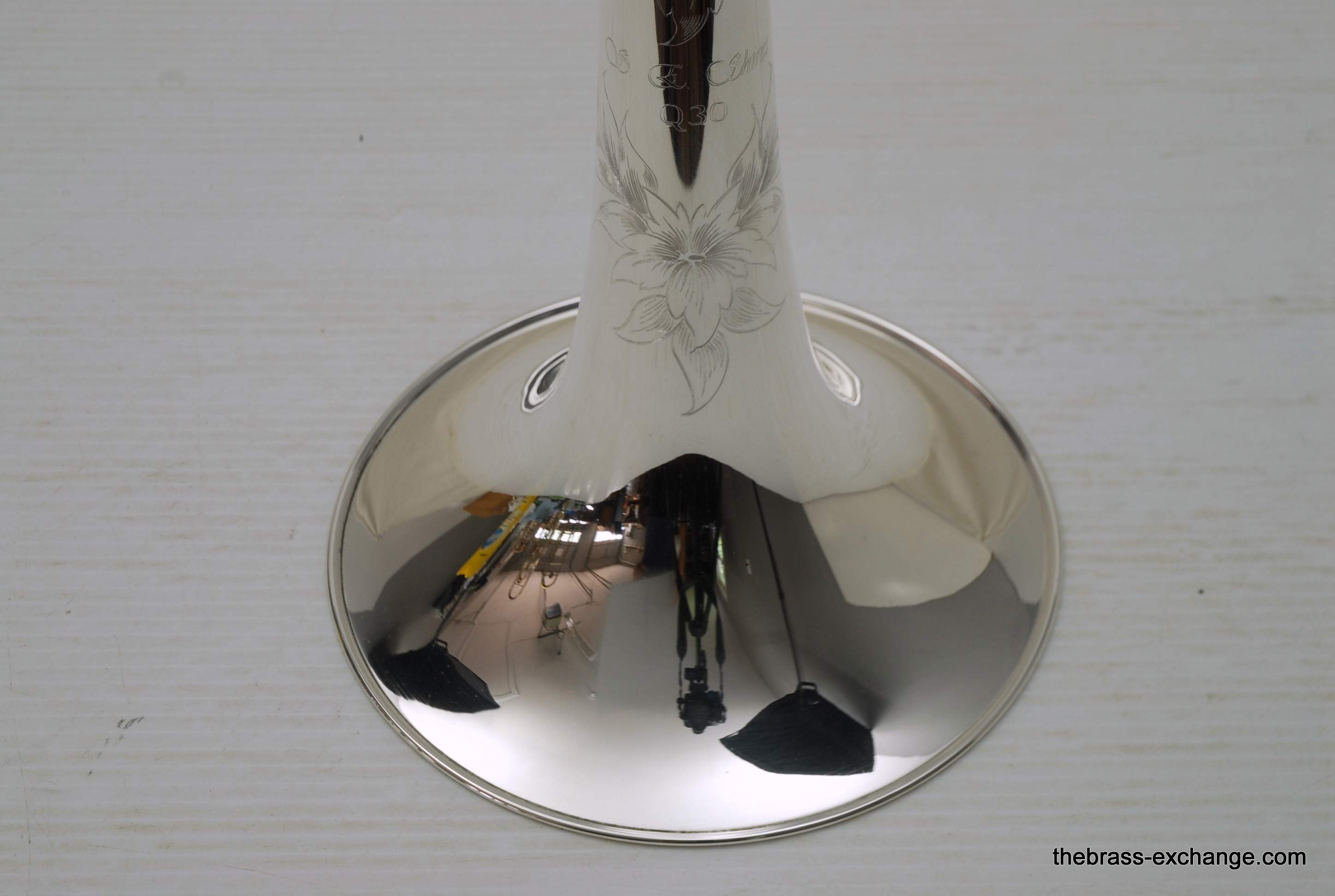
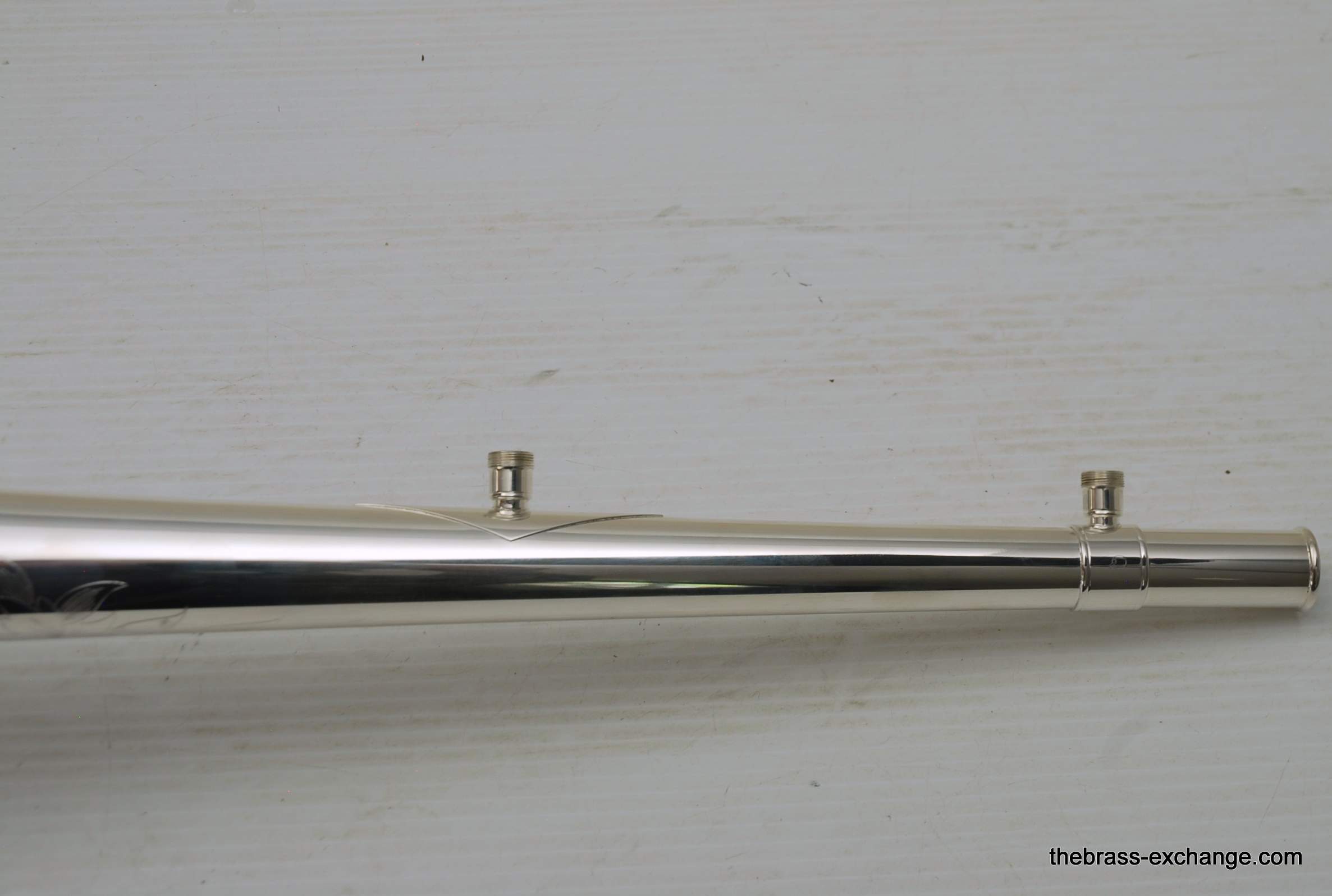
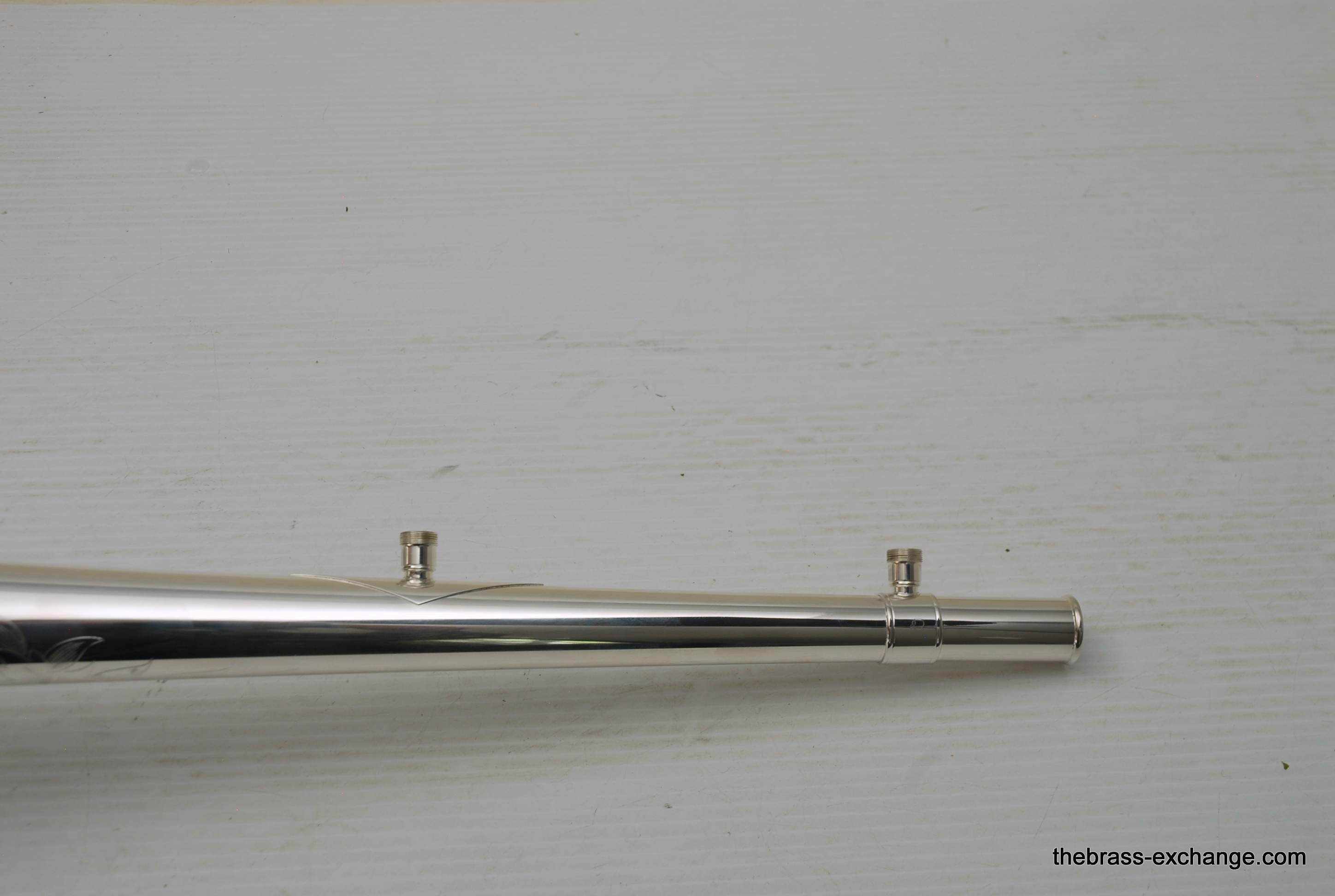
This S.E. Shires Q30 silver-plated bell is presented here as an archival reference for musicians and collectors.
Although this bell has been sold, it represents a notable and rarely-seen variation within the Shires Q-Series line.
Unlike standard baked-epoxy lacquer — the current manufacturing gold-standard for durability — this bell was finished in traditional silver plate by Anderson Plating, the long-respected U.S. shop used by many major makers.
Silver-plated Shires bells have been produced only in very limited numbers, making them of special interest to players researching finish options.
Silver plate weighs roughly one-fifth (≈ 20%) the mass of a baked-epoxy lacquer layer.
While the difference in actual grams is negligible, many brass players perceive that a silver-plated bell feels a touch freer and less resistant, closer in response to a raw-brass or unlacquered bell.
This characteristic is well known in the trumpet world, where the majority of professional players prefer silver plate.
(We sometimes joke that trumpet players want all the help they can get, but there is a real and widely-acknowledged difference in feel.)
It is important to distinguish silver-plated bells from solid sterling-silver bells:
Sterling-silver is a much denser alloy whose mass and stiffness produce a different timbre — often described as broader, darker, and more energetic once fully resonant.
Silver plate, by contrast, mainly preserves the character of the underlying brass while protecting it from tarnish.
This Q30 bell was compatible with all current and past Shires Custom and Q-Series valves and tuning slides, and it arrived in excellent condition, ready to drop into a modular setup.
Why are silver-plated Shires bells rare?
Only a small number of Shires bells have been finished in silver plate; most production has used baked-epoxy lacquer for durability and consistency.
How does silver plate affect playability?
Silver plate is lighter than lacquer and tends to let the brass vibrate a bit more freely.
Many players feel it responds a little closer to an unlacquered horn — lively and immediate.
How is silver plate different from sterling-silver bells?
Silver plate is a thin protective coating over a brass bell.
Sterling silver is a completely different alloy with higher density, which changes the bell’s mass and therefore its timbre and energy profile — generally broader and darker.
Why do trumpet players often prefer silver plate?
Although the physical weight difference is tiny, many trumpet players report that silver-plated horns feel quicker and more open in response.
The same tendency is noticed by some trombonists when comparing silver-plated and lacquered bells.
Where can I explore more Shires components?
🔎 Browse the Archive of Sold Instruments to see other historical Shires bells and components.
This S.E. Shires Q30 silver-plated bell has been sold and remains published here as an informational and historical reference for brass players considering finish options.
🔎 Browse our current trombone listings or 📞 contact us directly to discuss similar components or future availability.