


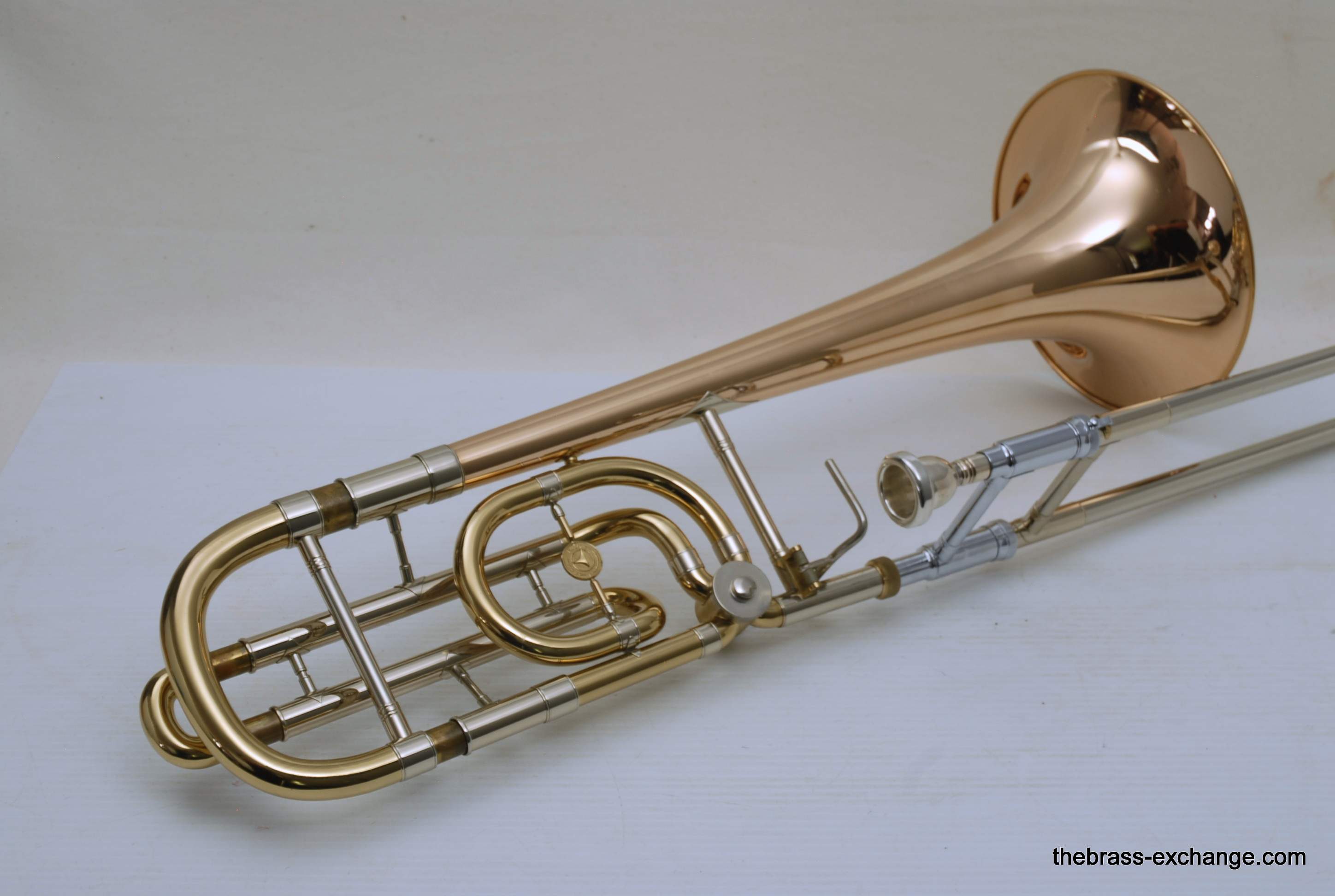
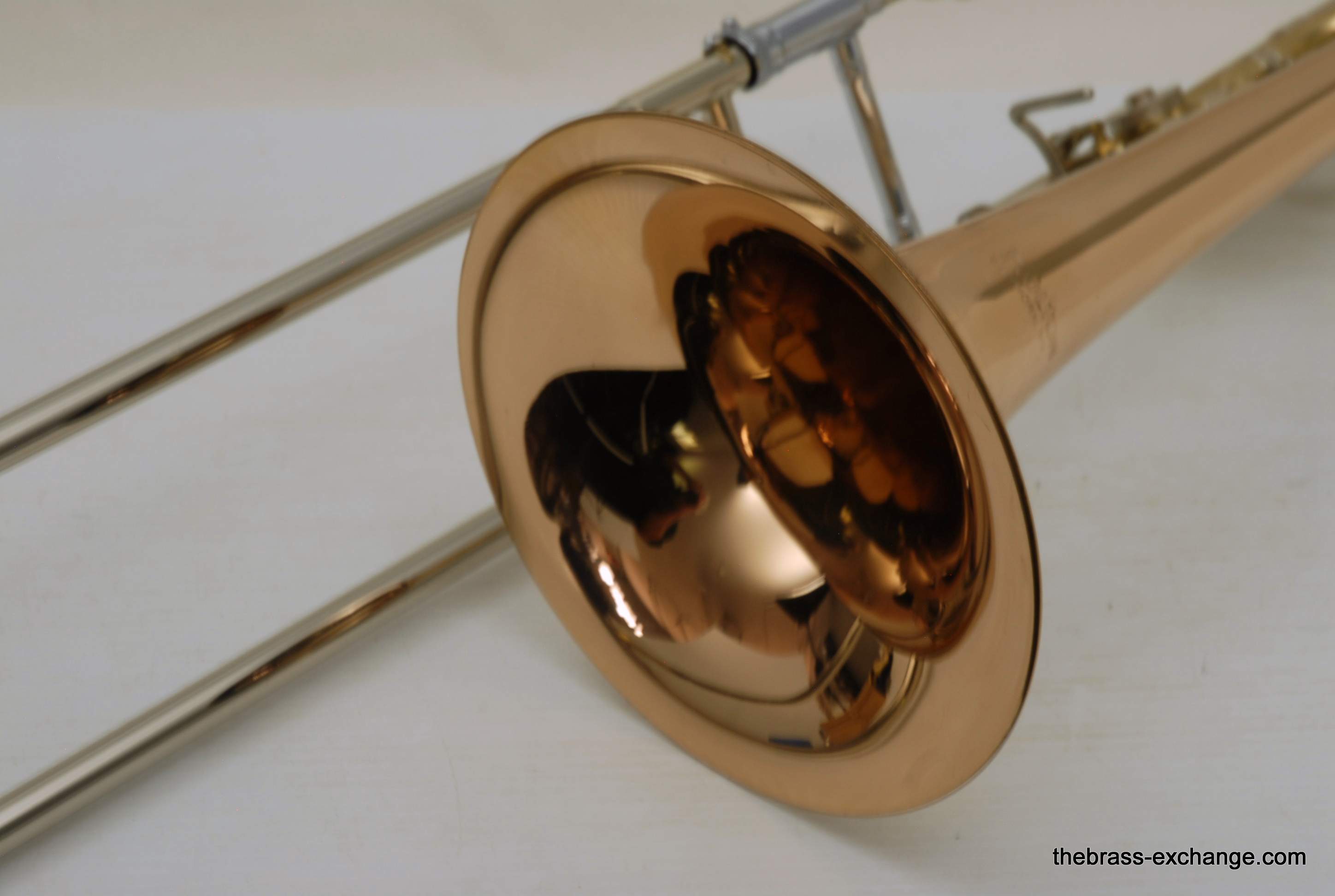

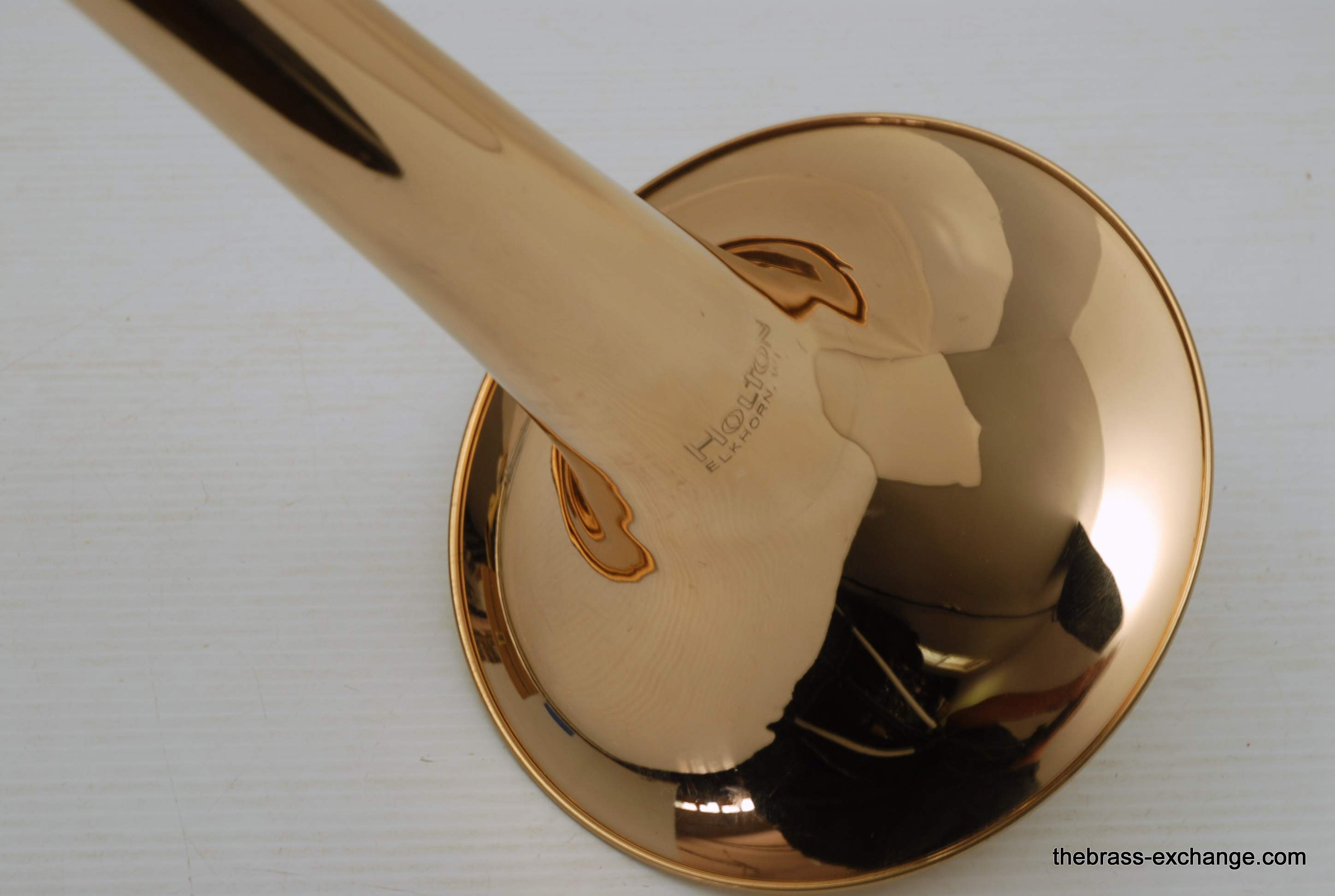
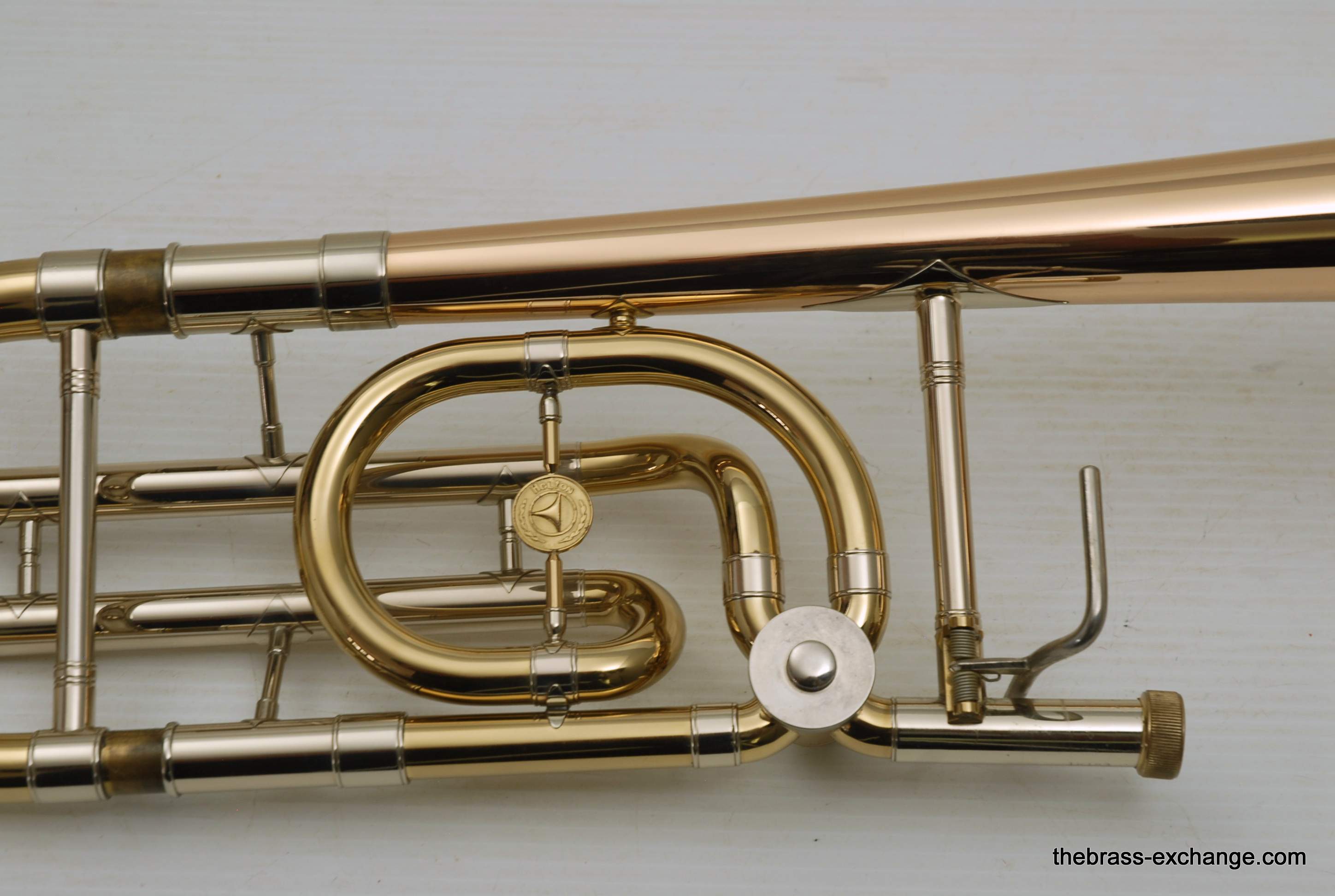
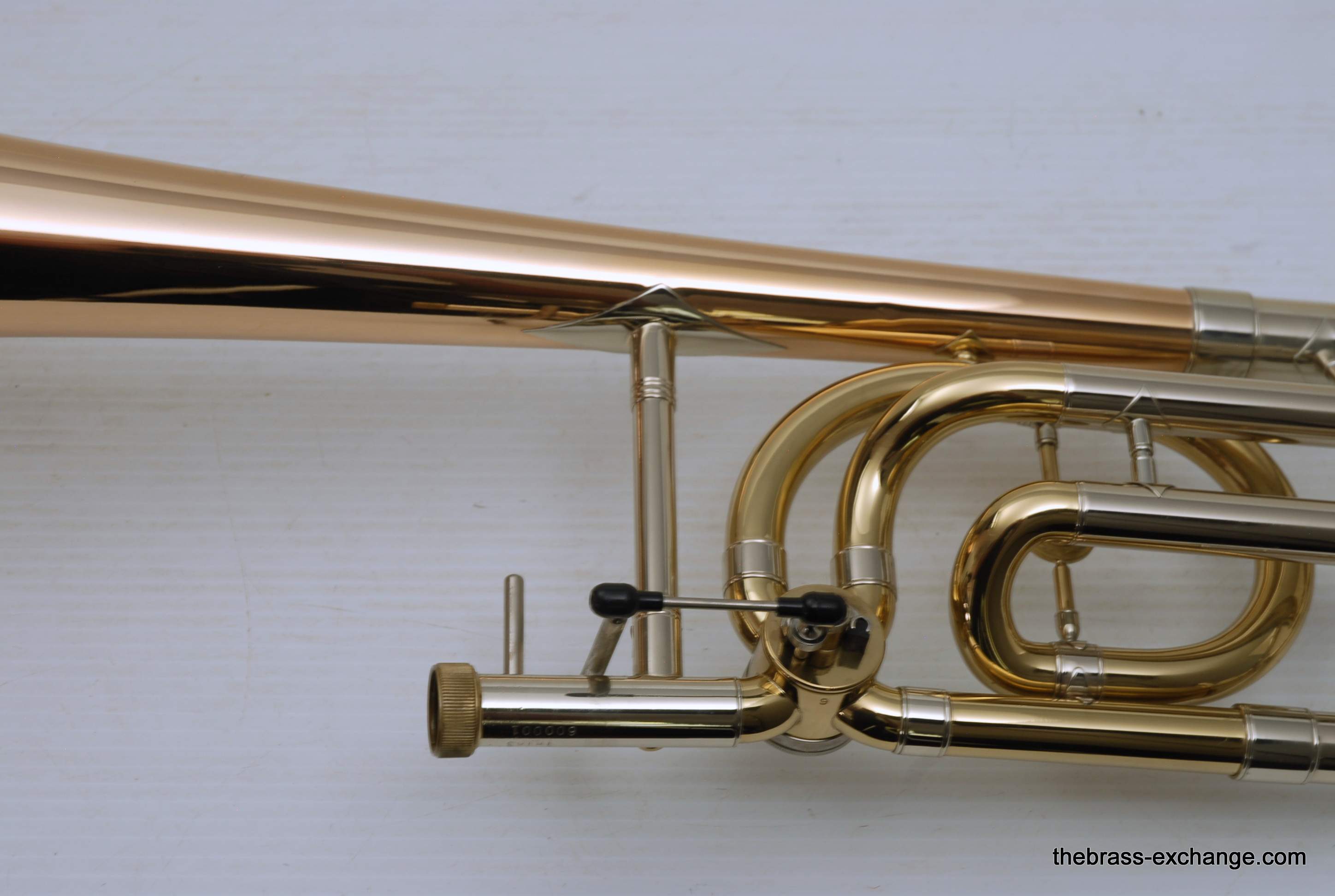


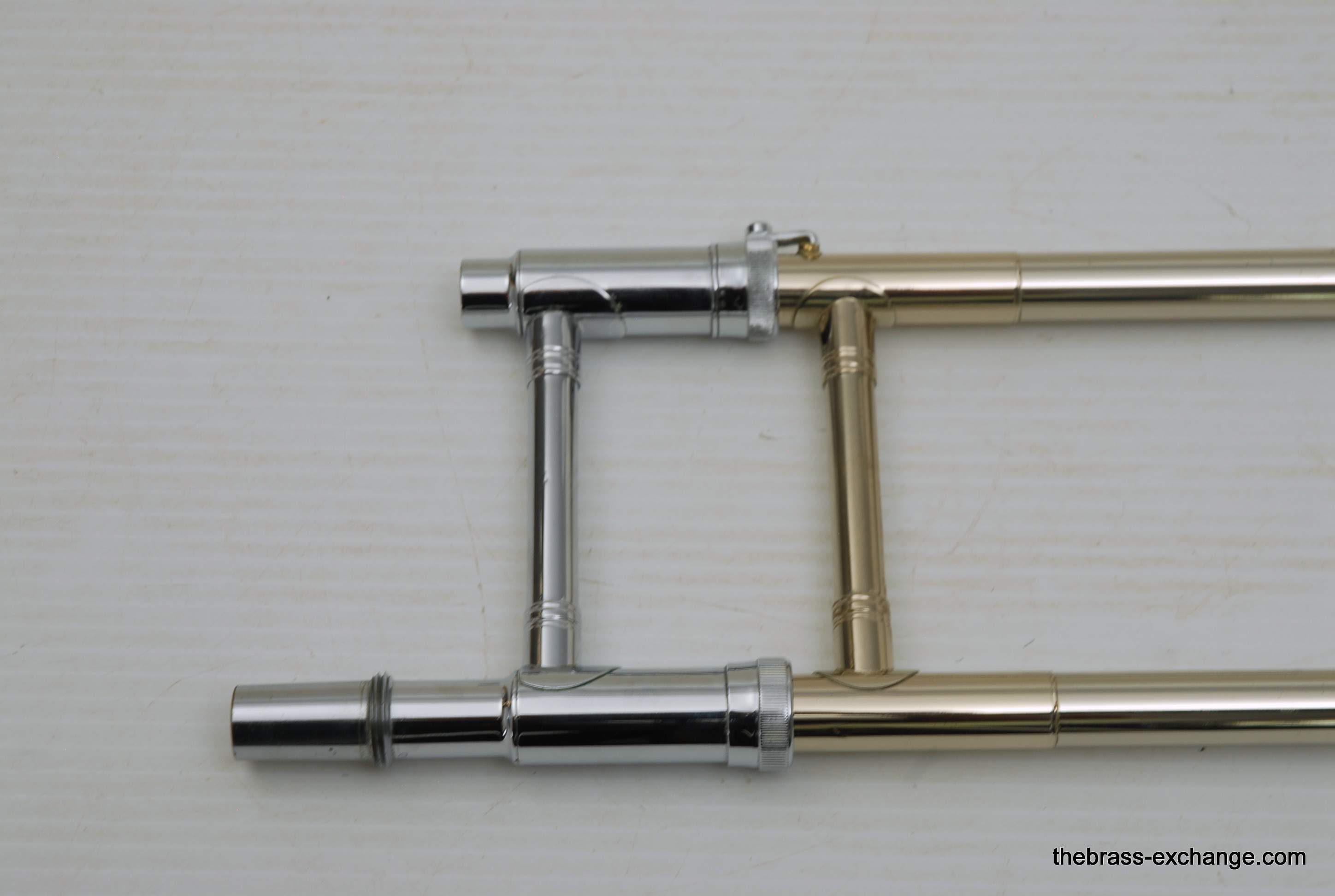

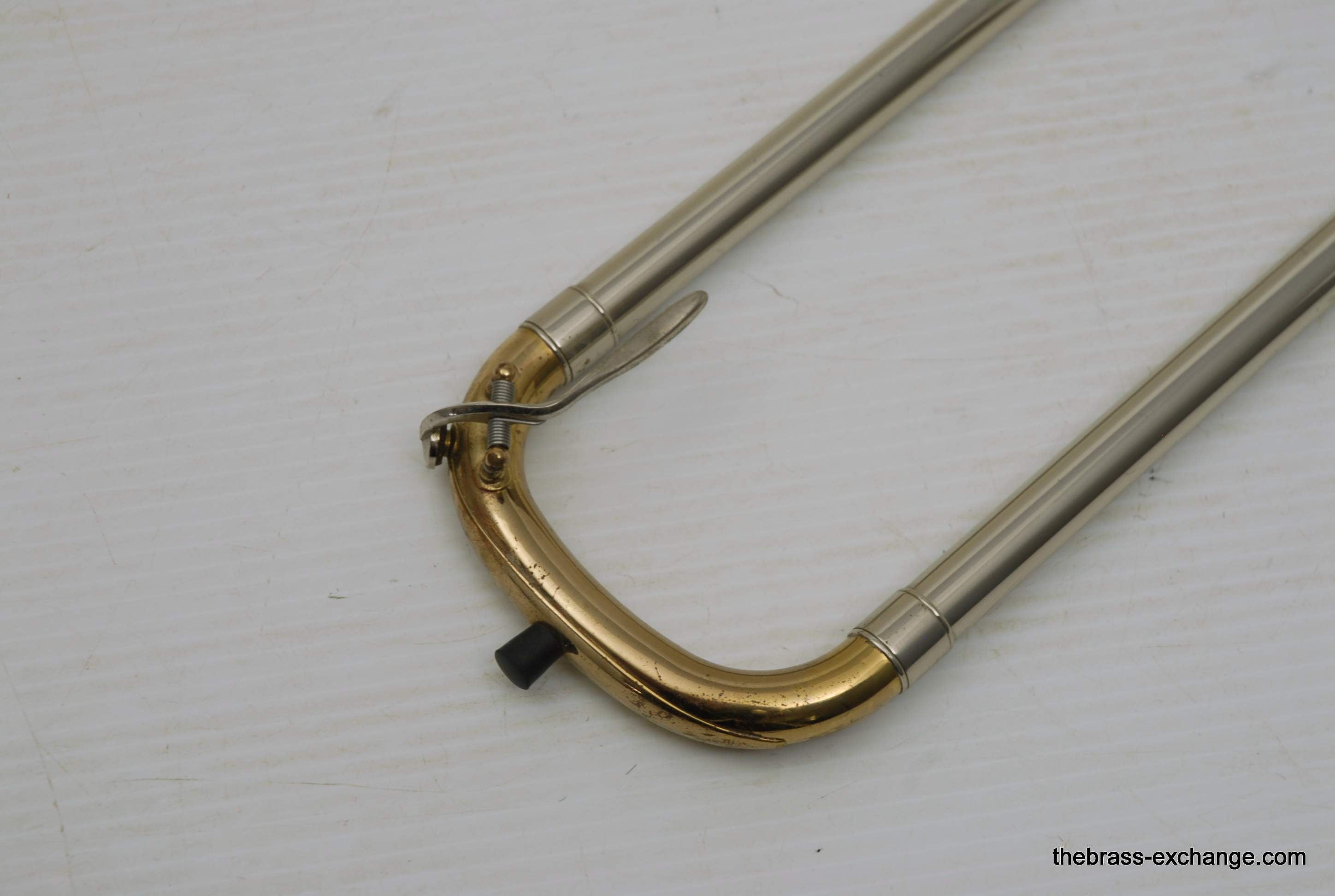

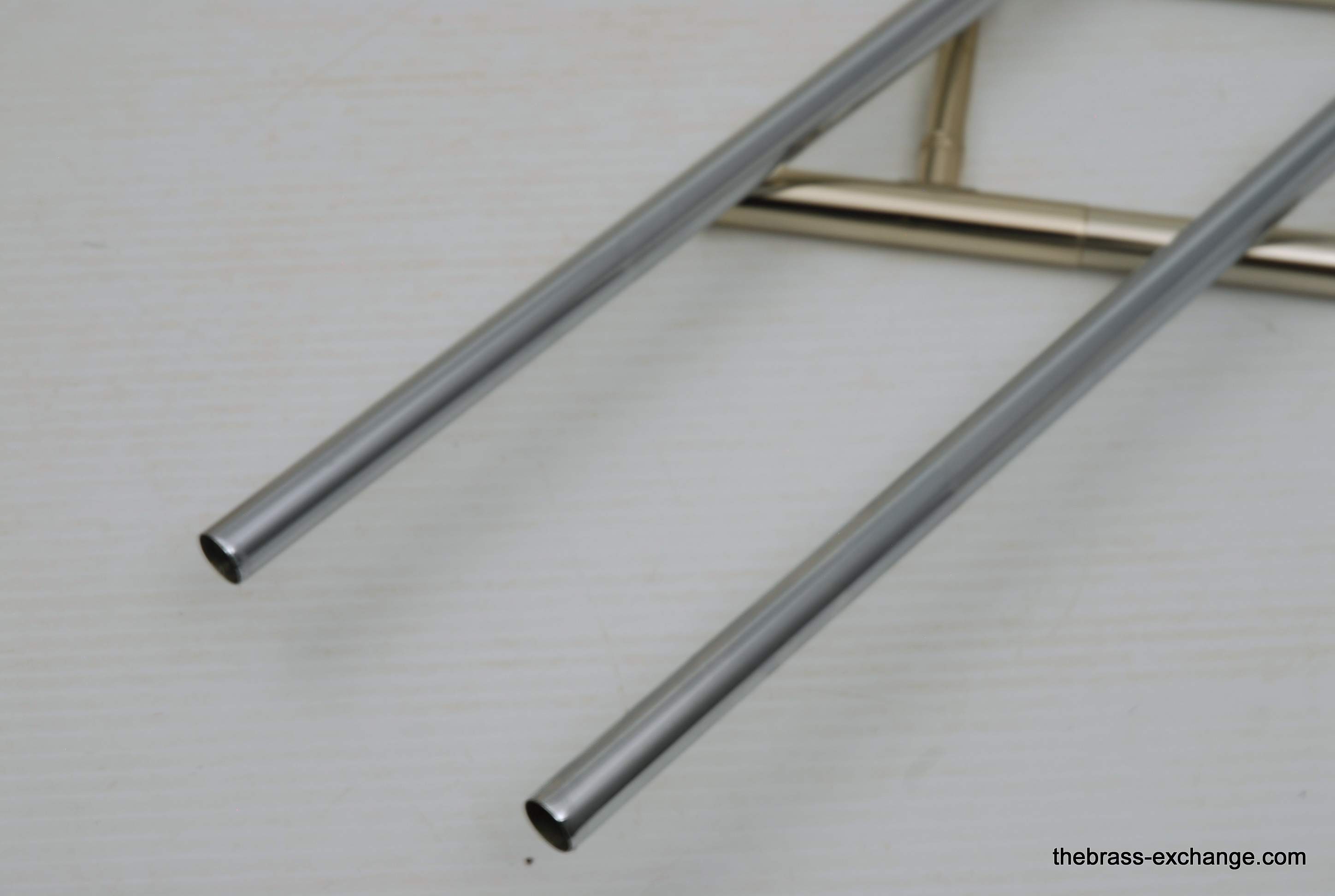

The Holton TR183 bass trombone, produced in the early-to-mid 1980s, featured a 9" rose brass bell and a .562 bore lightweight nickel silver handslide. It came with a single rotor F-attachment, a design that was highly respected in its day for players who valued simplicity and resonance over the added complexity of dual-valve systems.
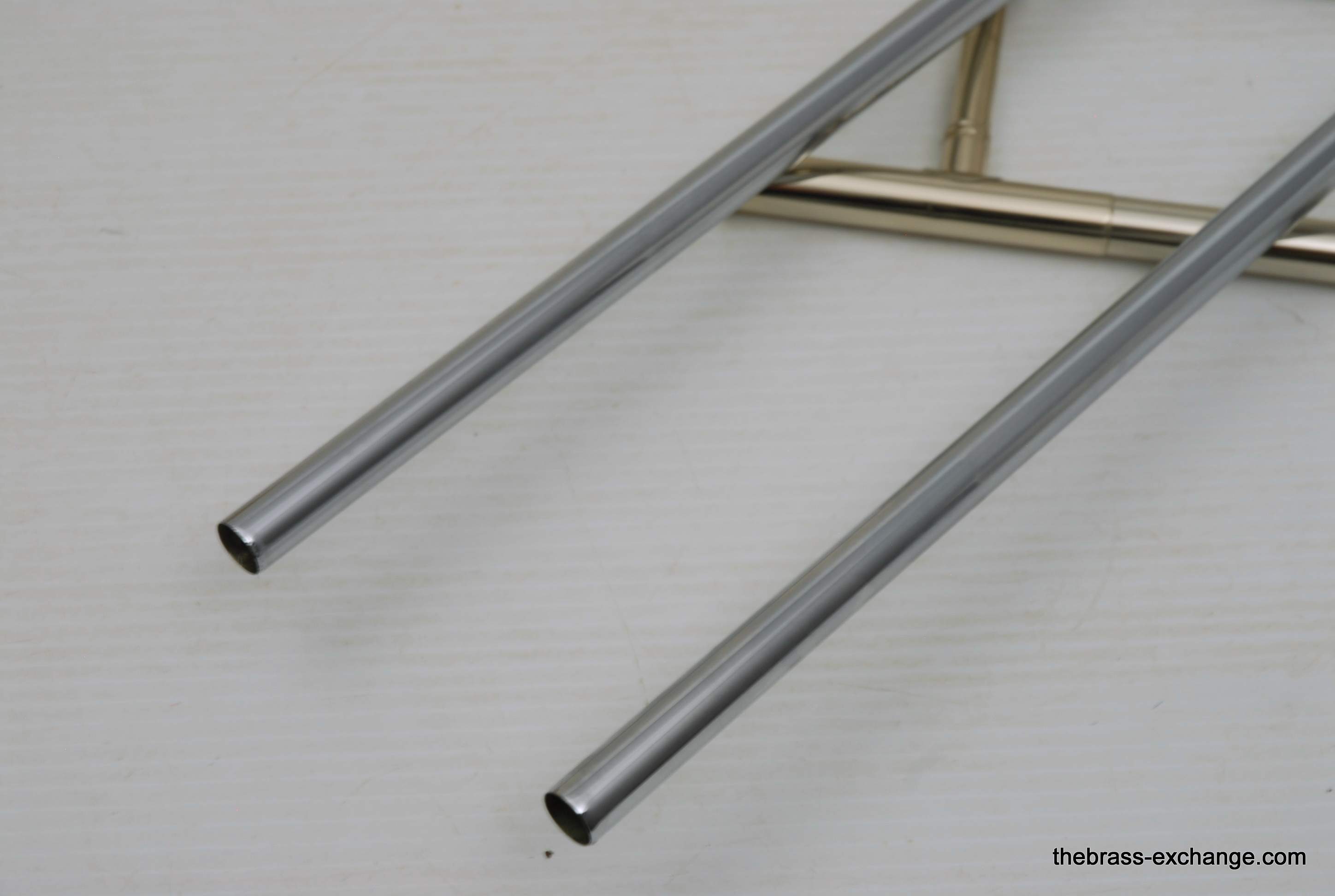
This example was a single-owner instrument, largely closet-kept since new. The handslide plating remained 100% intact, with perfectly straight tubes and no issues affecting playability. It was an excellent representation of Holton’s craftsmanship during the period — dark, lively sound with enough color and splash to stand out in big band settings, yet refined enough for orchestral or commercial work.
While many younger bass trombonists today prefer two valves (independent or dependent), seasoned players know that a single-trigger bass can cover the majority of music they encounter. For tenor trombonists looking to double on bass, or orchestra players wanting the signature Holton depth, the TR183 delivered an ideal balance of playability, projection, and character.
This instrument has since been sold and is now part of our Archive of Sold instruments, included here as a historical reference for musicians and collectors researching Holton bass trombones.
FAQ 🤔
What makes the Holton TR183 unique among bass trombones?
The TR183 was designed as a single-valve bass trombone, offering simplicity and a lighter feel compared to the heavier independent or dependent double-valve models. Its 9" rose brass bell and .562 bore slide give it a warm, resonant sound that can still open up with plenty of color when pushed.
Do you need two valves to play modern bass trombone parts?
Not always. While many modern players prefer two valves for low B-natural and extended passages, the vast majority of orchestral, jazz, and commercial literature can be played effectively on a single-valve bass like the TR183. For tenor players doubling on bass, it’s often easier to manage.
Is the TR183 a good choice for jazz or big band playing?
Yes. Its relatively light build and responsive slide make it an excellent big band bass. It has the ability to blend in section playing while still offering enough “punch” and resonance to cut through when needed.
How does the Holton TR183 compare to a Bach 50 or Conn 62H?
The TR183 is lighter and more agile, especially in single-valve form, while the Bach 50 and Conn 62H were often built as dual-valve basses with more orchestral focus. Players who want a more straightforward instrument with classic Holton warmth often gravitate toward the TR183.
What years was the Holton TR183 produced?
The TR183 was built primarily through the late 1970s into the 1980s. It represented Holton’s take on a professional single-valve bass before the widespread market shift toward double-valve configurations in later decades.
👉 Looking for a similar bass trombone? Browse our current trombone listings 🔎 or submit a trade form ✍️ to upgrade or sell your own instrument.