


Why So Many Physicians Return to Brass — And Why I Connect With Them So Naturally
(Names changed to protect the innocent.)
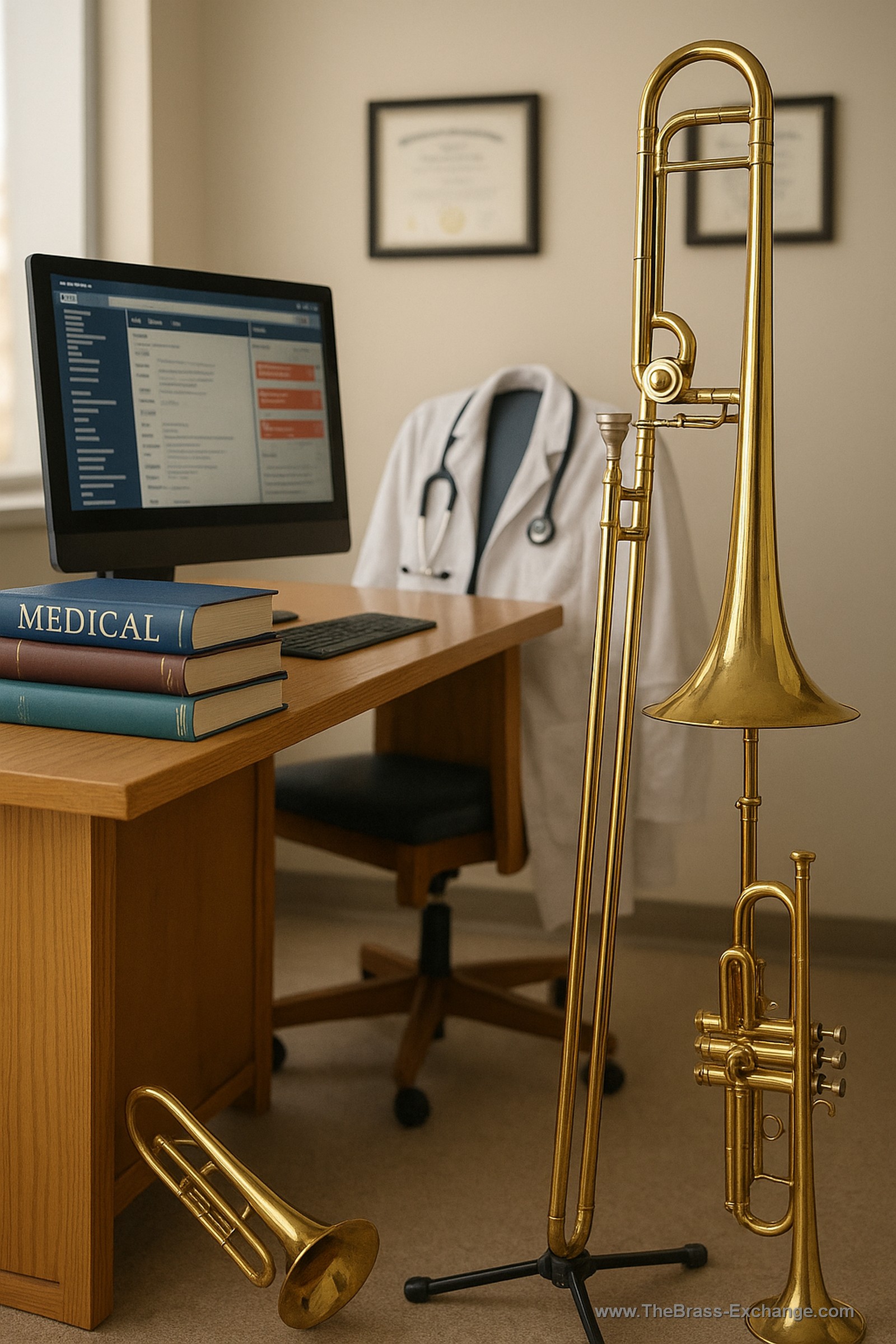
If you're a physician who once played trombone, trumpet, euphonium — any brass instrument at all — and you’ve been thinking about picking it back up, this blog is for you.
For more than 15 years at The Brass Exchange, I’ve noticed a remarkably consistent pattern:
A large percentage of returning brass players are physicians.
Surgeons, GI specialists, infectious disease experts, internists, hospitalists — all rediscovering brass playing after years of intense medical practice. Some want to join an ensemble, some want a creative outlet after long EMR days, and some simply want to reconnect with a part of themselves that went quiet during residency and early career.
And because of my own journey in medicine-adjacent work, I’ve always understood them.
A Story From Long Before The Brass Exchange Existed
Before launching TBE in 2010, I spent almost 20 years in medical device work inside clinics, rehab centers, and hospitals. During one clinical trial, I connected instantly with an older internal medicine physician who was also a church organist.
We bonded over music immediately.
I liked him so much that I eventually asked if he would become my personal physician. He agreed — and he turned out to be excellent.
On one of my early visits, his clinic had just implemented EMR. This was the mid-2000s era when practices were being pushed into digital systems. While checking my blood pressure, he paused, stared at the computer with visible frustration, and let out a sigh all physicians recognize.
In that moment I remember thinking:
“This is going to change medicine.
And a lot of older docs are not going to like it.”
That experience stayed with me. Today, when physicians reach out wanting a trombone or ask how to return to brass playing after years away, I already understand exactly where they’re coming from.
Why Doctors and Brass Fit Together Naturally
1. They value precision.
Hand-built brass instruments involve tolerances, acoustics, and mechanical nuance — a world doctors instantly understand.
2. They prefer clarity over hype.
After decades interacting with clinicians, I know how to explain tonal differences, modular systems, and ergonomics in a way that respects their intelligence and their time.
3. Music gives them what EMRs cannot.
Expression. Relaxation. Identity. A way to breathe again.
True Story
A GI doctor first visited years ago to buy a trombone for his son. Recently, preparing for retirement, he returned wanting a euphonium so he could start playing again. We found the perfect setup — and he later left one of the warmest Google reviews we’ve ever received.
An infectious disease specialist purchased a couple of trombones, cases, and then signed up for lessons — rediscovering a part of himself he hadn’t felt since college.
And a brass-loving attorney at a local college and medical school once asked if I knew a trombonist for his weekly quintet. He didn’t expect my answer:
“Why don’t I sit in for a while until we find the right fit?”
After months of rehearsals squeezed in between shop work, teaching, and shipping, the perfect match appeared — the same infectious disease doctor returning to brass. They’ve been happily playing together ever since.
These are the moments I treasure most.
If You’re a Physician Thinking About Playing Again…
You’re not alone.
You’re part of a large, thoughtful, passionate community of clinicians returning to the instruments they love.
When you’re ready:
👉 Browse current instruments
👉 Ask for guidance on returning to playing
👉 Get help choosing the right setup for where you are now
Whether you’re coming back after 5 years or 35, I’m here to help you reconnect with brass playing — one note at a time.
🎖️ TBE Trust Standard — Guidance for Returning Musicians
The Brass Exchange has helped thousands of players — including many physicians — return to brass with confidence. From equipment selection to ergonomic setup to musical re-entry planning, our approach is independent, experience-based, and built around the real needs of adult learners and comeback players.