


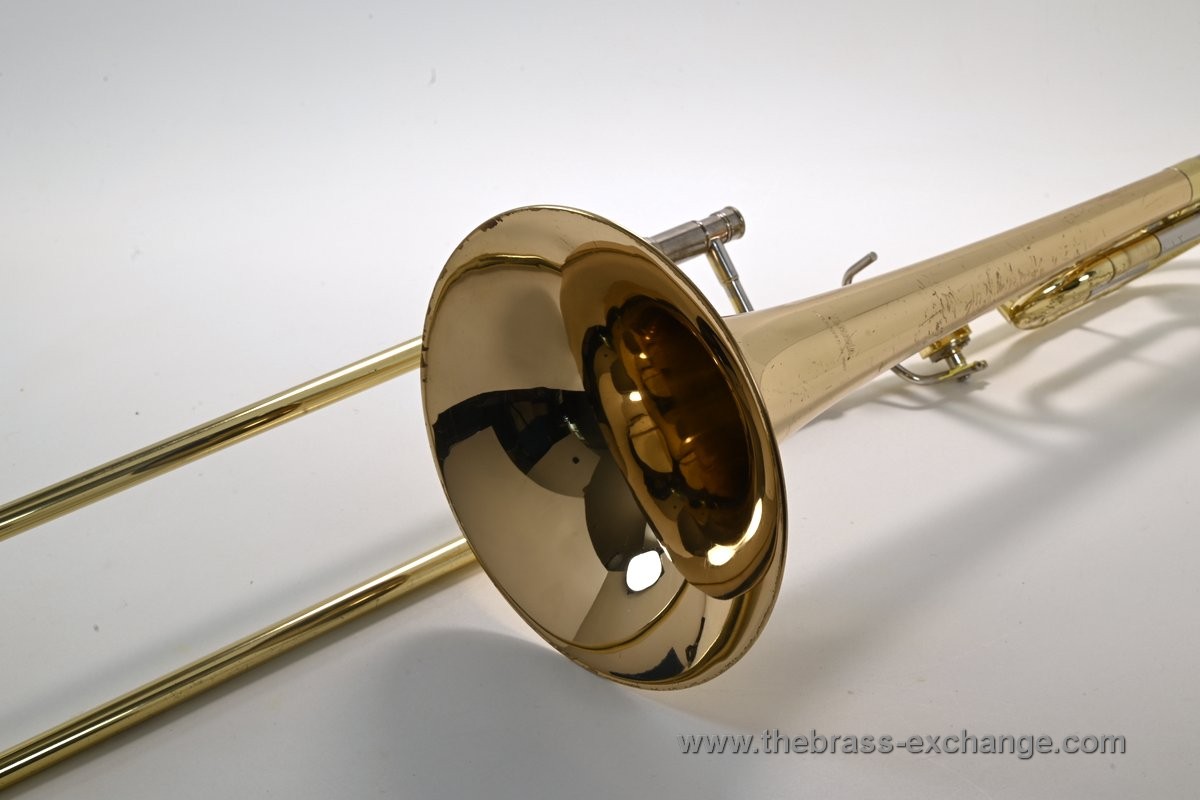
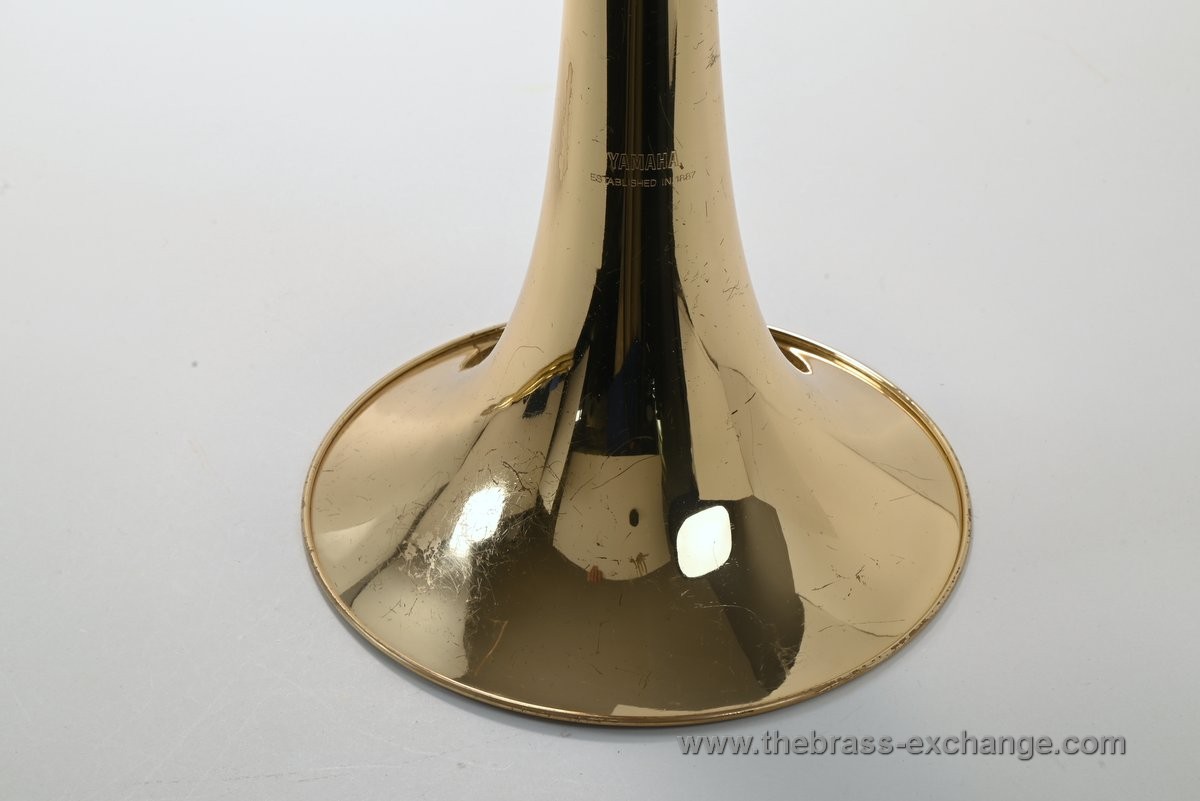
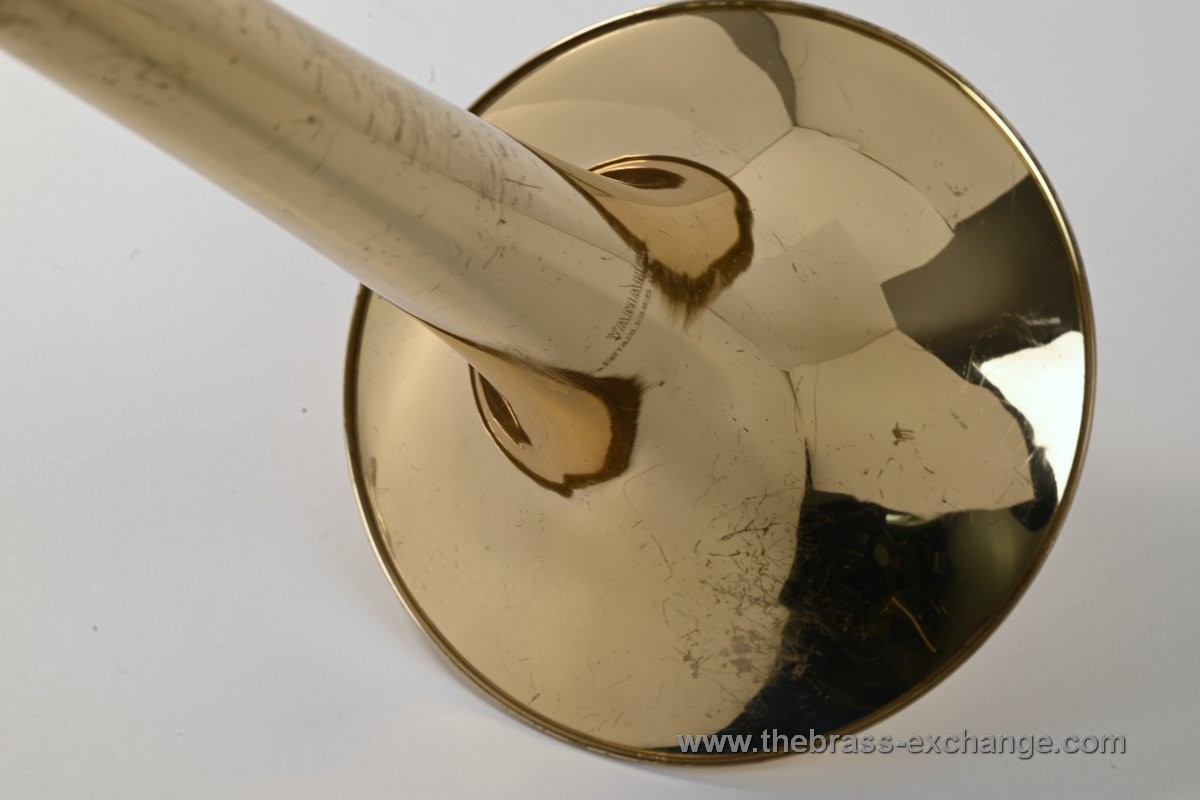
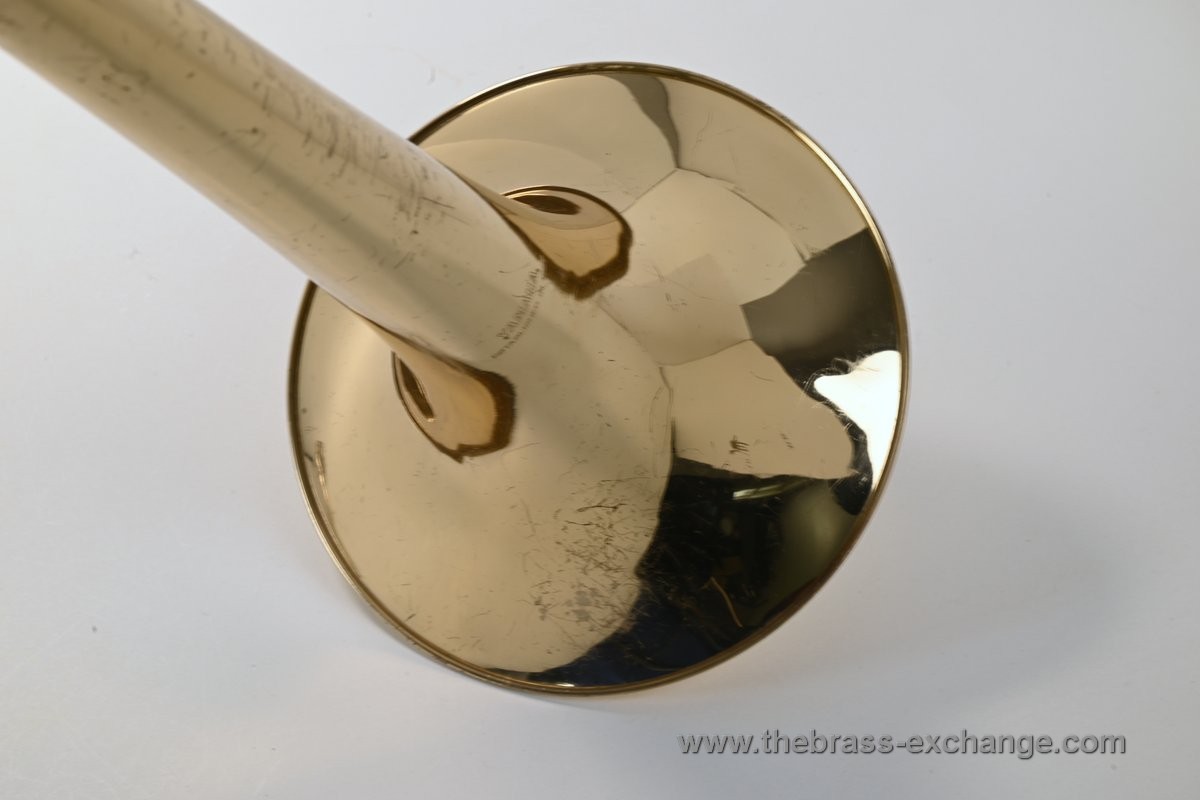
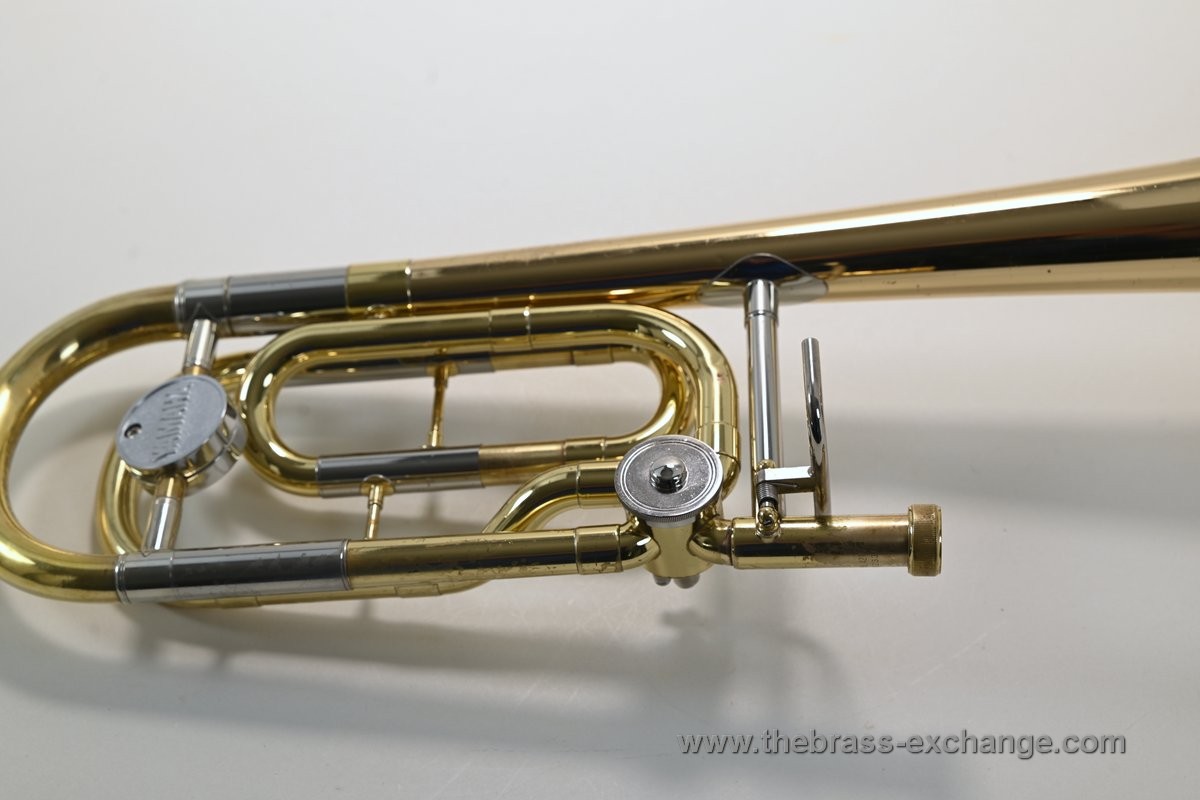
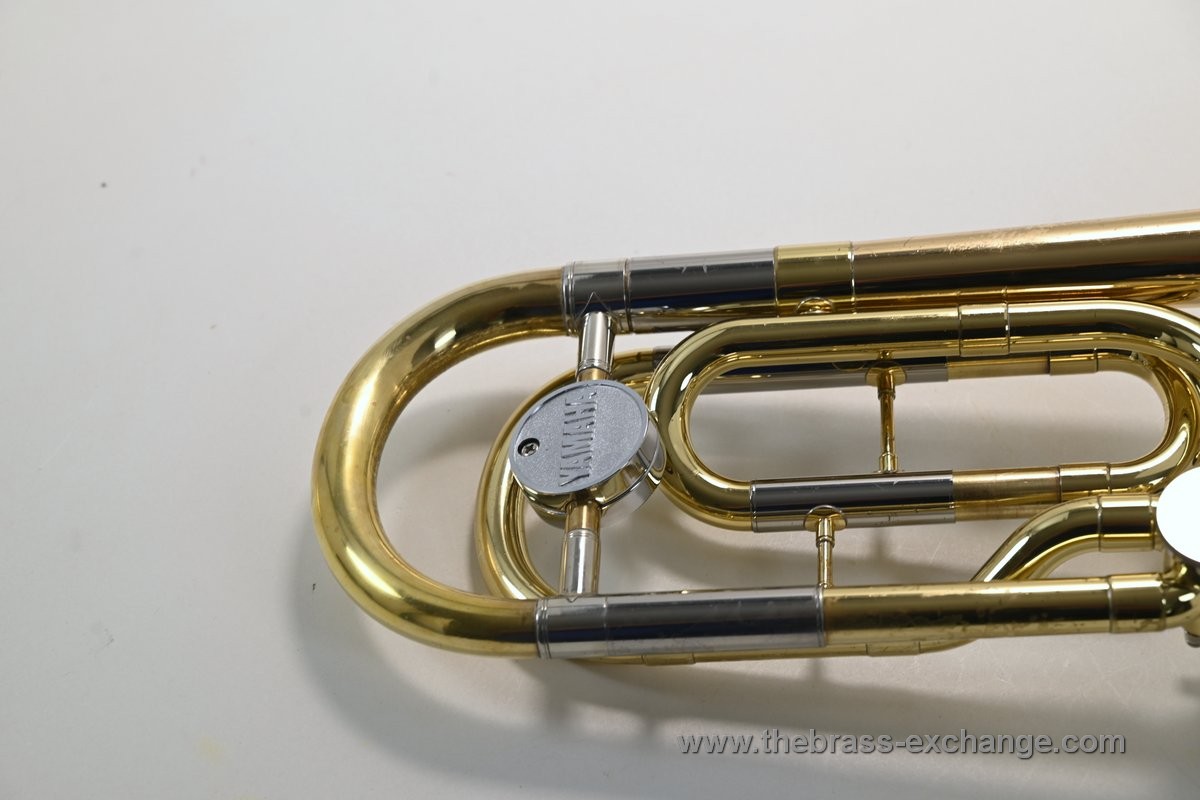
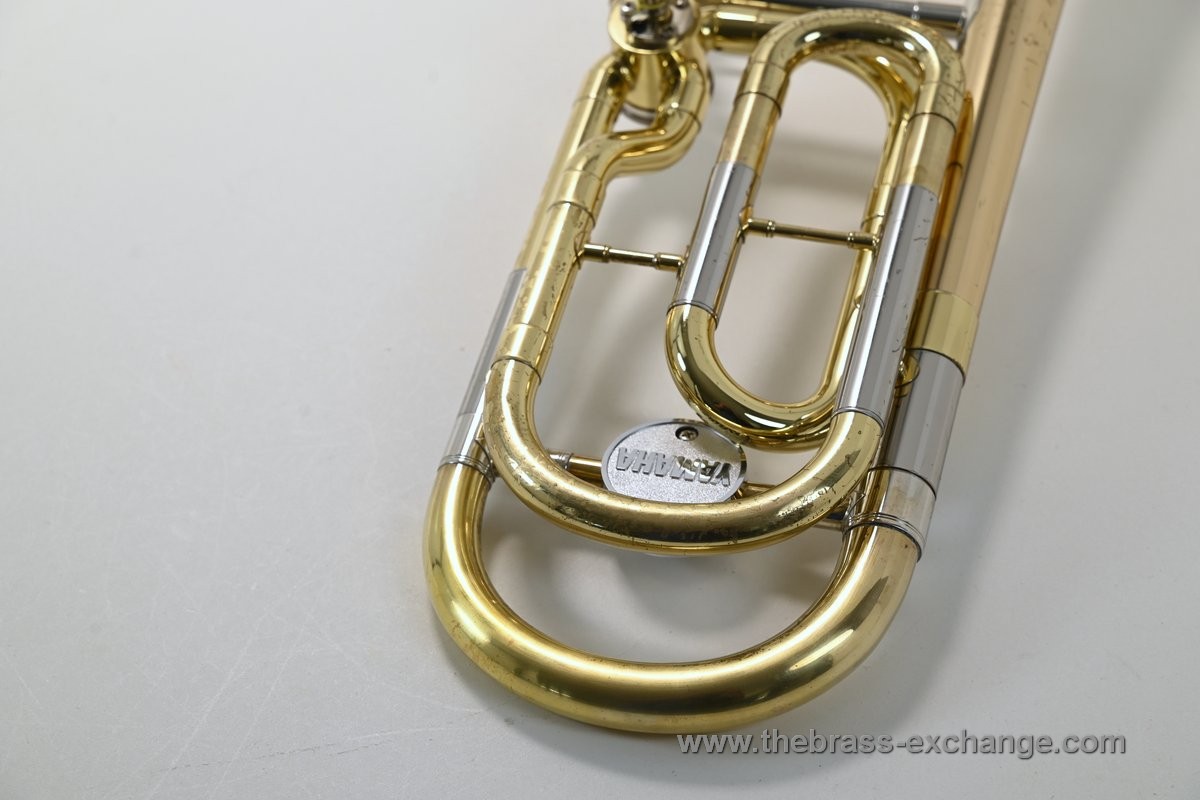
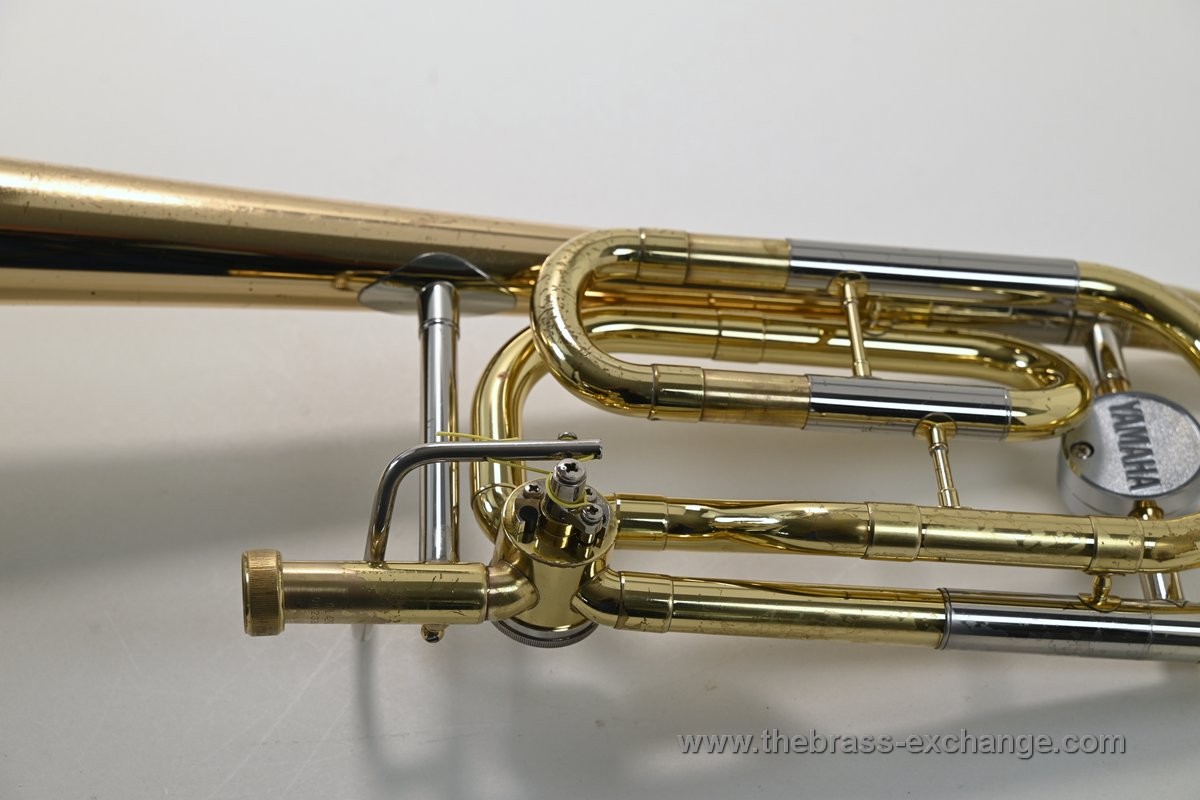
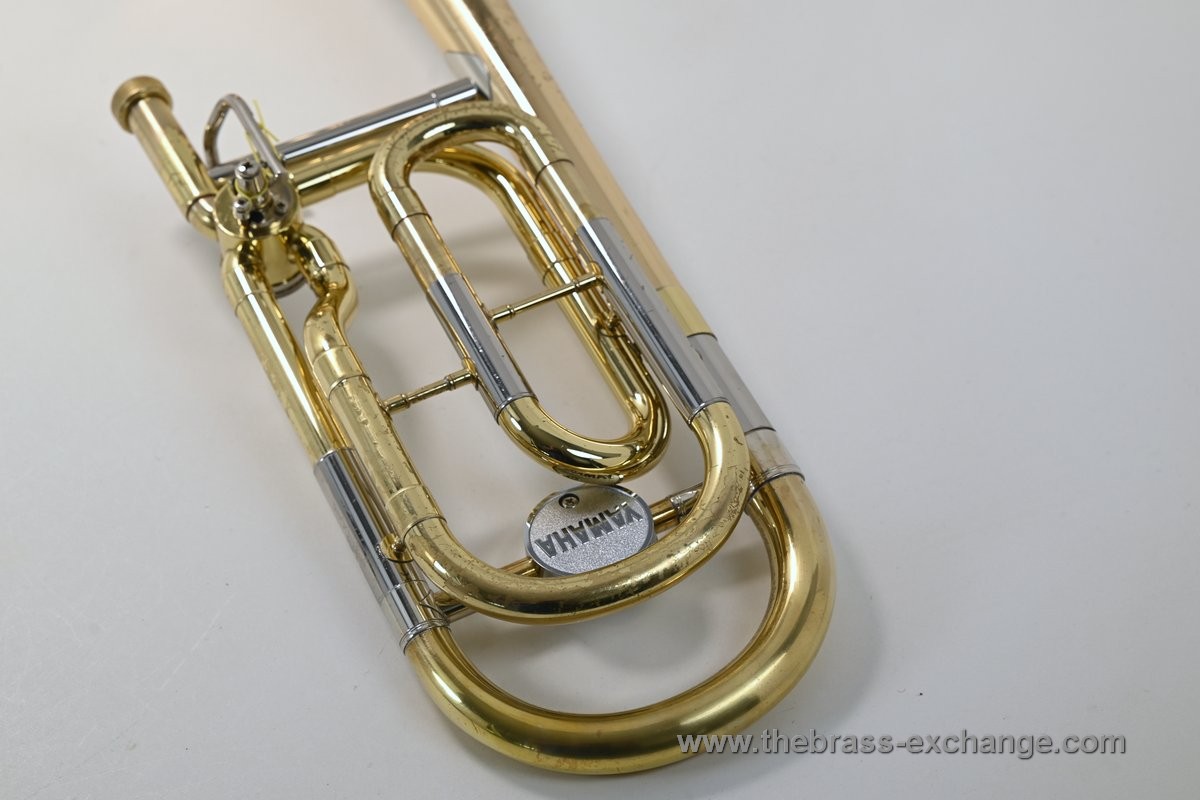
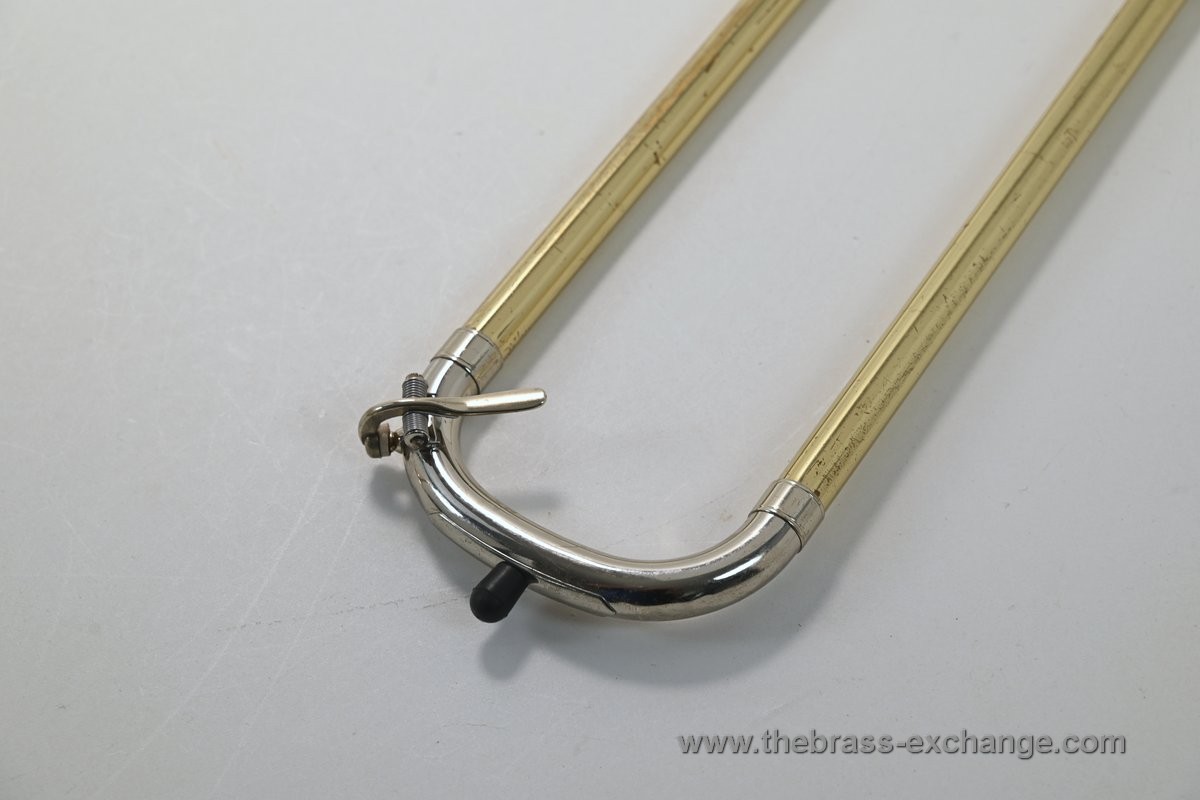
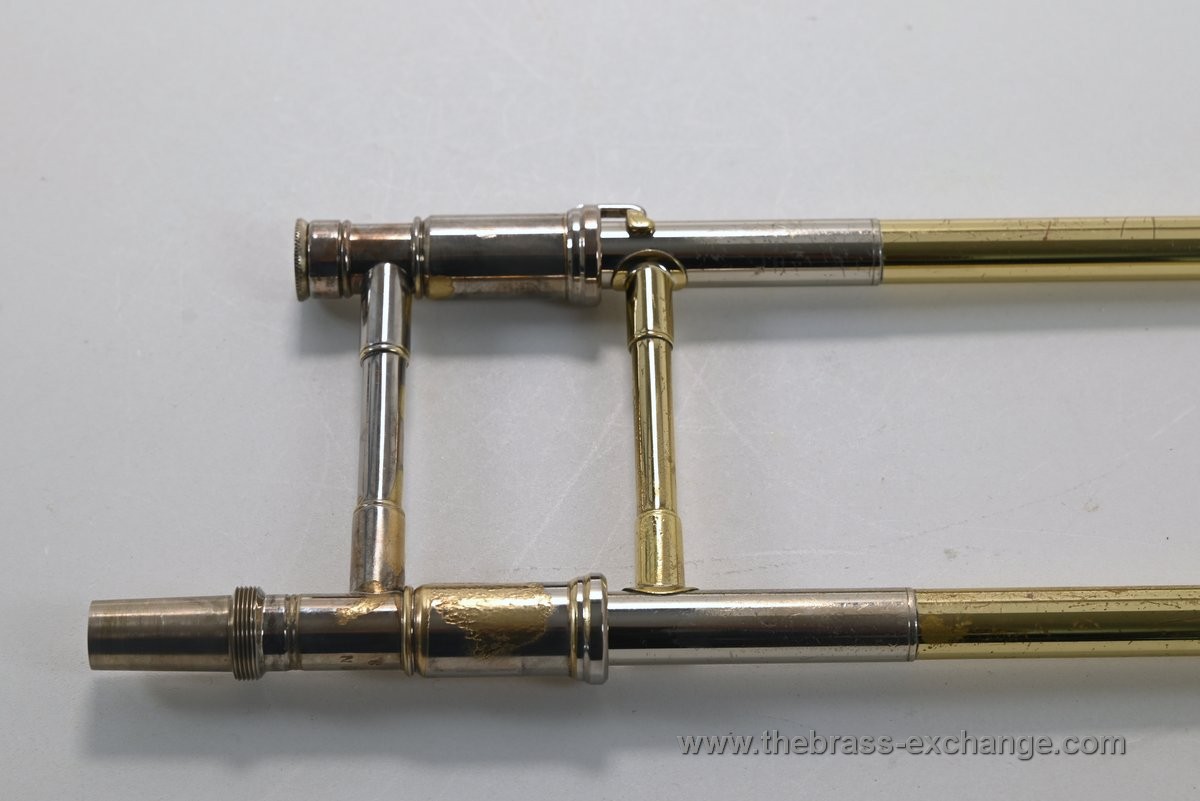
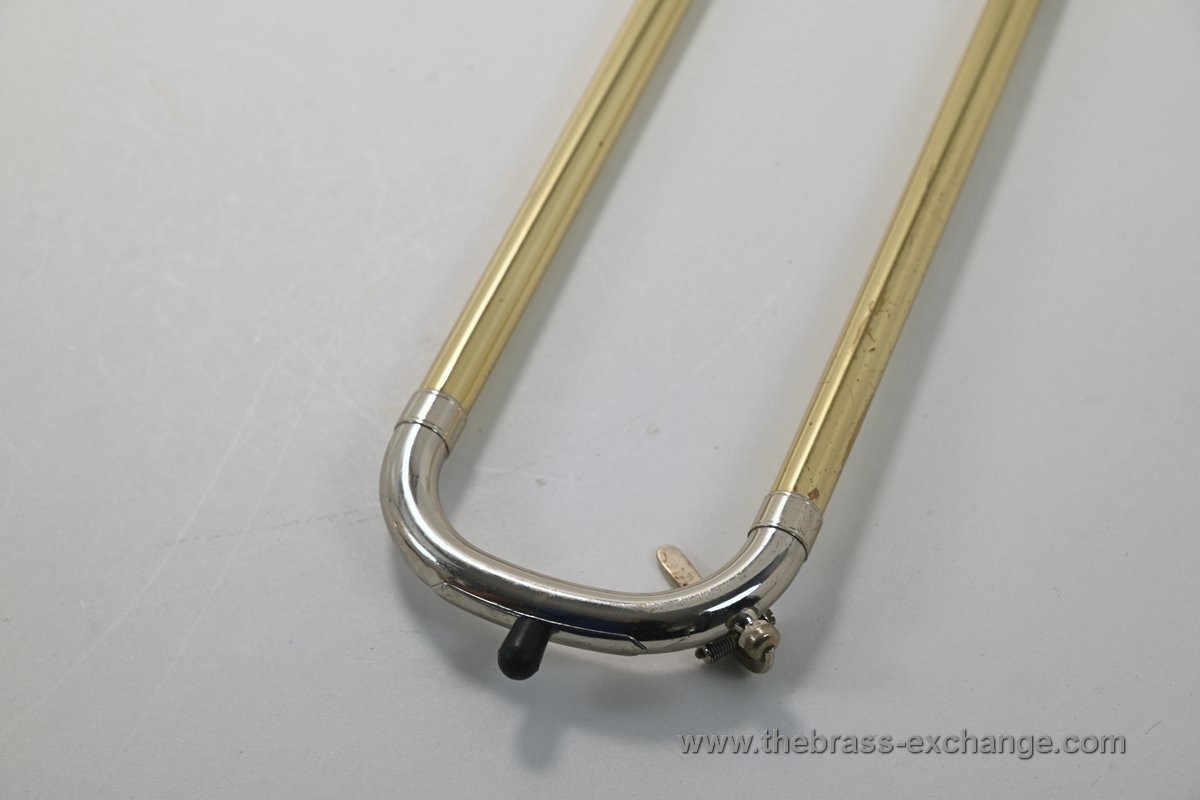
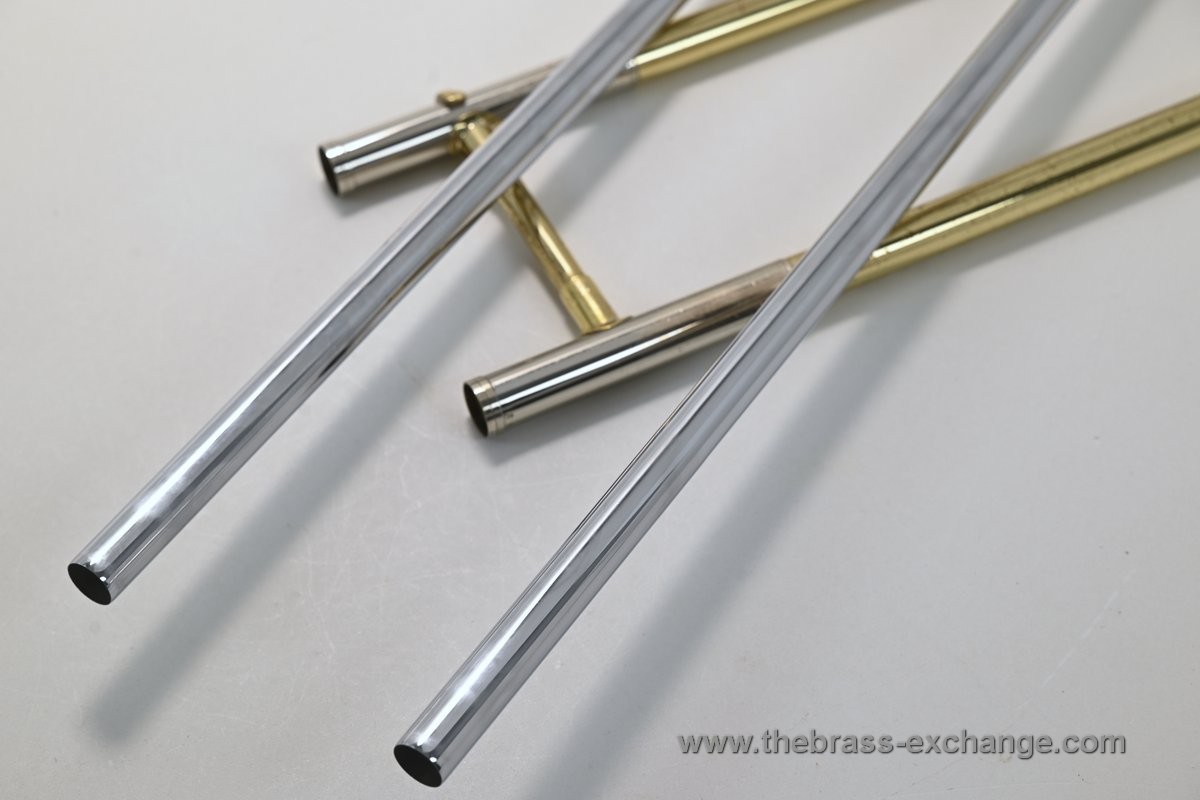
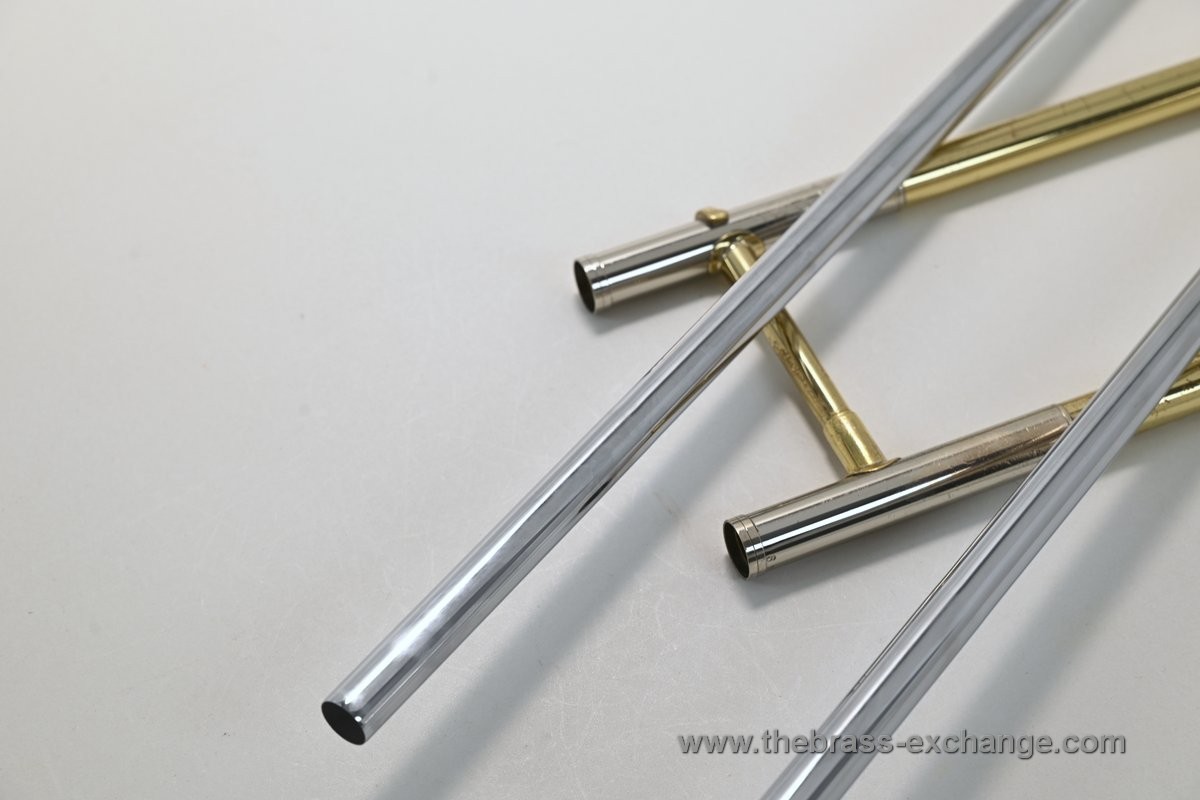
Yamaha YBL-421G Bass Trombone, serial number 002336, pre-owned. This is an experienced intermediate-level bass trombone designed for players looking to enter the world of bass playing without the complexity or cost of a double trigger system. It features a 9.5" gold brass bell, single rotor F attachment, and a straight bore .562 handslide. This instrument has all original parts and lacquer, and it has been fully serviced in our shop. Work included a chemical bath, rotor service, slide adjustment, water key rebuild, and a thorough once-over to improve it to top playing condition.
There are no dents or dings, and the overall appearance is good considering its age and use. You will notice some lacquer wear on the outer slide grip areas, neck area, and tuning slides, along with some surface scratches and lacquer loss on the bell. We have improved the cosmetics as much as possible without performing a full re-lacquer, which is not recommended at this price point.
This Yamaha YBL-421G would make an excellent single bass for any player wanting to learn how to play bass trombone. It's perfect for middle school and high school players, and ideal for jazz band or large ensemble work. This is the type of instrument that allows you to develop your sound, master slide technique, and become comfortable with the F attachment before moving on to a double trigger bass later on. And of course, when you're ready to upgrade in a year or two, we can help you trade it back in for a credit toward a more advanced model.
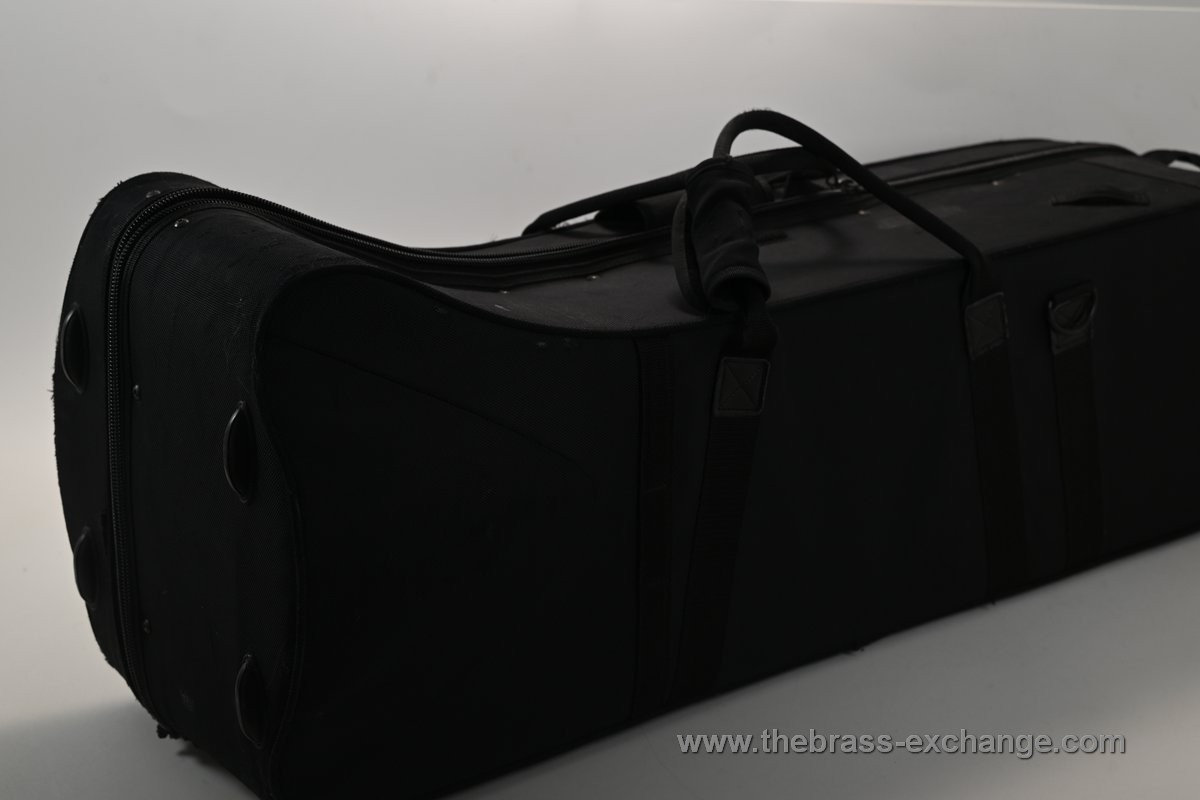
Includes an older style Protec bass trombone case. Mouthpiece not included.
This YBL-421G Bass Trombone has been sold and is now shown here as a reference in our Archive of Sold Instruments. 🔎 Browse available trombones at The Brass Exchange
What is the advantage of starting on a single trigger bass trombone before moving to a double trigger model?
Starting on a single trigger bass trombone like the Yamaha YBL-421G helps players focus on core fundamentals, including sound production and slide technique, without the added complexity of a second valve. A single trigger bass is also lighter and easier to manage physically, making it an ideal choice for younger players or those building strength and technique. While a second trigger does not truly extend the lower range, it does provide additional alternate valve combinations that can help with slide positioning and tuning adjustments. Beginning on a single trigger keeps things simpler and allows a player to develop a strong foundation before moving to a more complex double valve system later on.