


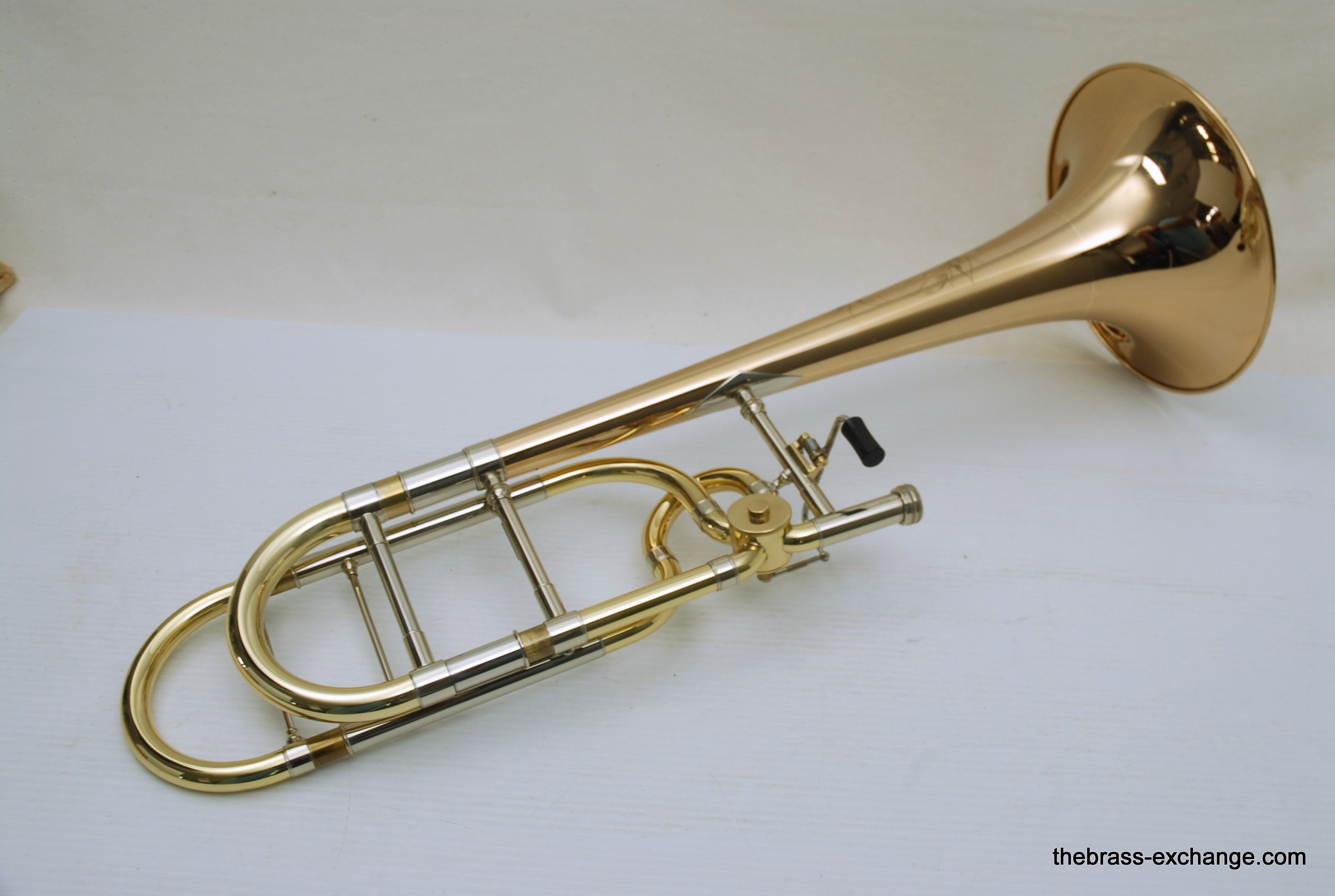
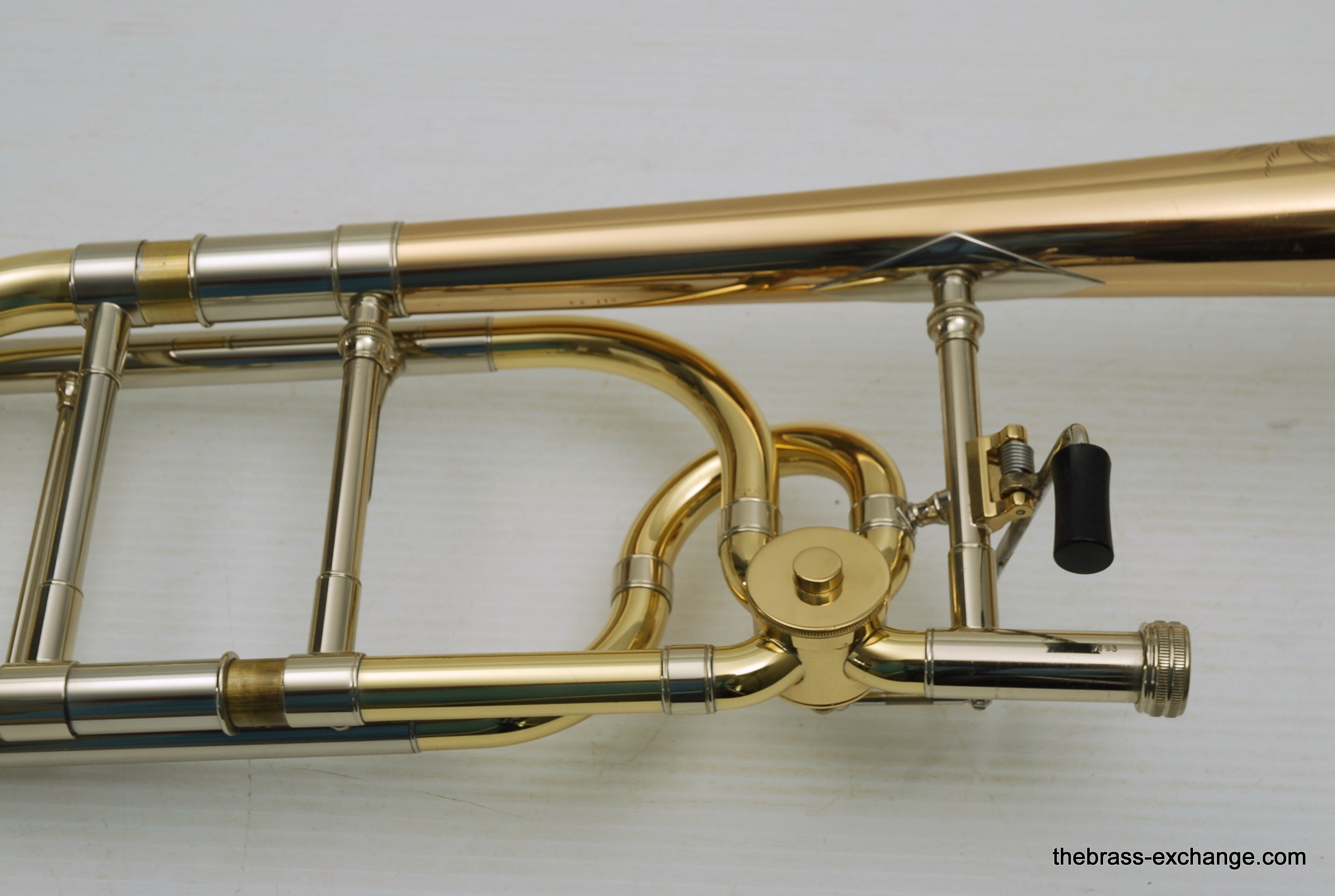
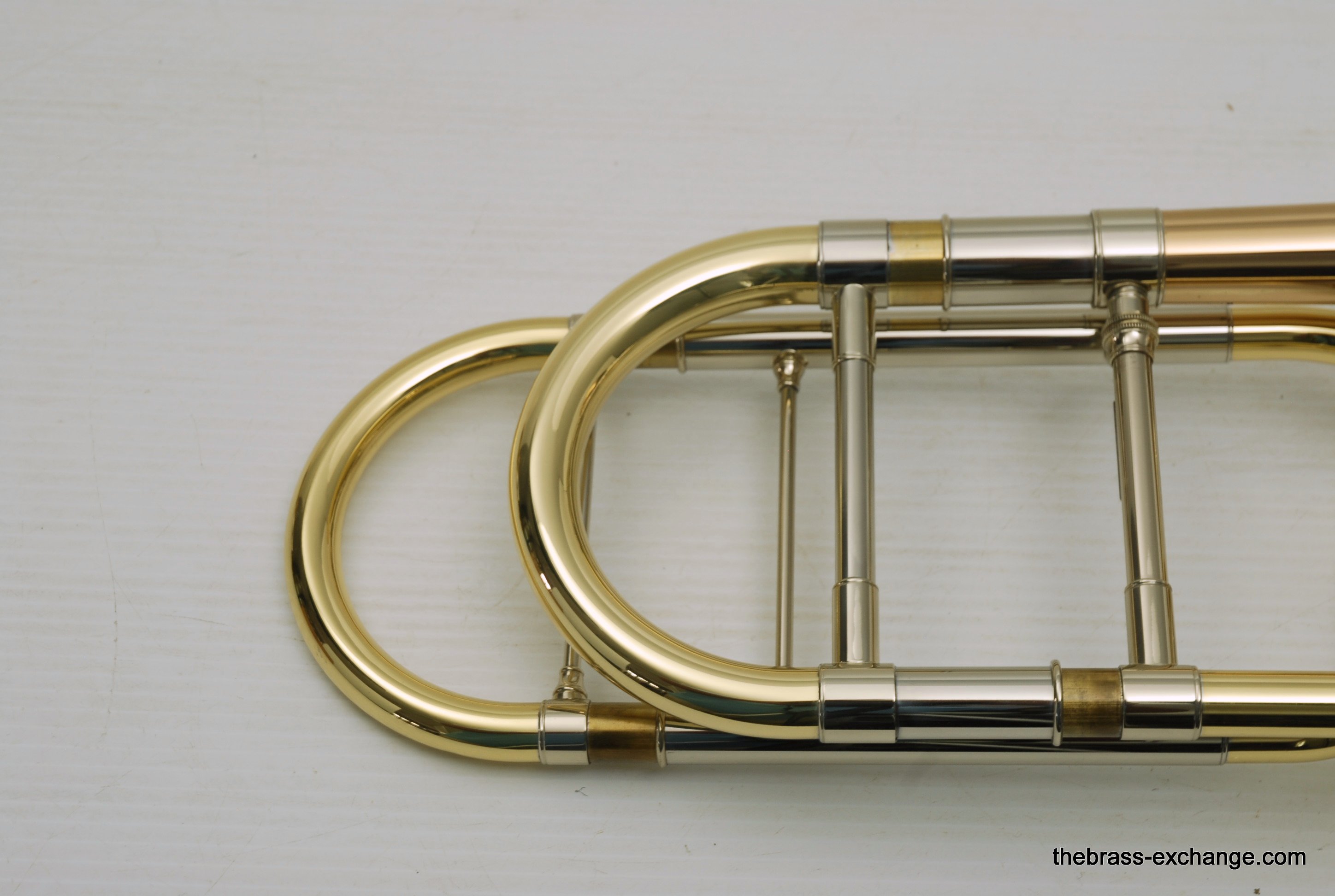
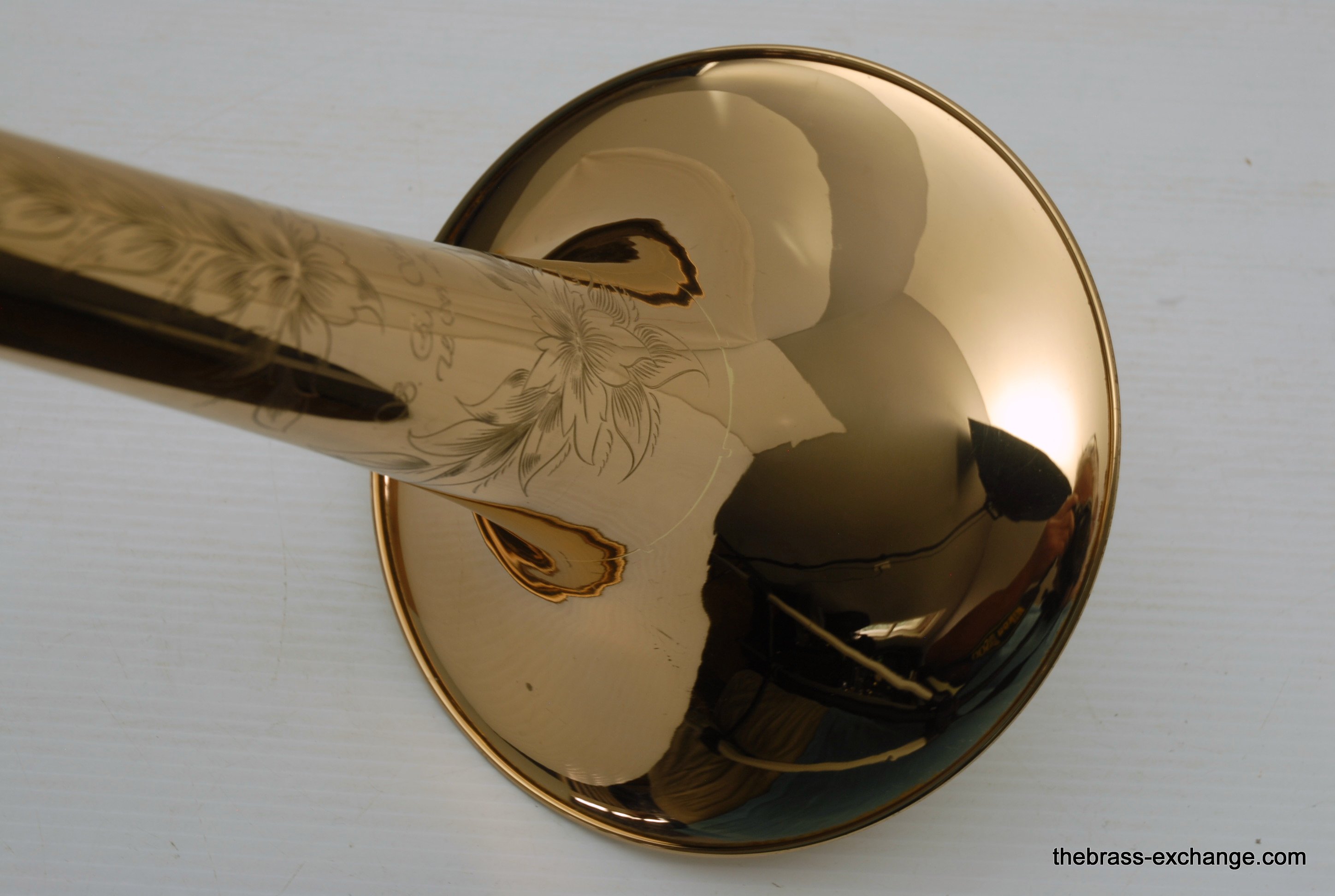
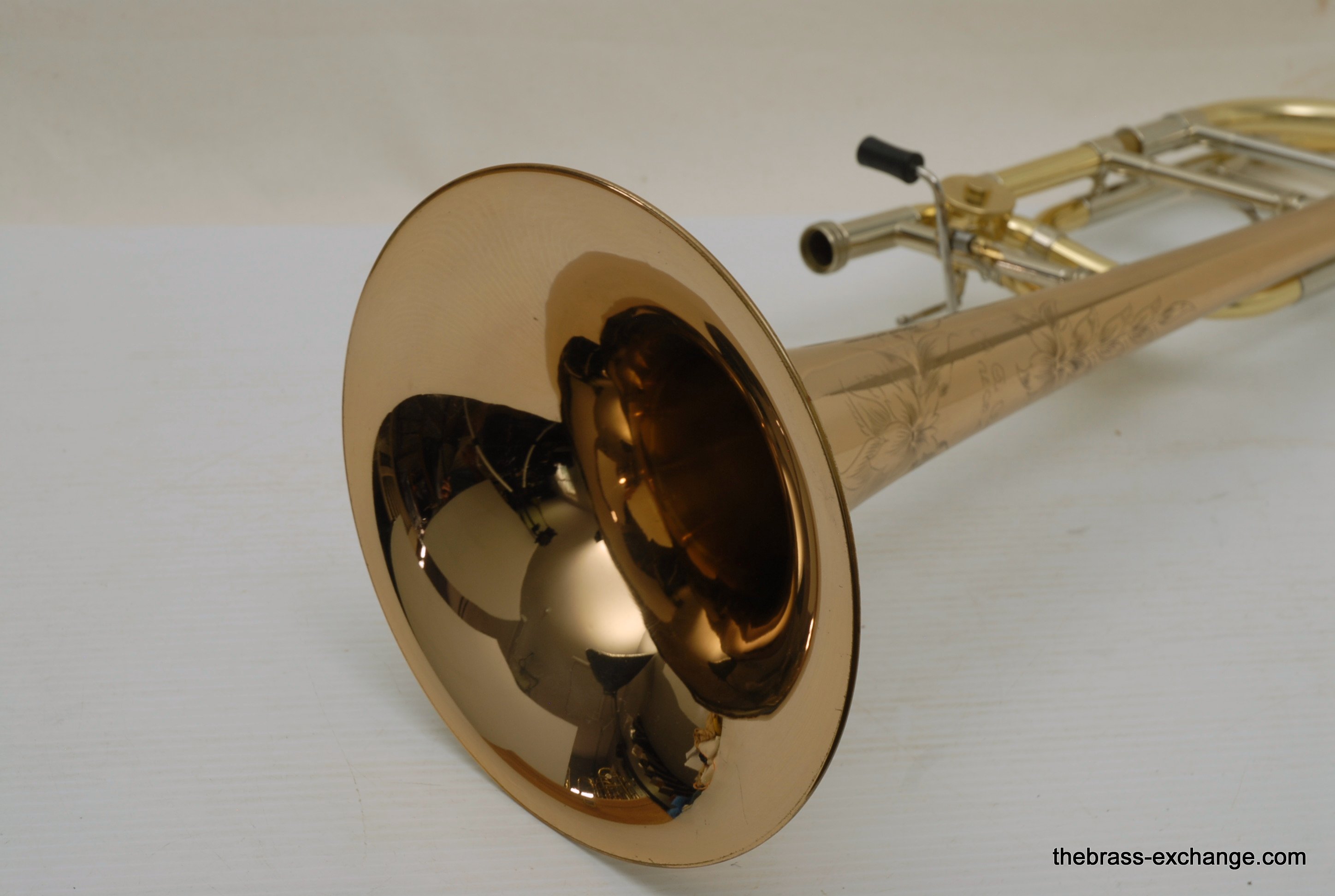
This S.E. Shires single rotor bass trombone bell and valve section is a beautiful example of modular craftsmanship and tonal flexibility, now presented as an archive reference. The bell and valve section are slightly used and have been well maintained, while the included "C" tuning slide is factory new.
This setup offers an excellent balance of dark, rich timbre and open, free-blowing response. The "C" tuning slide features a slightly more gradual taper than the standard "B" model, providing a broader, more open feel and smoother transitions between partials. This design enhances the instrument’s flexibility and contributes to a more expansive, resonant sound.
While most bass trombonists today choose double inline valve sections to simplify certain slide positions and allow for additional alternate positions, single valve bass trombones remain highly valued for their lighter weight and simpler airflow. The second valve primarily enables first position options for notes like Gb (second valve only) and D (both valves engaged), and allows for the lowest B natural when both valves are used. Despite this, many professional players over the years have managed perfectly with only a single valve setup.
This particular Shires single rotor setup, paired with the new C tuning slide, offers exceptional projection, a warm core sound, and the flexibility to match various performance demands. The combination reflects S.E. Shires’ dedication to providing customizable solutions for professional players who value precision and modular options.
At The Brass Exchange, we have been an Authorized S.E. Shires Pro Shop for well over a decade, and we take pride in providing carefully curated and serviced components to serious musicians worldwide.
This instrument has been sold and is shown here as an archive reference for S.E. Shires enthusiasts and collectors.
Why do some bass trombonists still prefer single valve setups, and how did legendary players manage without a second valve?
Many bass trombonists continue to prefer single valve setups because they offer a lighter, more responsive feel and a simpler, more direct airflow path. The single valve design allows for a more focused sound and easier handling, especially when the repertoire does not demand the lowest B natural.
A famous example is the legendary George Roberts, widely considered the most recorded bass trombonist in history and famously known as Frank Sinatra’s bass trombonist. George Roberts played on a single valve bass trombone for most of his career. Remarkably, he was still able to play a low B natural by pulling the F attachment slide out as far as possible and playing it in an extended seventh position — a technique requiring expert control and skill.
This demonstrates that with great technique and careful slide management, players can achieve a full range of notes even on a single valve instrument, making it a compelling option for many professionals today.