


Overview
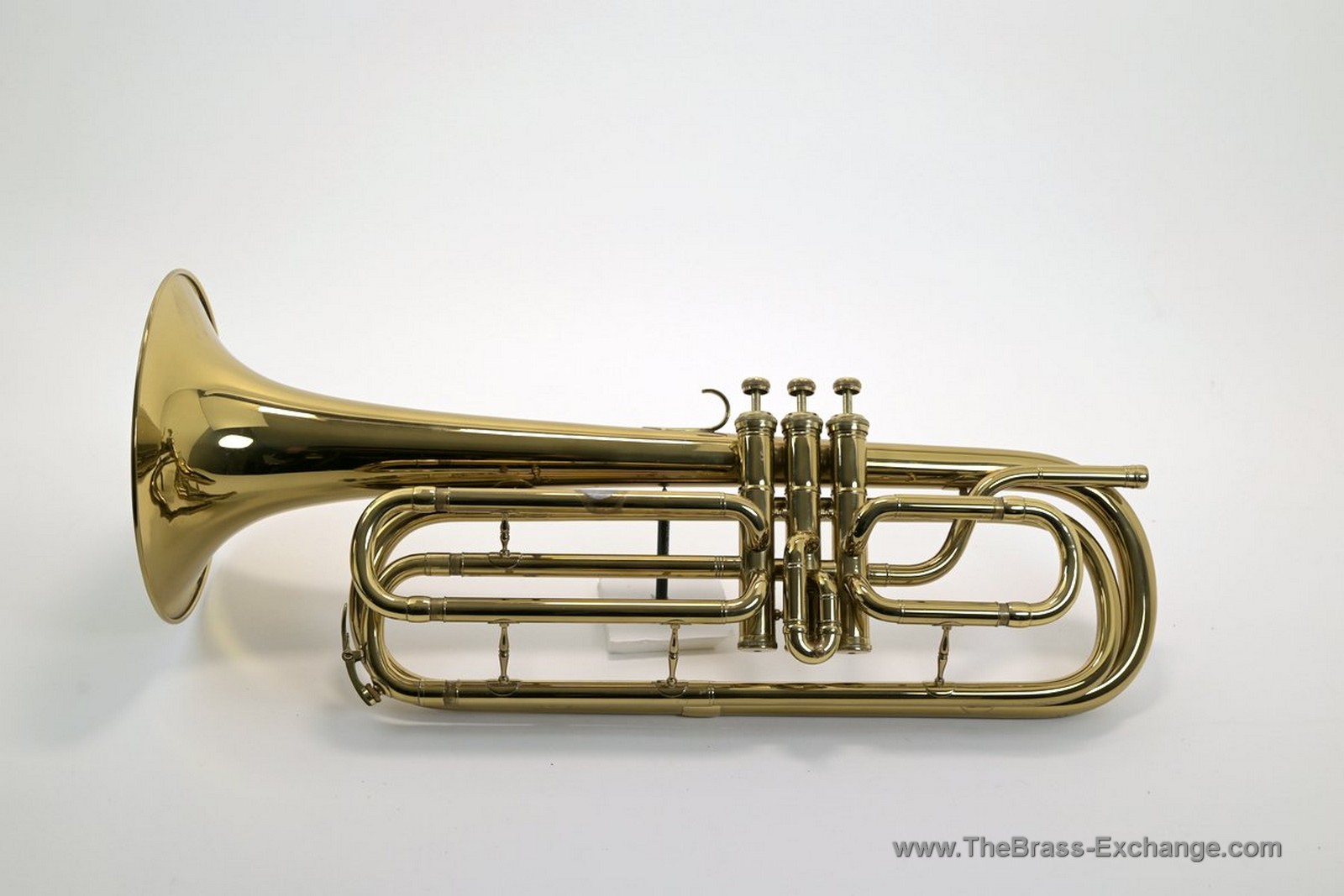
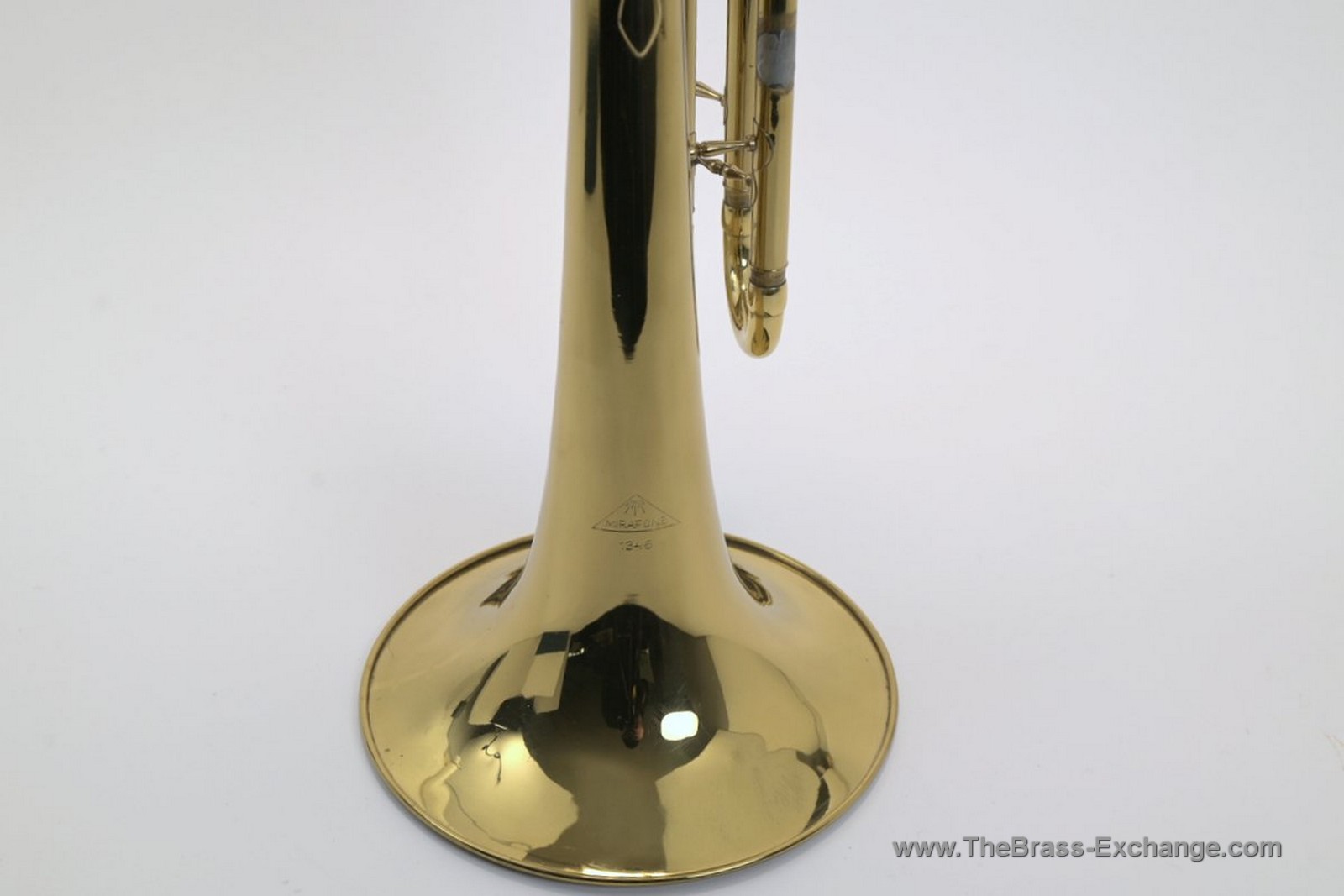
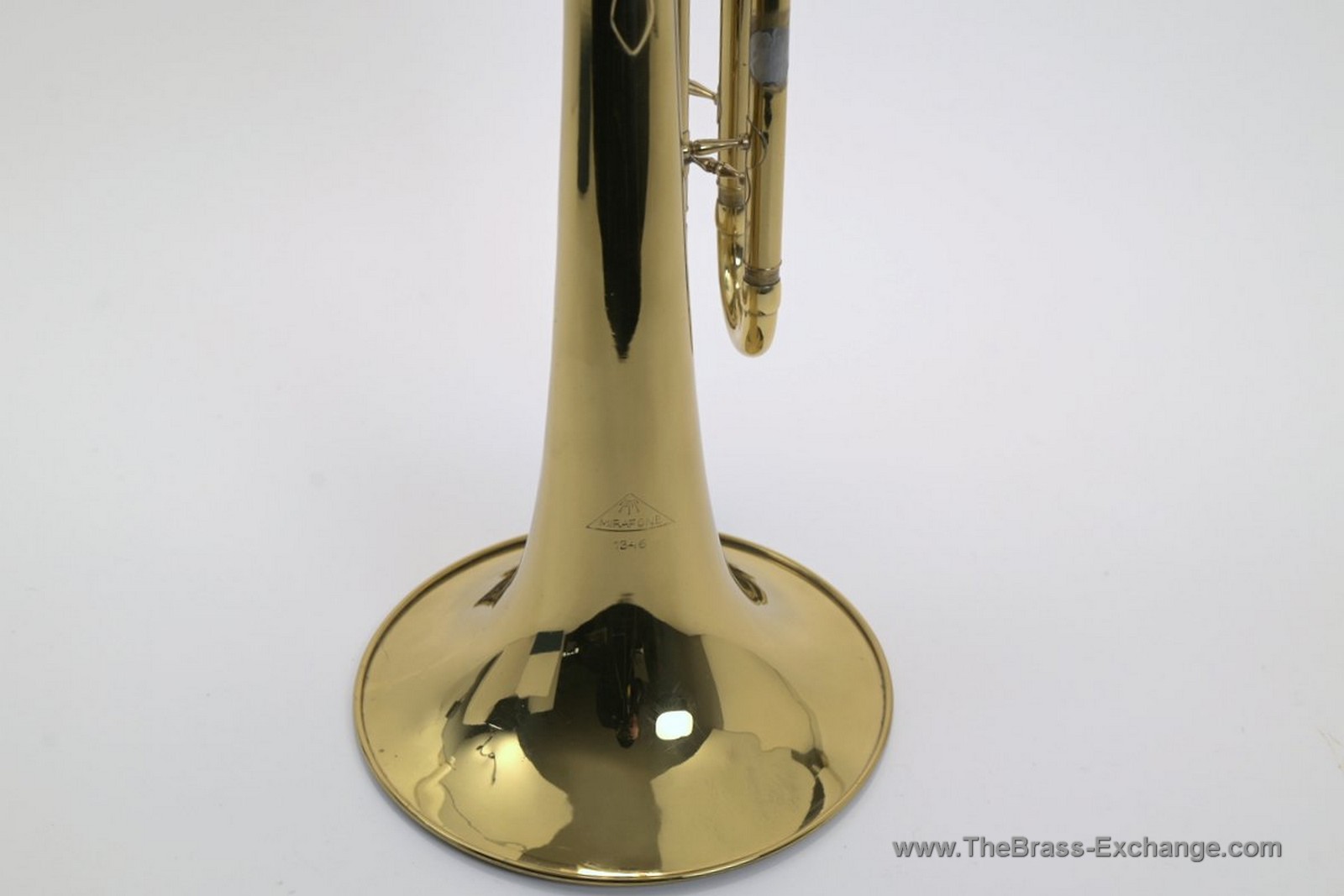
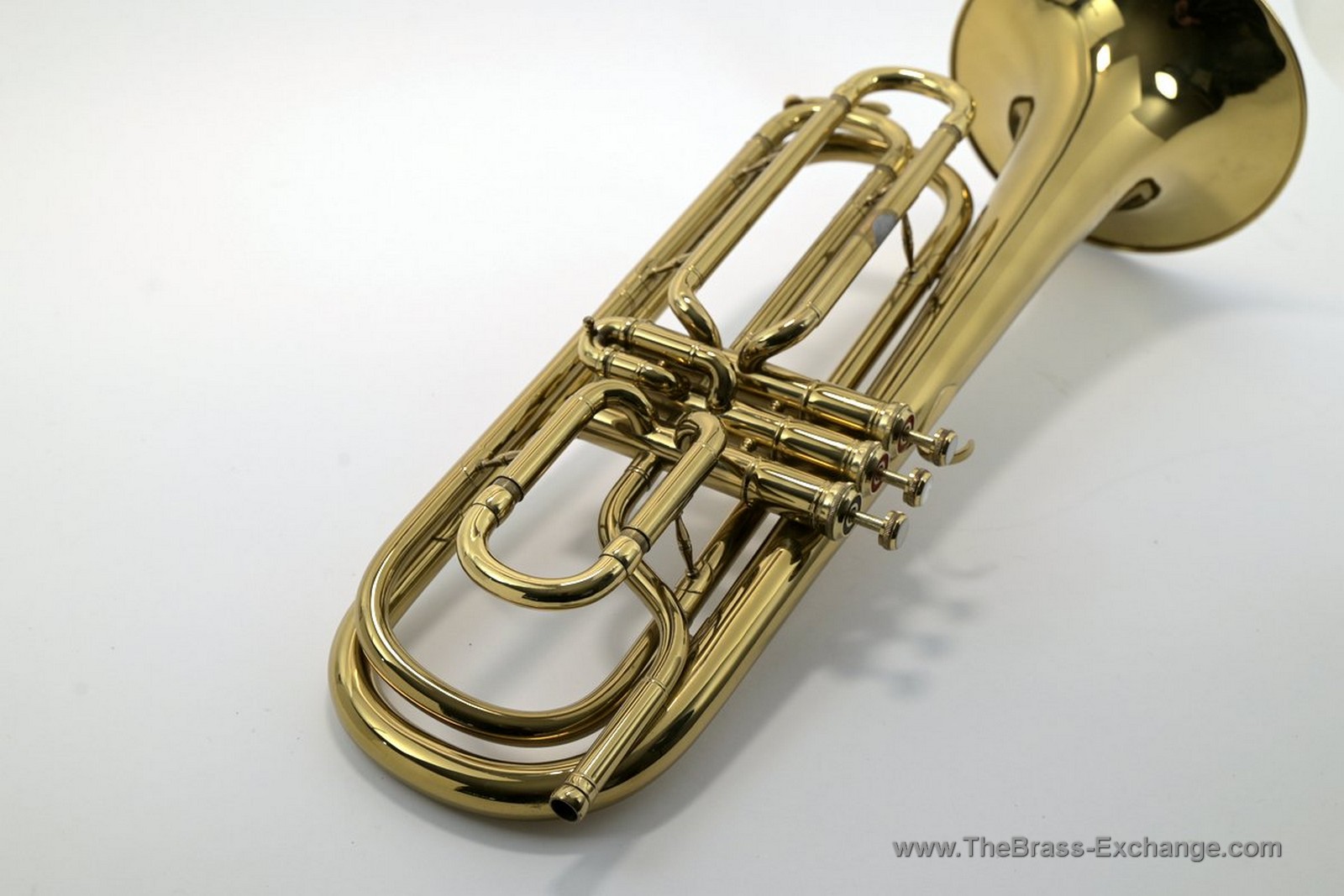
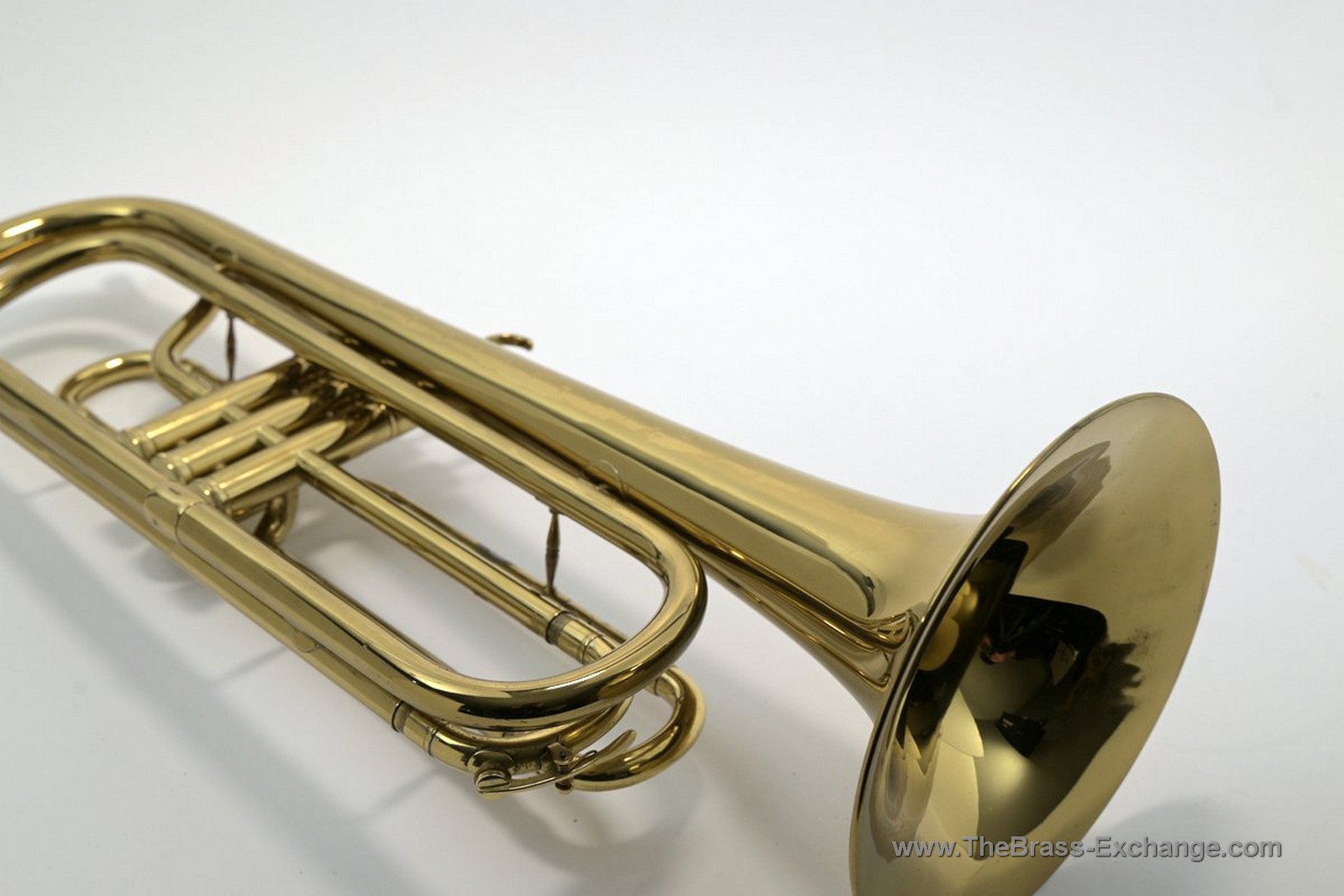
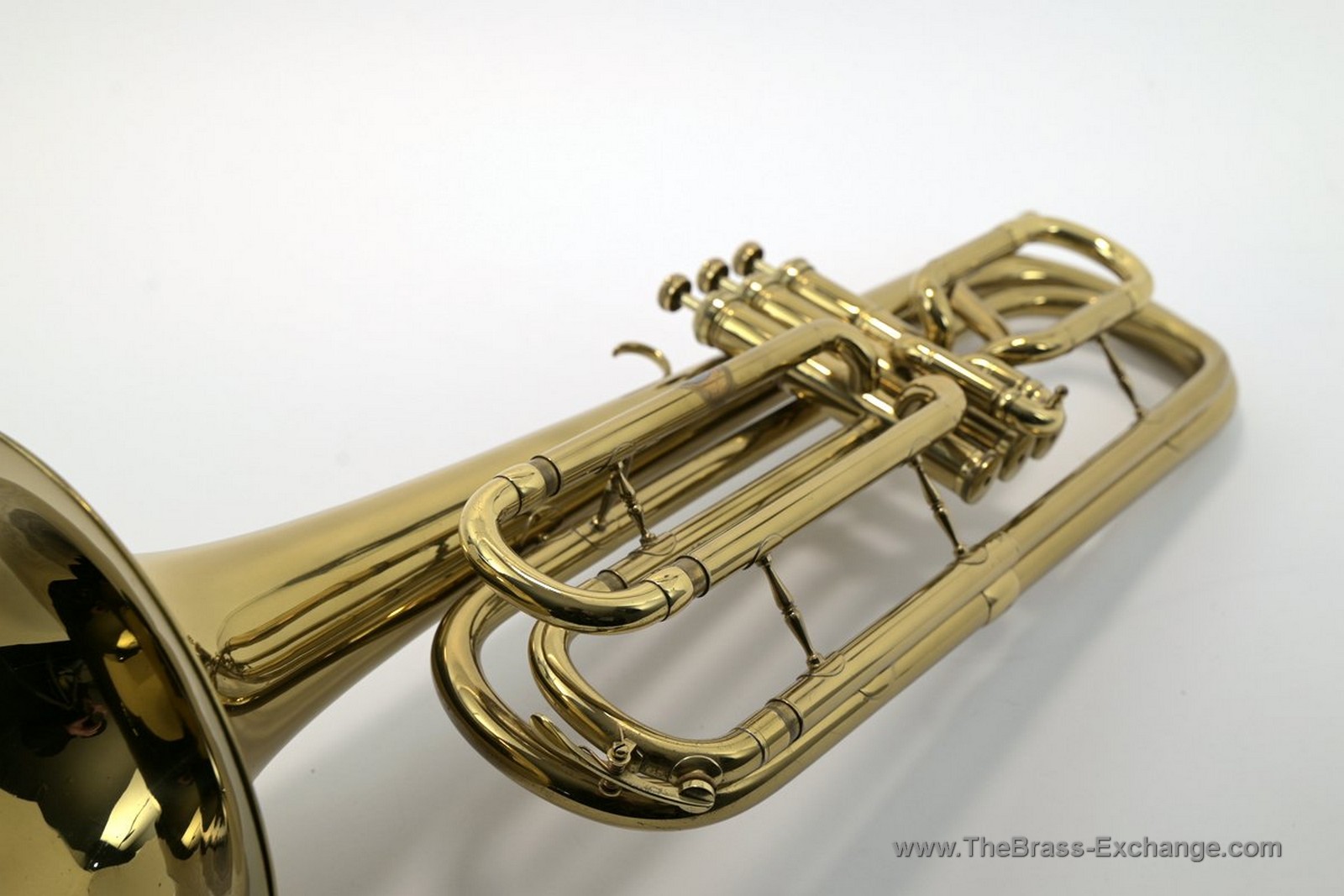
This Mirafone Model 1346 marching valve trombone—commonly referred to as a flugabone—is now part of our Archive of Sold instruments, preserved as a historical reference from a unique period in brass instrument design.
Developed during the late 1960s through the 1970s, instruments like this were designed for American marching bands and drum corps, where a compact valve instrument could replace the traditional slide trombone on the field.
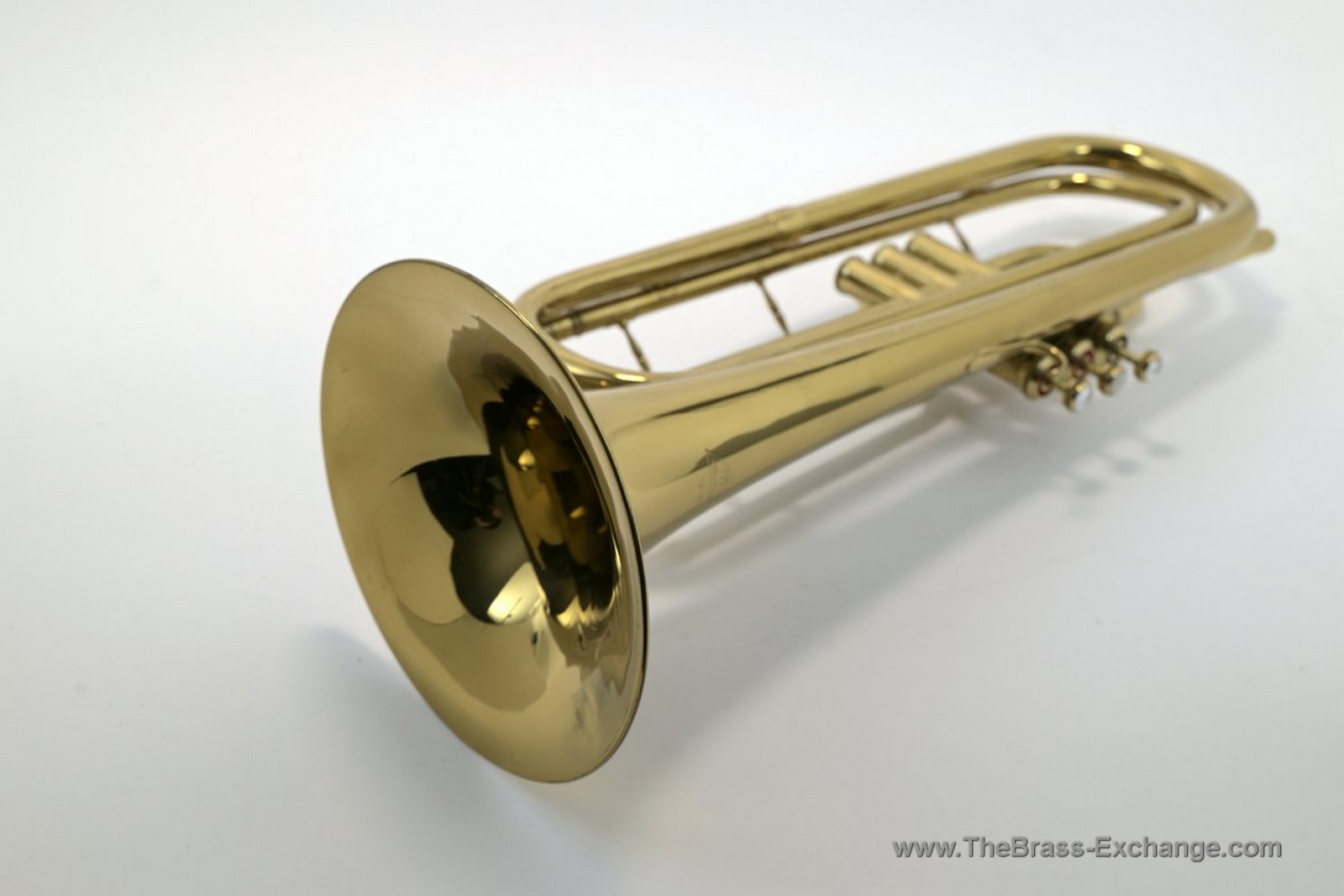
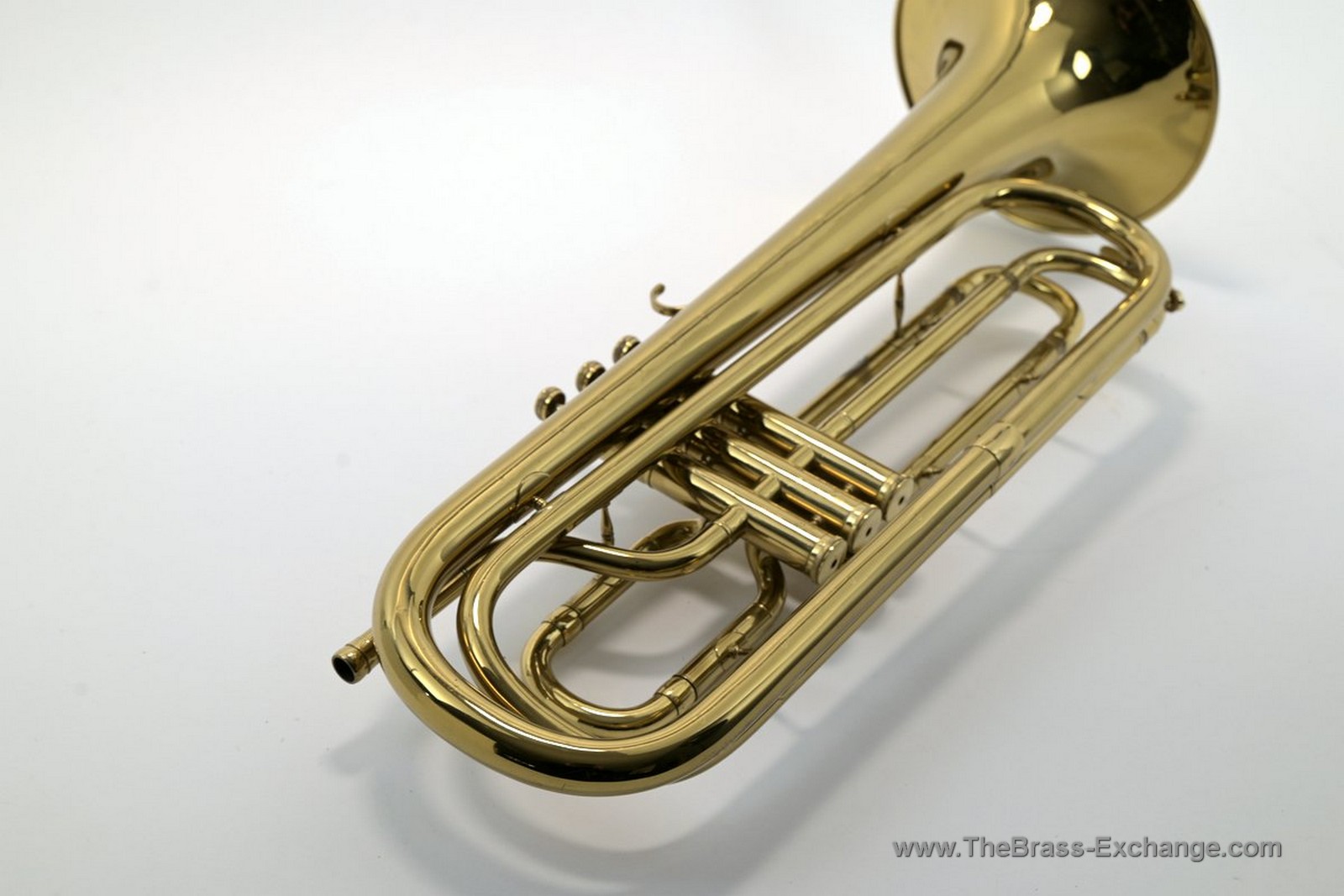
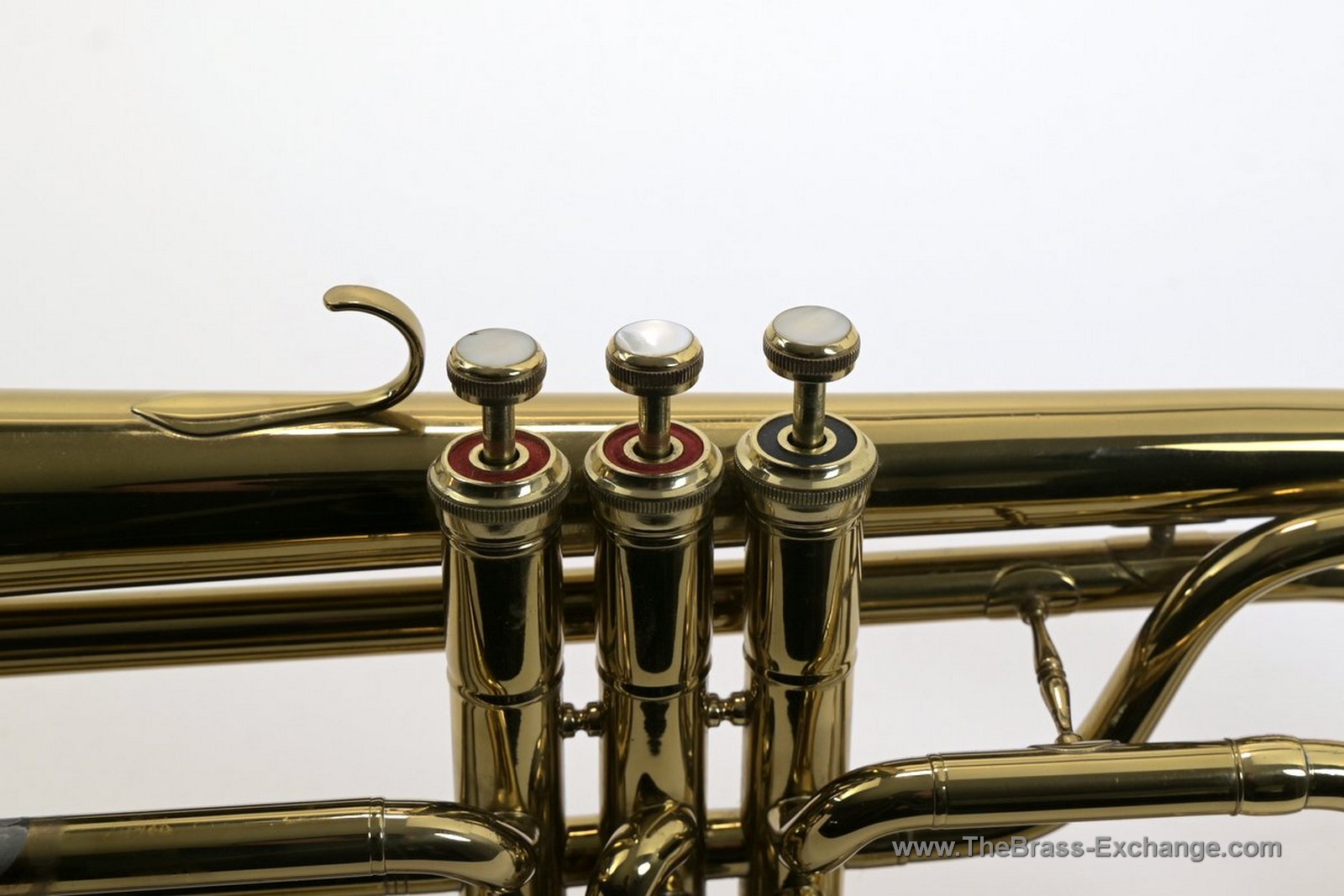
The Mirafone 1346 features:
• Compact trumpet-style wrap
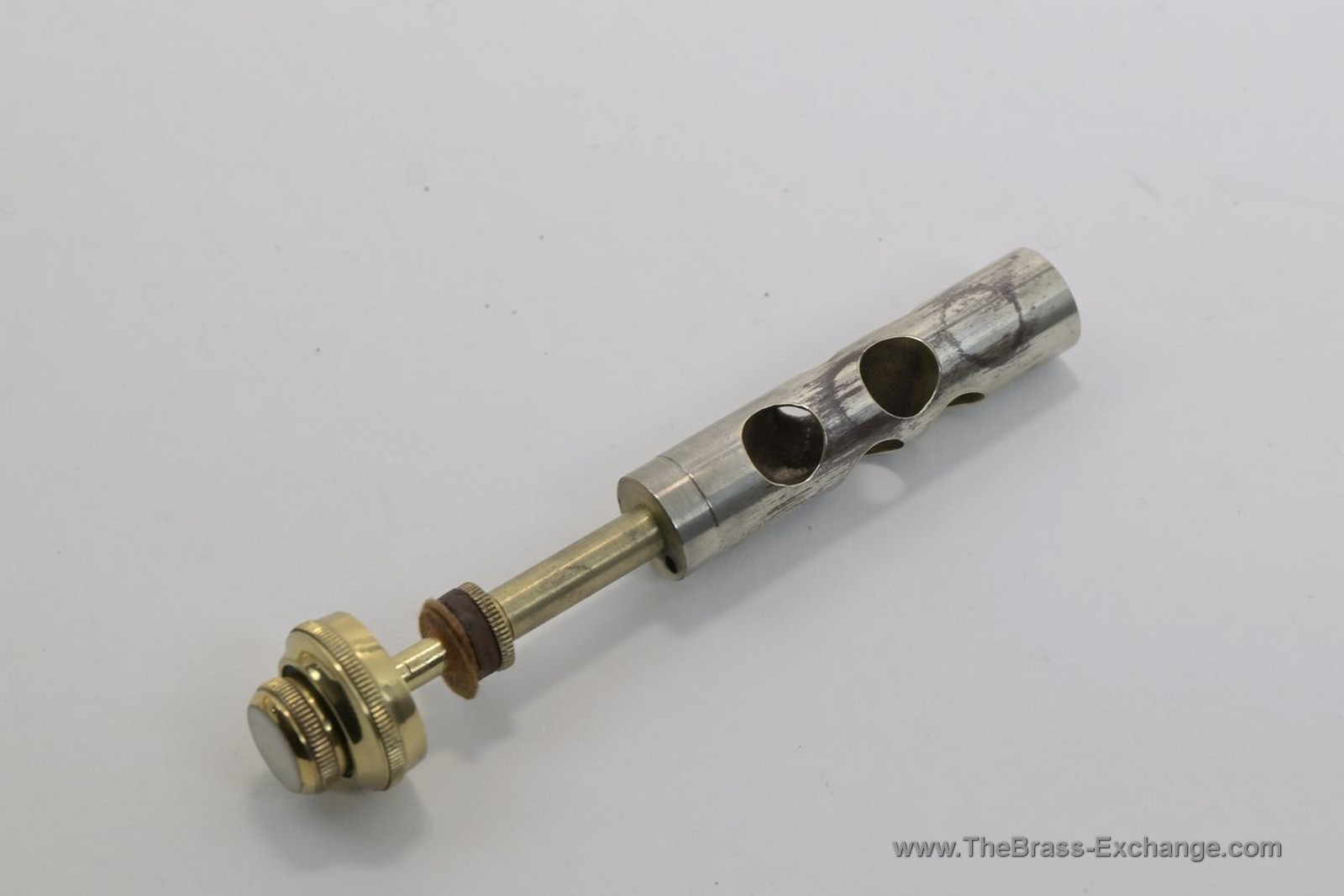
• Three top-action piston valves
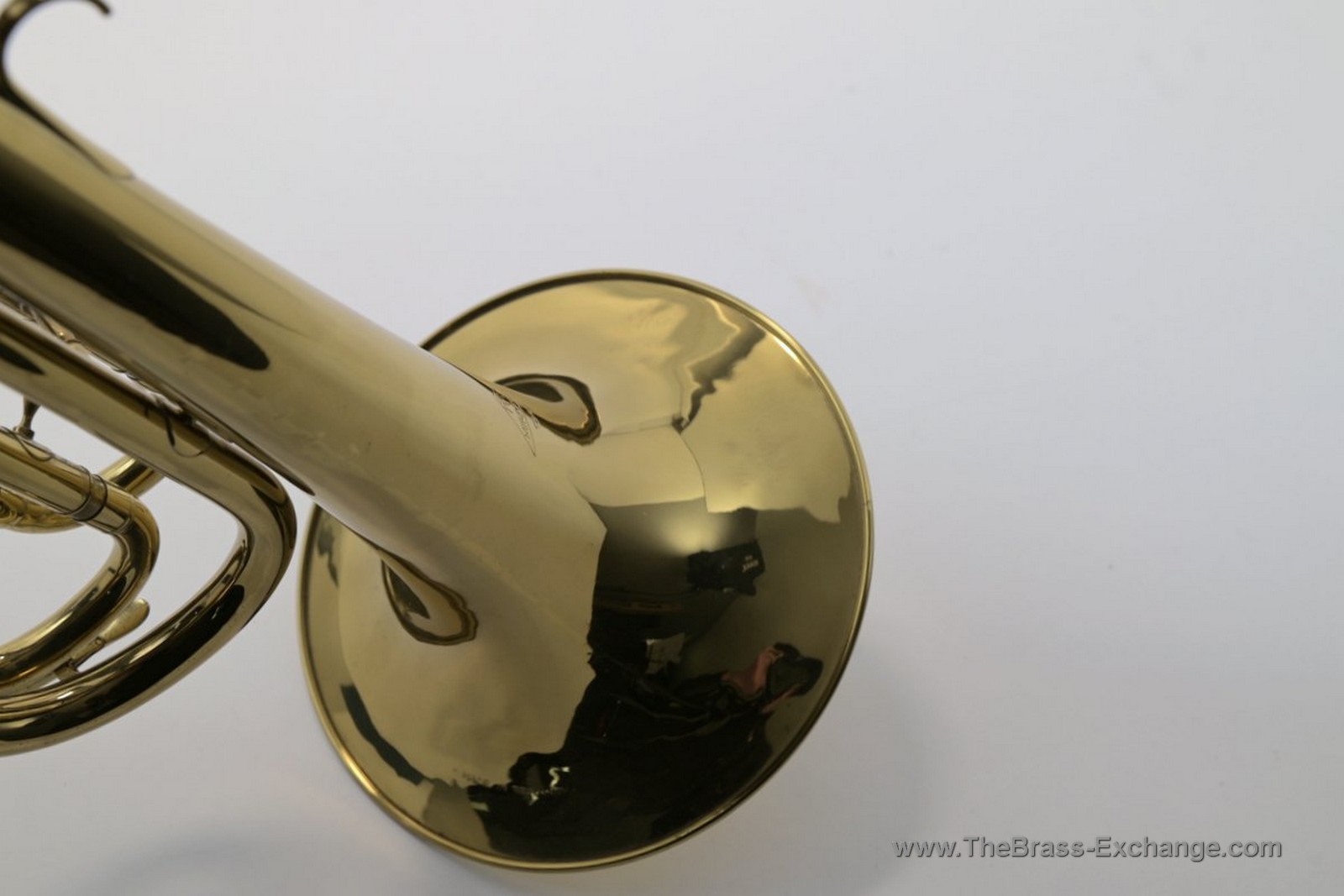
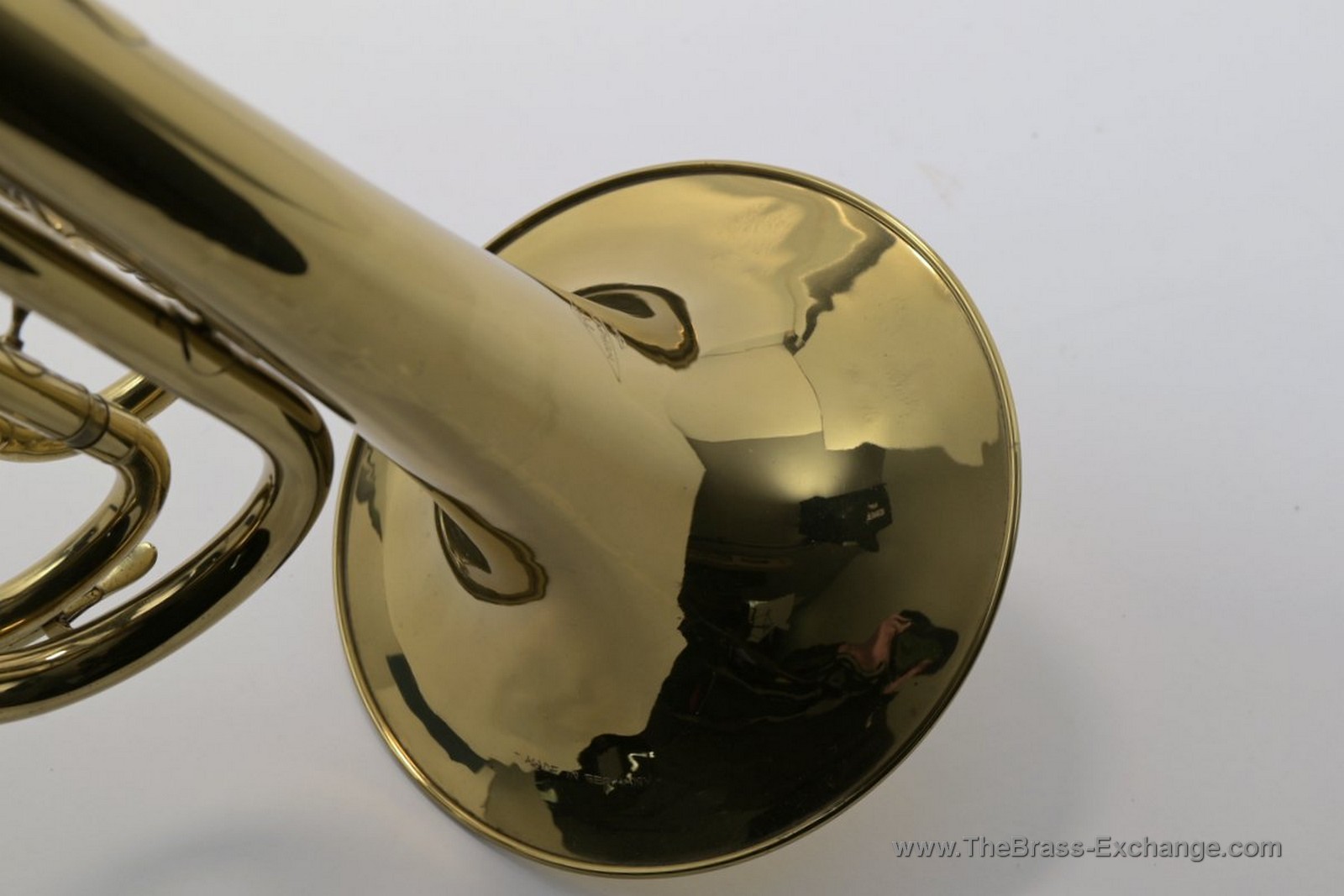
• Large 8.25" yellow brass bell
• Small shank trombone mouthpiece receiver
Compared to many similar instruments of the era, the larger bell produces a broader, more resonant sound that aligns more closely with the trombone family.
Unlike Miraphone’s traditional German rotary instruments, this model reflects a U.S.-market design approach, using piston valves for familiarity and practicality in marching environments.
✦ Player Perspective
From a playing standpoint, the Mirafone 1346 feels immediately natural for trombonists.
The use of a small shank trombone mouthpiece allows players to maintain their normal setup while adapting to valve technique.
Tonally, the instrument sits between:
• valve trombone
• flugabone
• bass trumpet
The larger bell gives the sound a broader and more rounded profile, making it less “pointed” than a typical bass trumpet while still retaining clarity.
Players often find this type of instrument useful for:
• doubling situations
• brass ensemble work
• studio applications
• alternative tonal textures
✦ Historical Perspective
The flugabone concept—essentially a valve trombone wrapped into a compact, forward-facing design—emerged as a practical solution for marching performance.
Mirafone (export branding of Miraphone) produced models like the 1346 to meet this demand, blending:
• piston valve operation
• trombone tonal characteristics
• improved marching ergonomics
These instruments represent a transitional era in brass design, where builders experimented with adapting traditional instruments to new performance environments.
✦ Related Instruments – Bass Trumpet Comparison
Instruments like the Mirafone 1346 are often compared to bass trumpets, particularly models produced by makers such as Getzen, Holton, and Conn.
While similar in appearance, bass trumpets typically produce a more focused and brighter sound, whereas flugabones like this example offer a broader, more trombone-like tonal character.
👉 For comparison, see a similar valve-based low brass design here:
https://www.thebrass-exchange.com/content/getzen-bass-trumpet
✦ Condition & Service
At the time of sale, this instrument was in good overall playing condition:
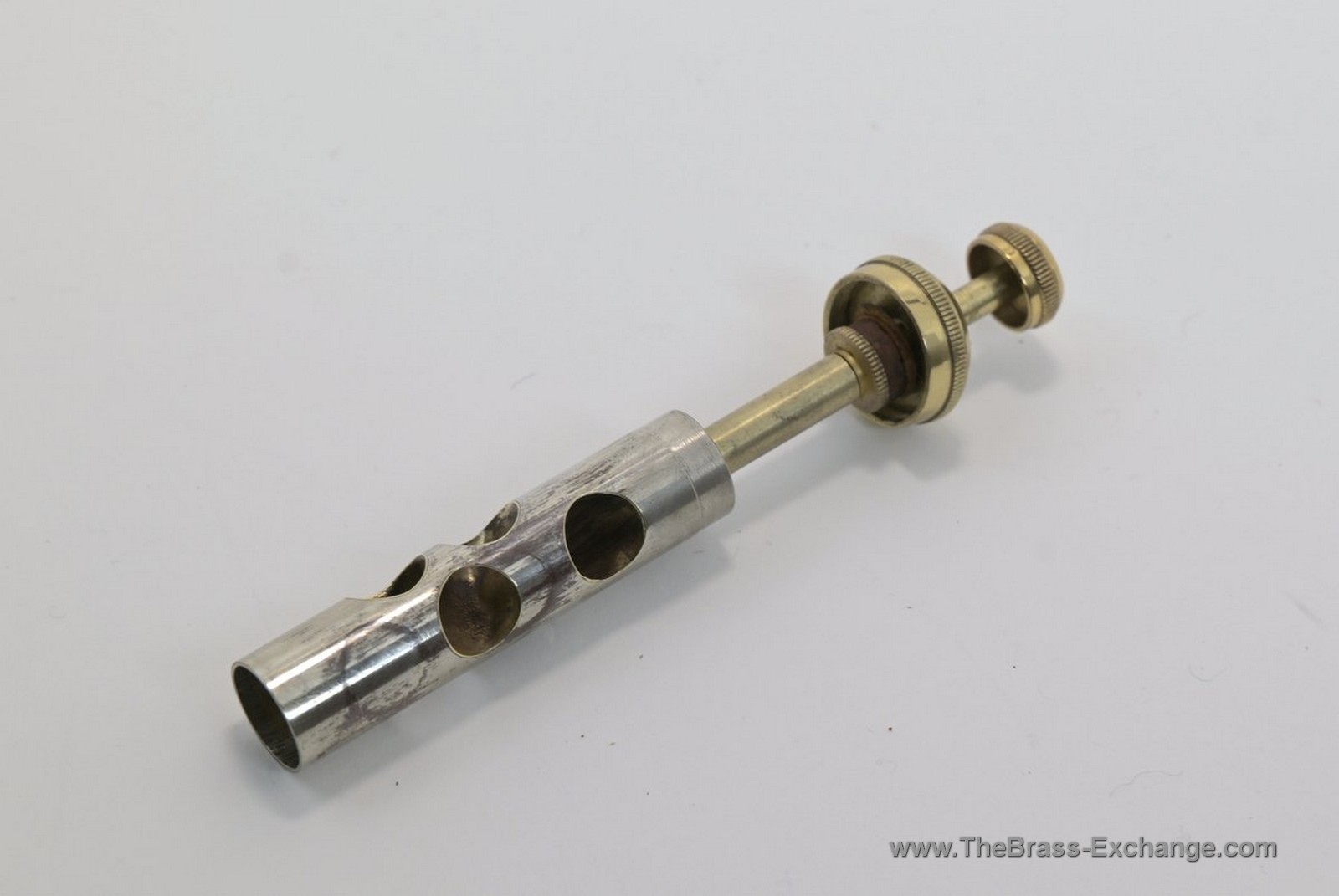
• Valves functional and responsive
• No major dents or structural damage
• Minor cosmetic wear consistent with age
• Light bell flare imperfections from normal use
• Small solder mark present (non-structural)
The instrument had not recently undergone a full chemical cleaning but remained a solid, playable example.
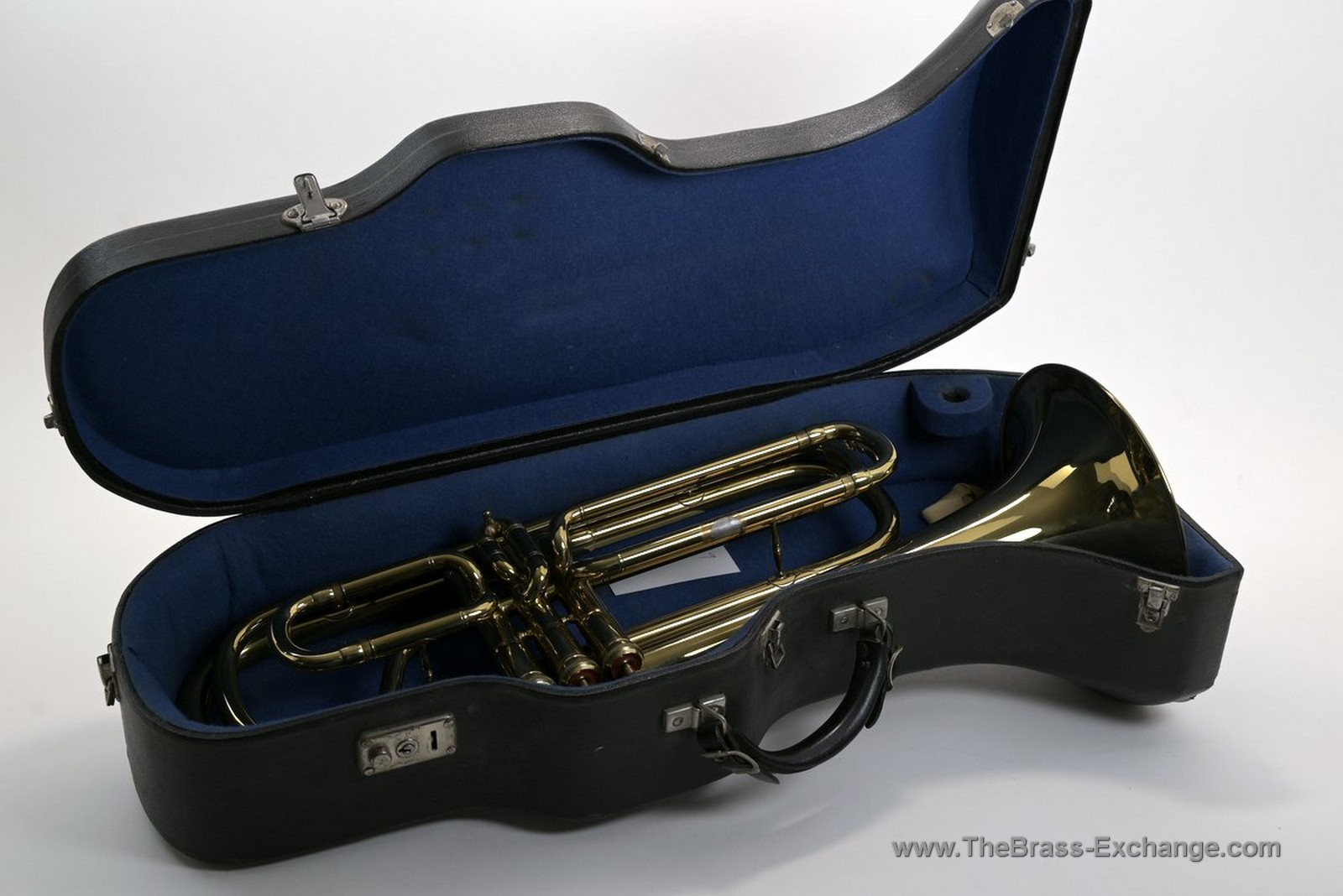
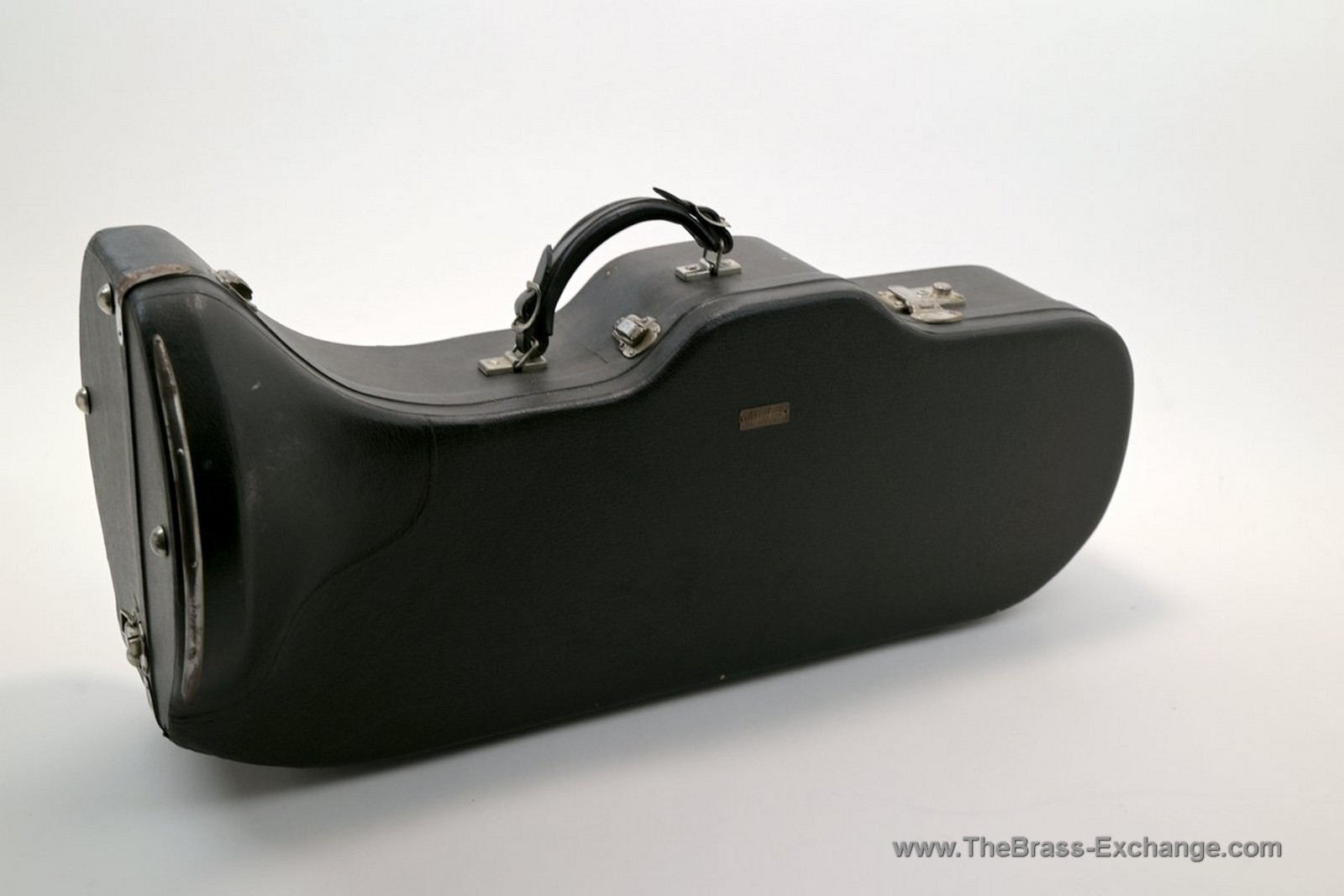
The original fitted hard case was included.
Questions Players Often Ask
What is a flugabone or marching valve trombone?
A flugabone is a compact valve instrument designed to replace the slide trombone in marching settings. It uses piston valves while maintaining a trombone-like tonal concept.
Is this the same as a bass trumpet?
No. While visually similar, bass trumpets tend to have a more focused and brighter sound. Flugabones use a trombone mouthpiece and produce a broader tonal profile.
What mouthpiece does the Mirafone 1346 use?
It uses a small shank trombone mouthpiece, making it easy for trombonists to adapt.
Additional Questions Players Often Ask
What is a Mirafone 1346 flugabone worth?
Because these instruments are relatively rare and were produced in limited numbers, value can vary widely depending on condition, originality, and playability. Clean, functional examples typically fall into a niche collector and player market rather than a standardized price range.
Who would use a flugabone today?
Today, flugabones are most often used by players interested in doubling, studio work, or unique tonal colors. They are also collected as examples of mid-20th-century brass instrument design.
Why were flugabones developed?
They were designed primarily for marching applications, where slide trombones were less practical. The valve system allowed for easier handling while maintaining a trombone-like sound concept.
🔧 Availability & Archive Status
This instrument has been sold and is now part of our Archive of Sold collection.
These pages are maintained as a historical and educational resource, particularly for rare and less-documented brass instruments.
📌 Archive Reference & Next Steps
The Mirafone 1346 flugabone represents a fascinating intersection of marching design and trombone tonal concept.
If you are researching similar instruments—or considering selling one—we’re always happy to help.
👉 Browse current brass instrument inventory 📌
https://thebrass-exchange.com/trombones
🔄 Considering a trade-in?
✍️ Contact us for a valuation and explore your options
🏅 Why Players Trust The Brass Exchange
Since 2010, The Brass Exchange has specialized in professional and rare brass instruments, with thousands of instruments evaluated and documented.
Our Archive of Sold continues to grow as a living reference library, helping players and collectors better understand both common and uncommon instruments.