


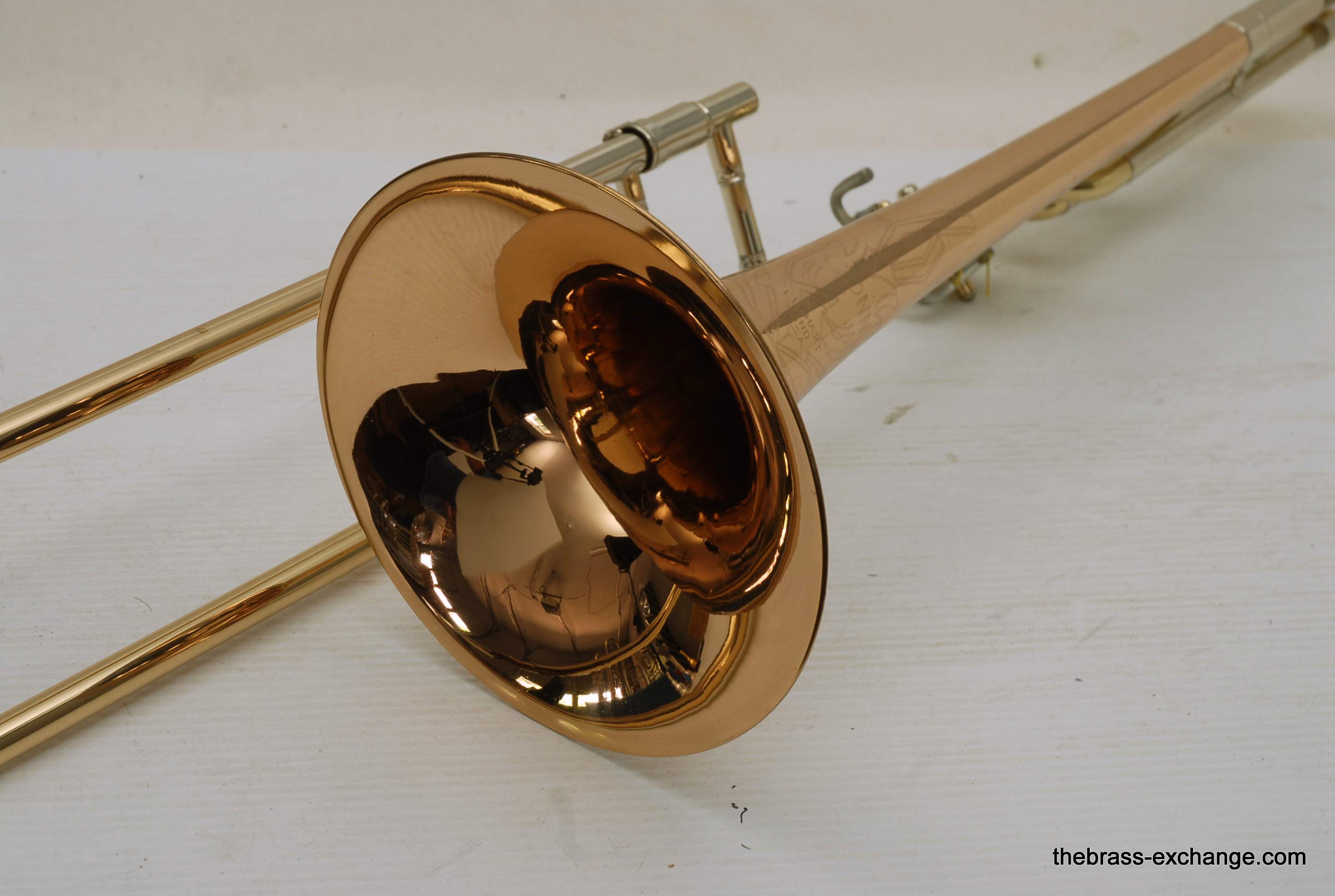
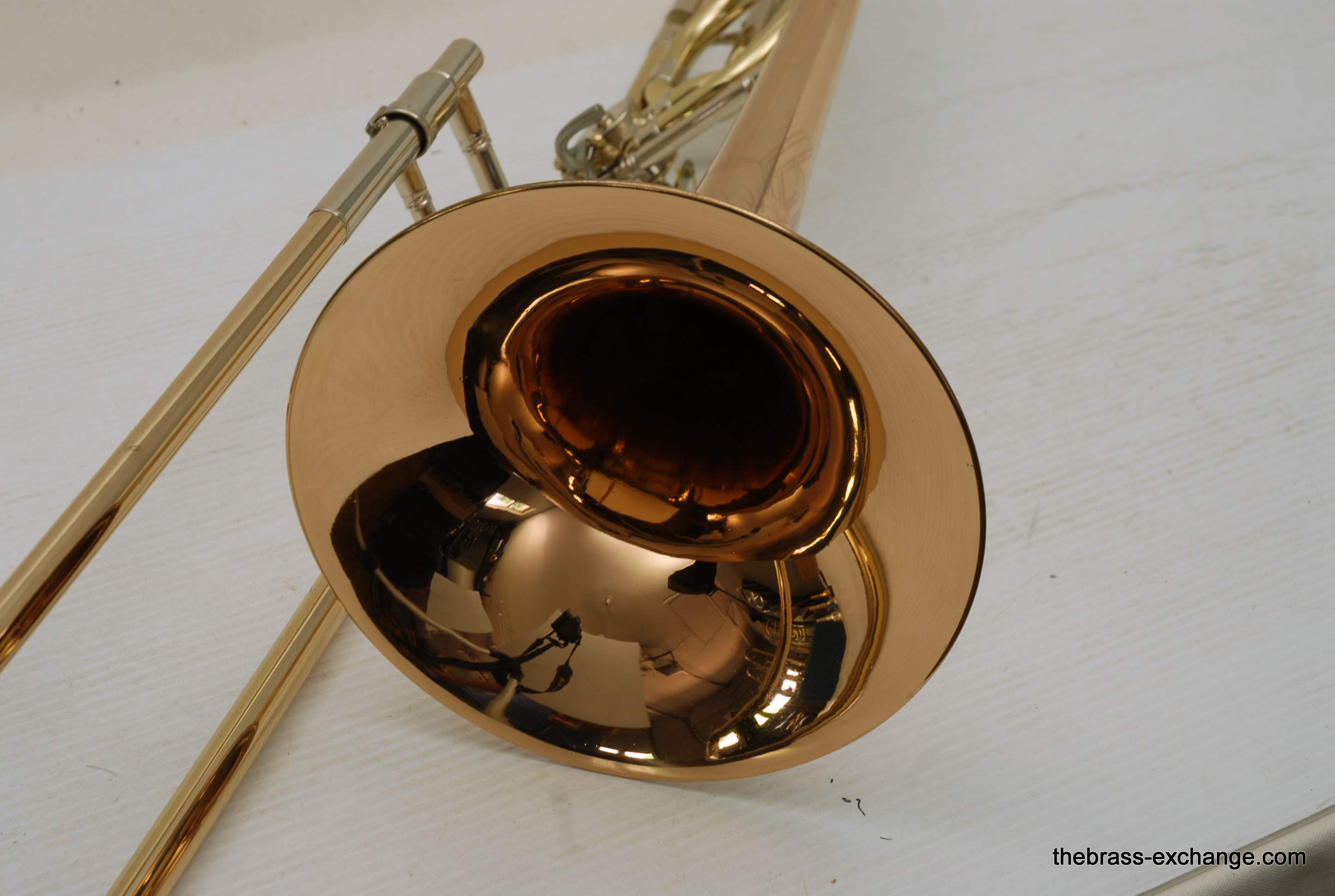
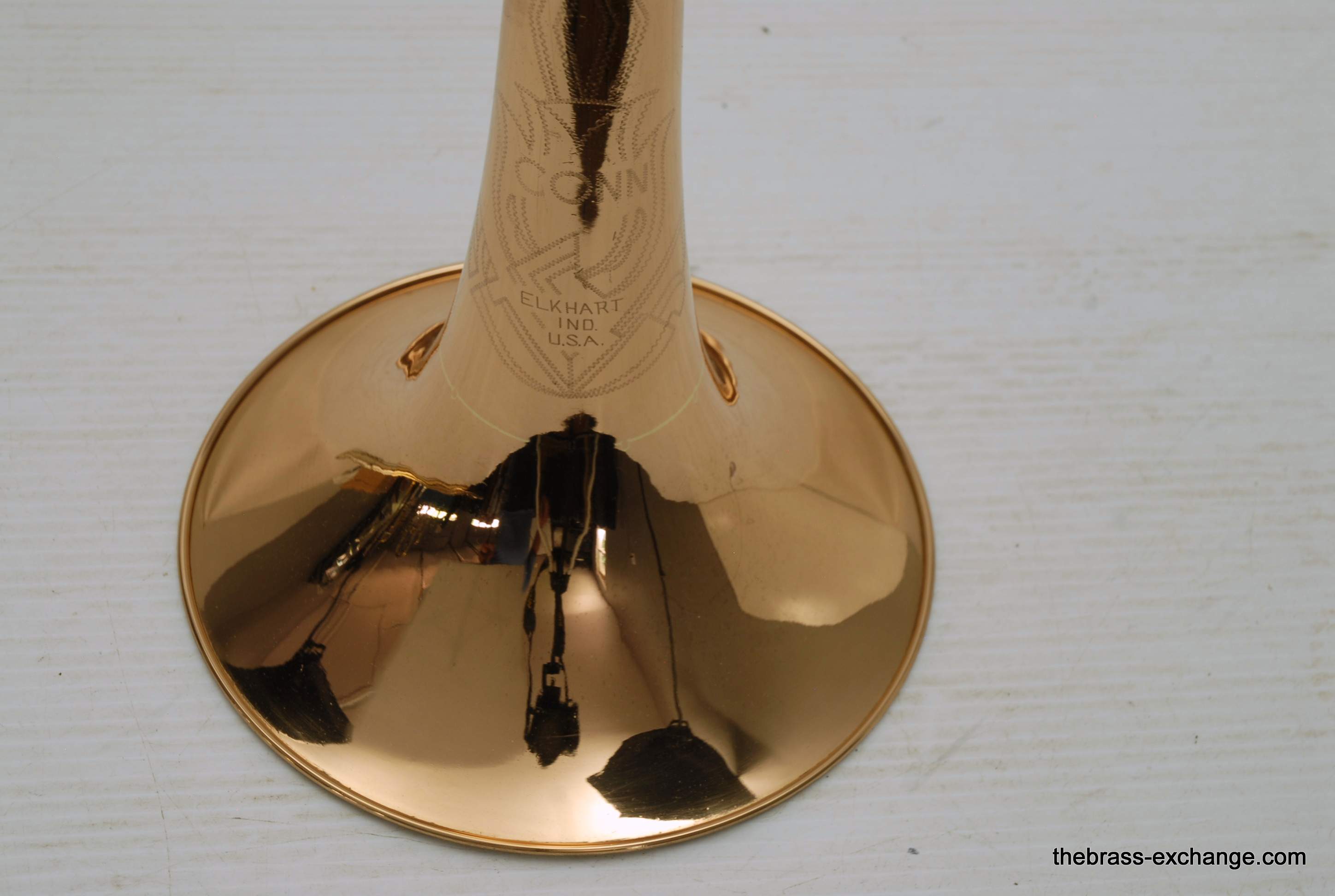
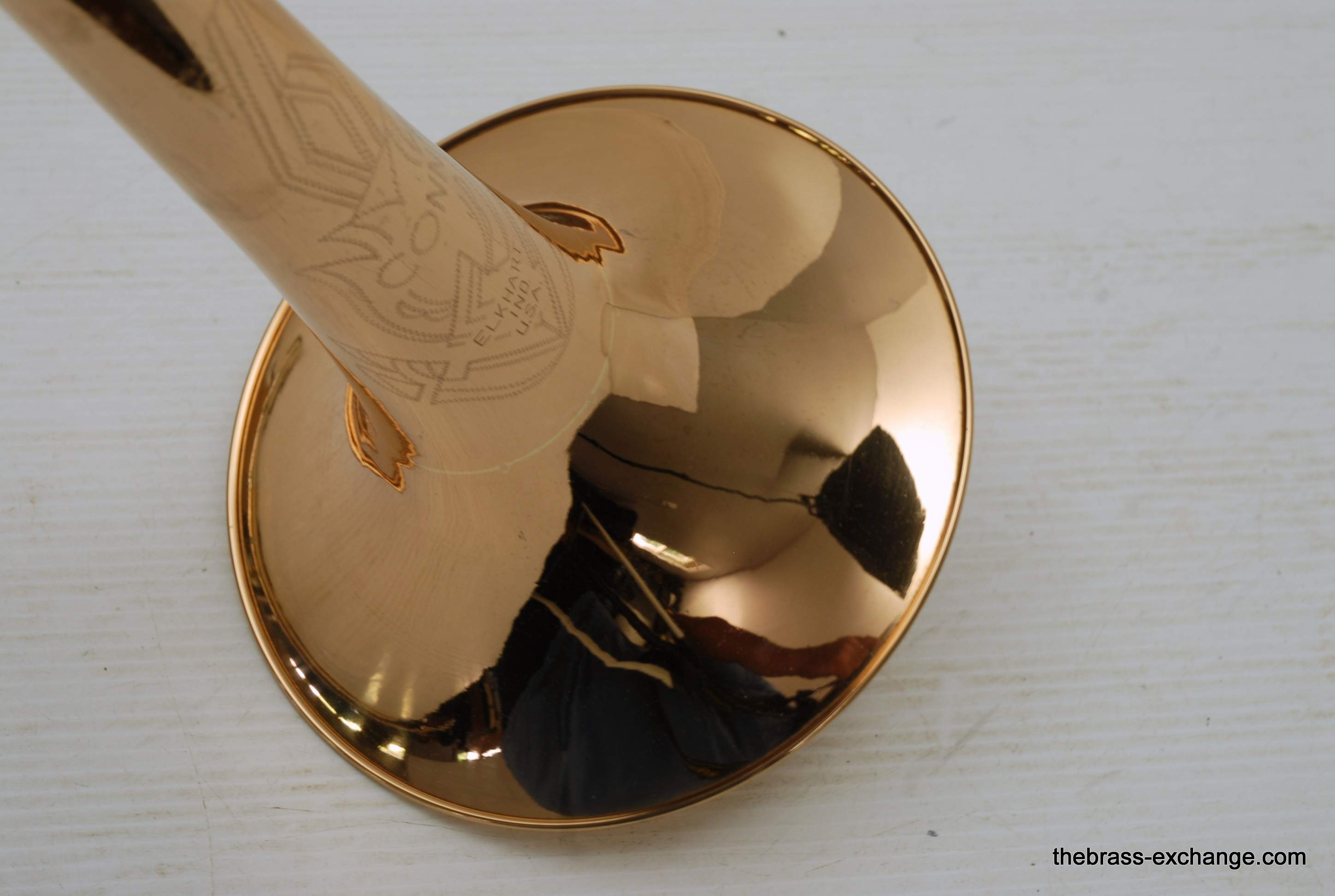
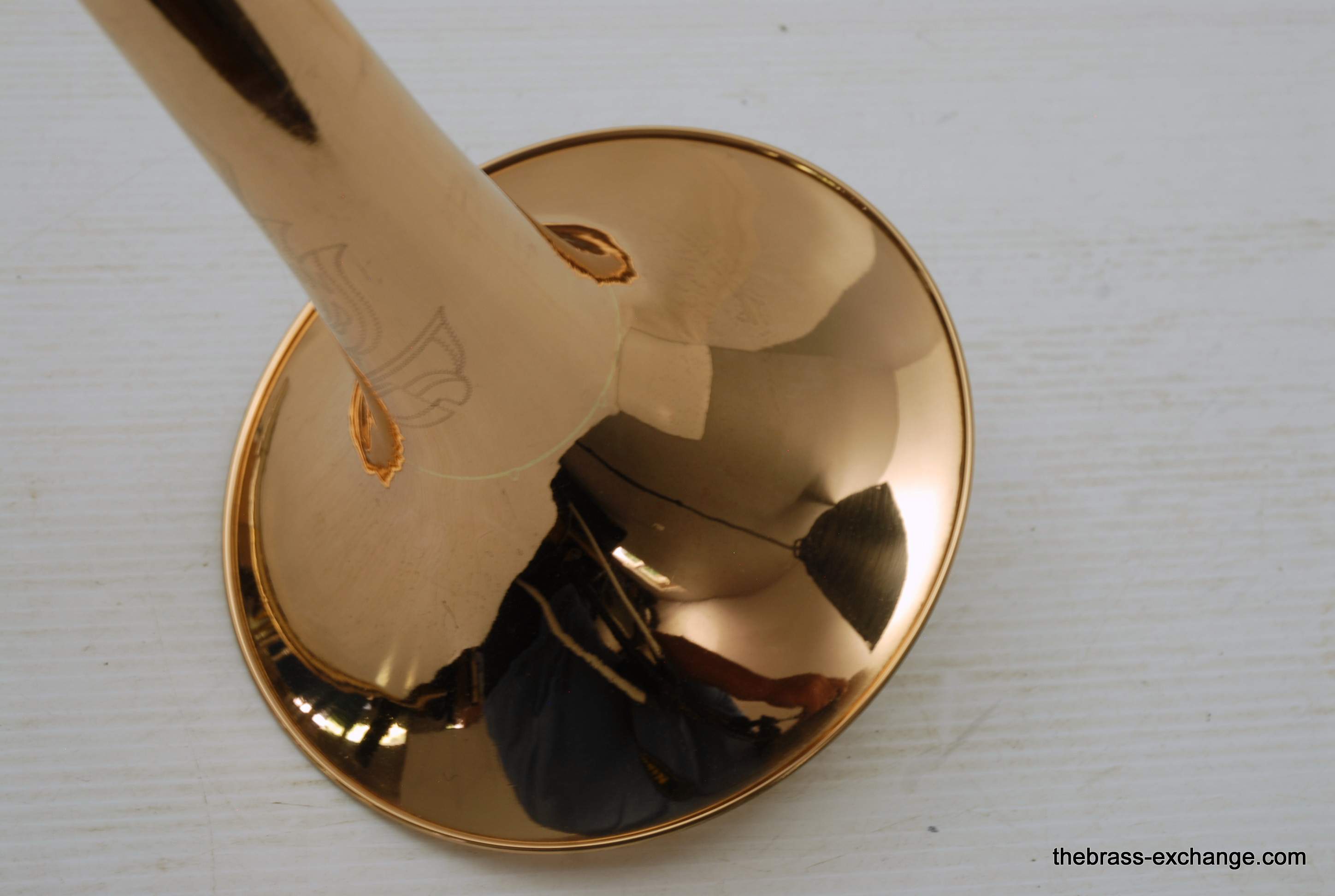
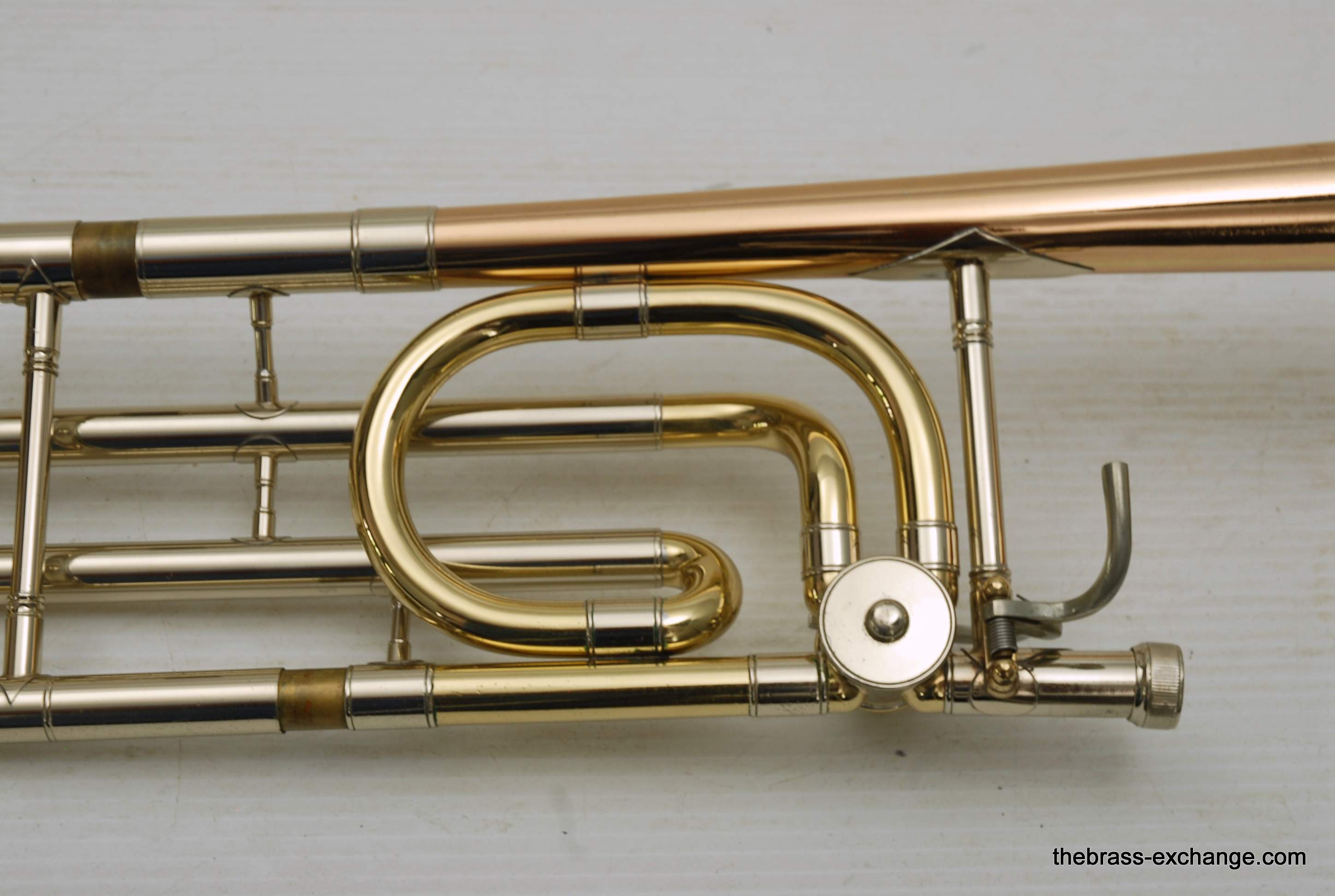
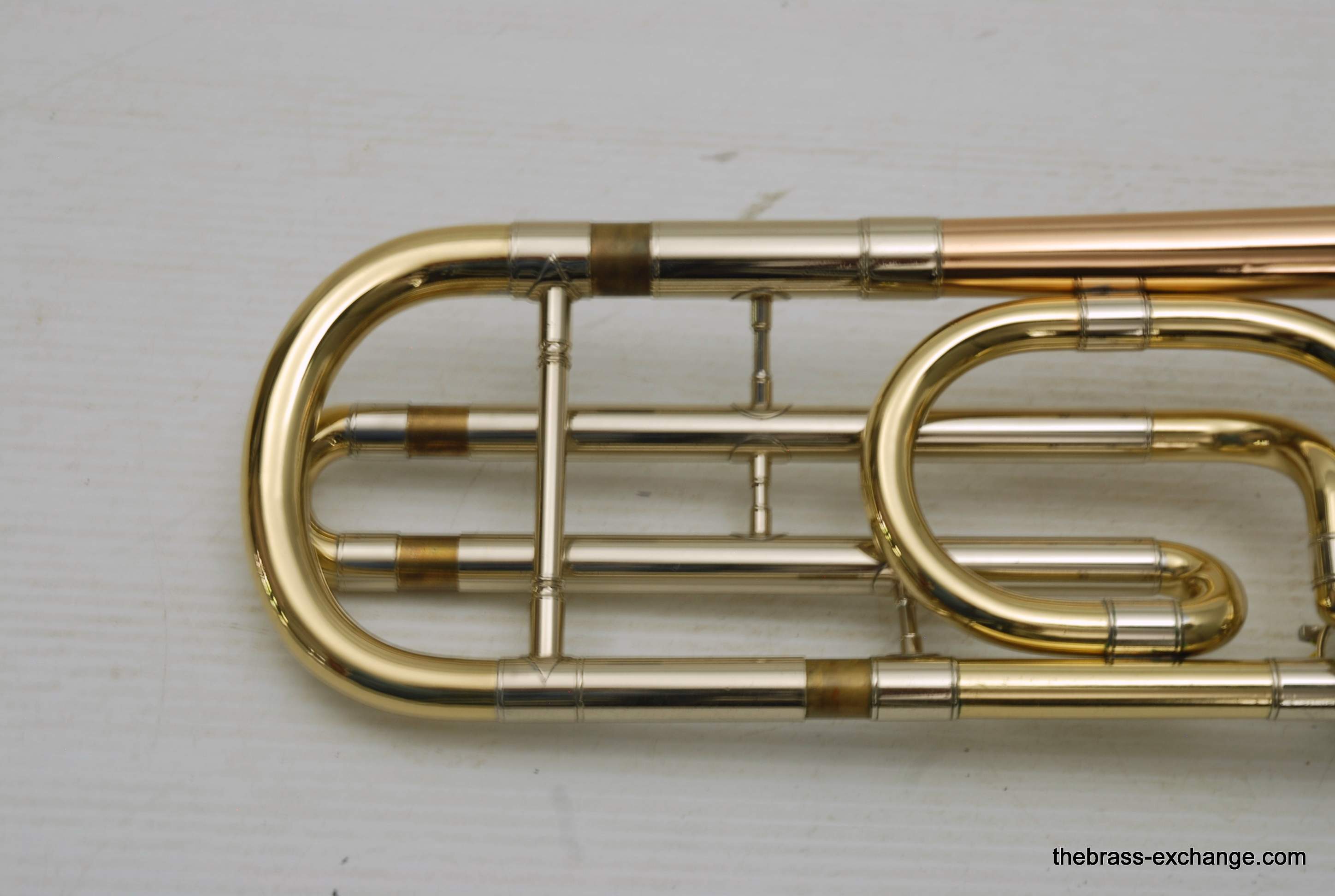
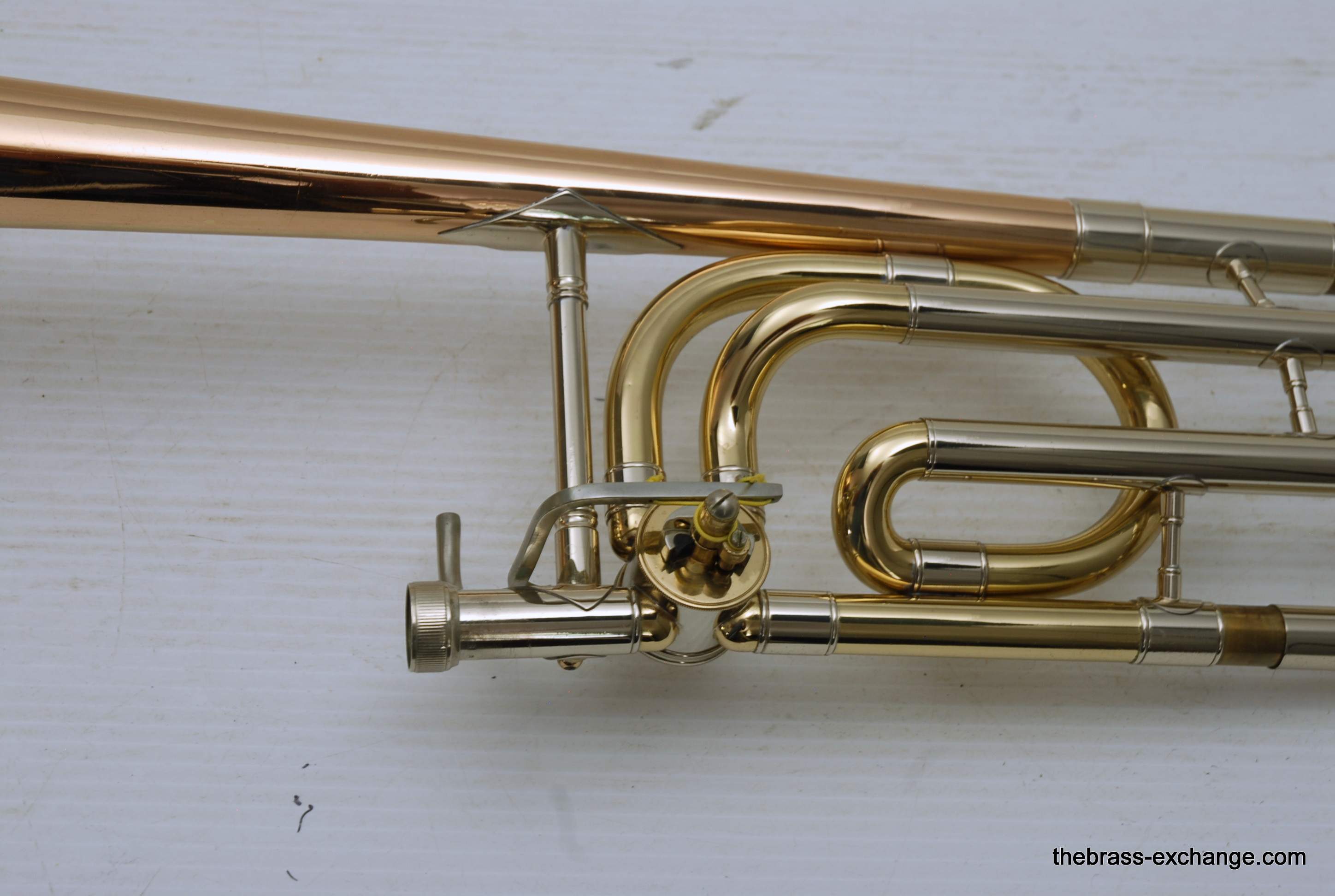
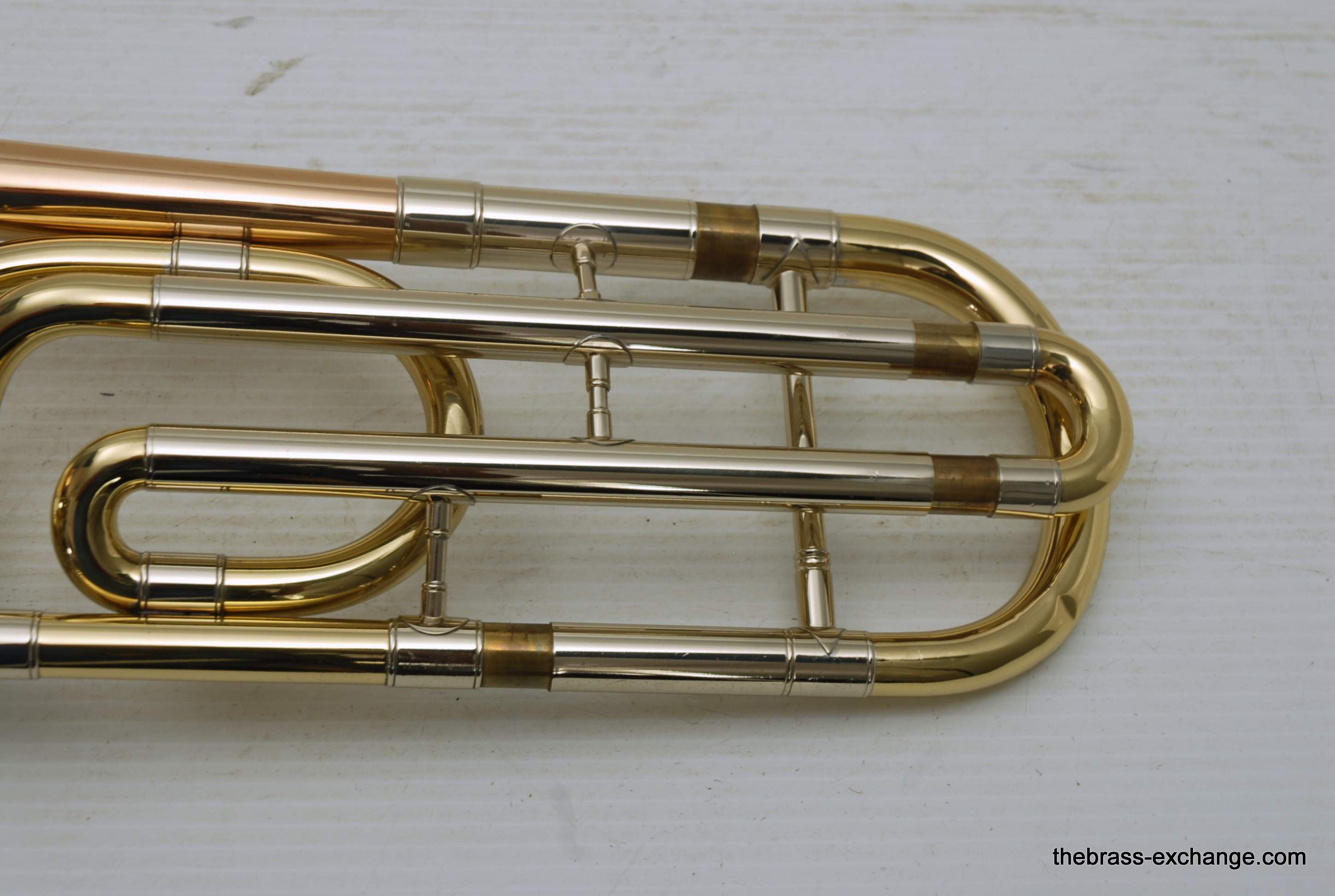
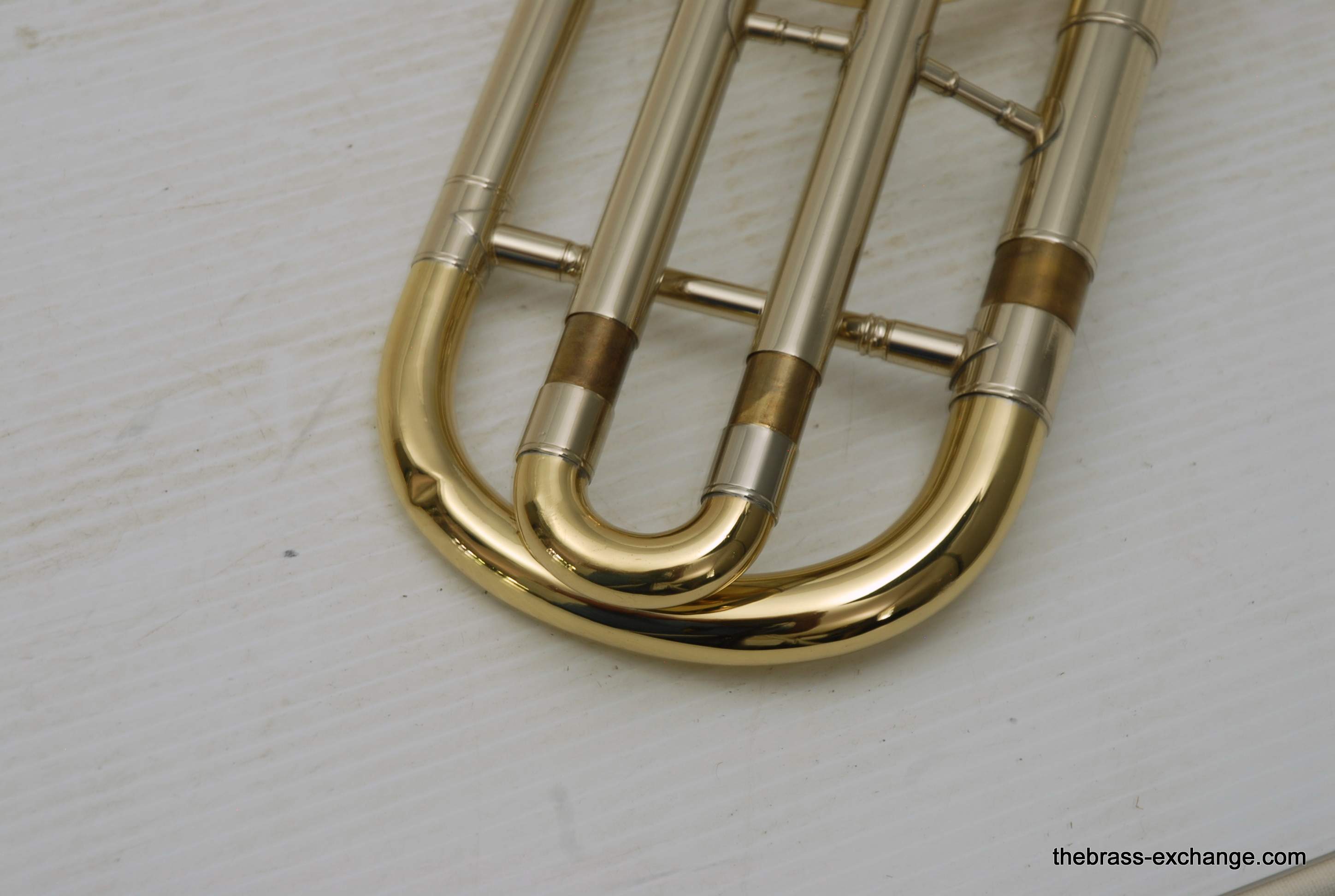
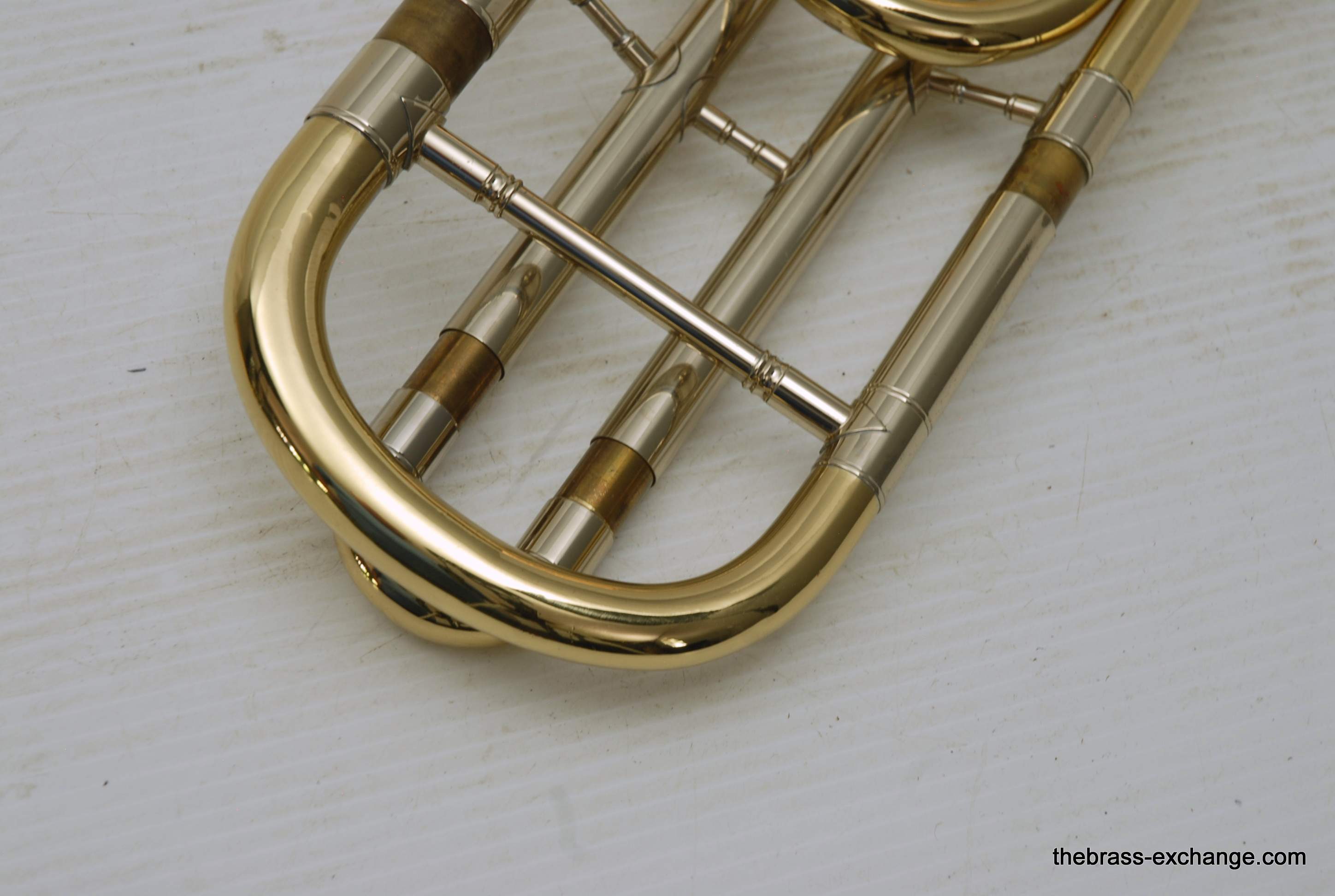
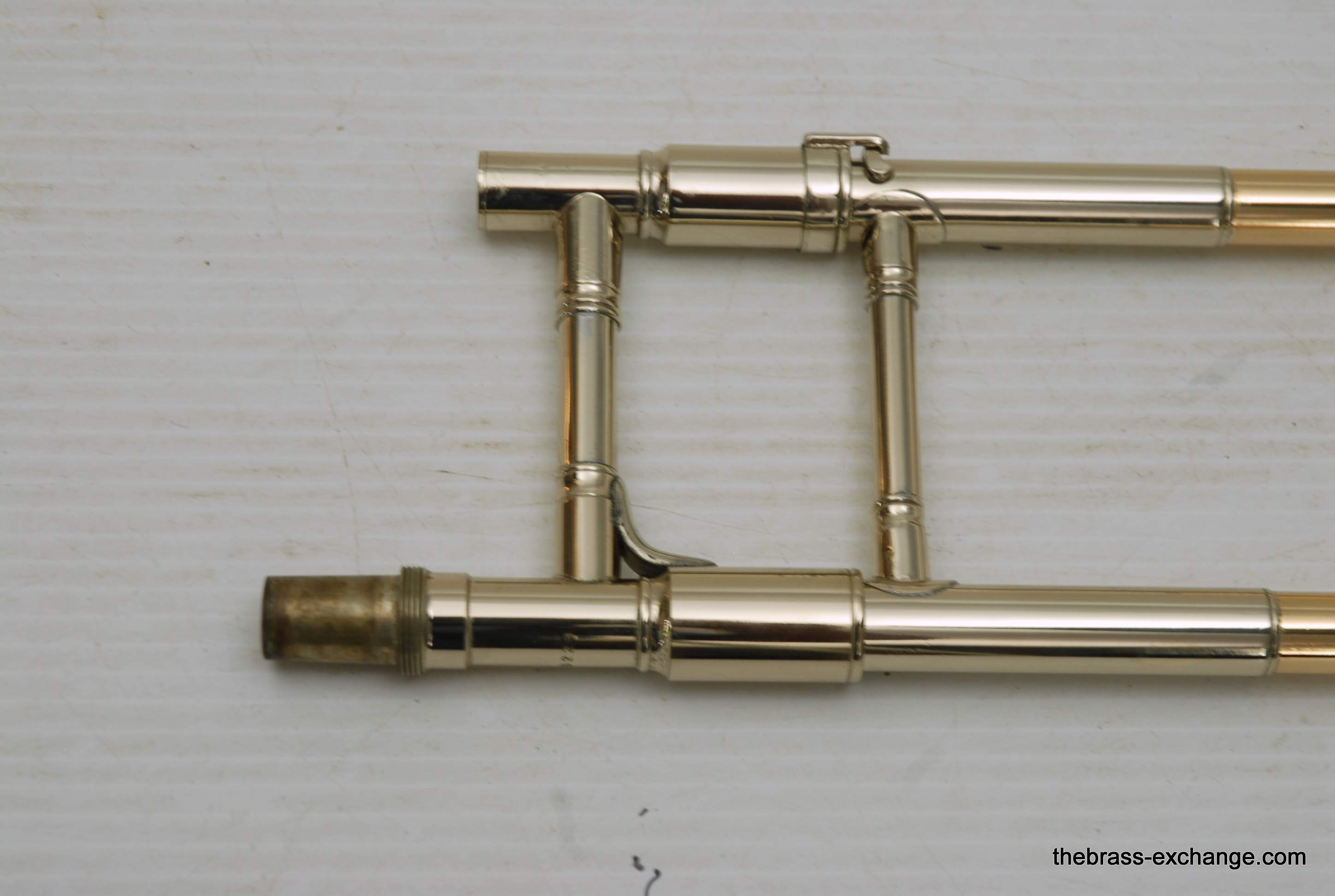
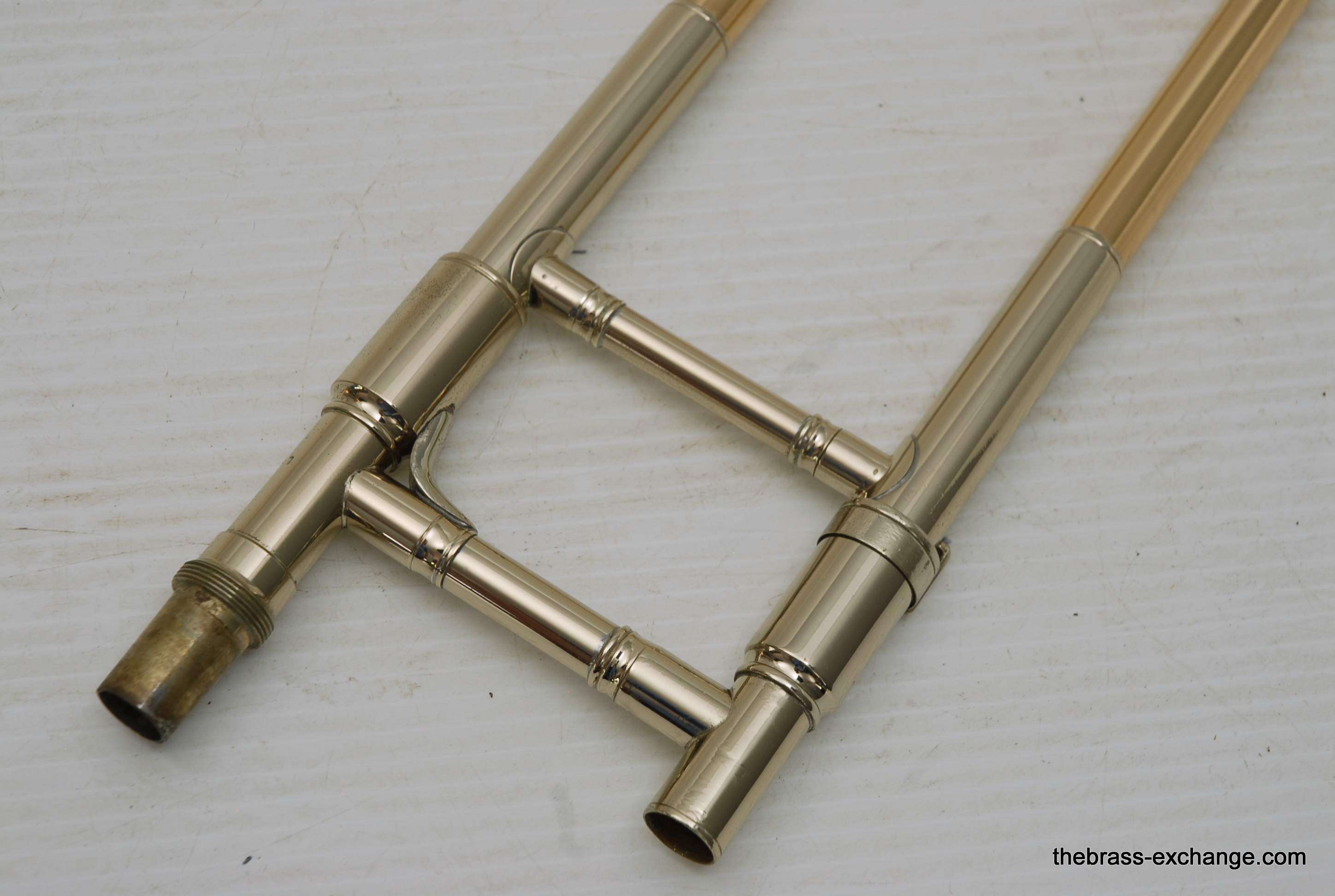
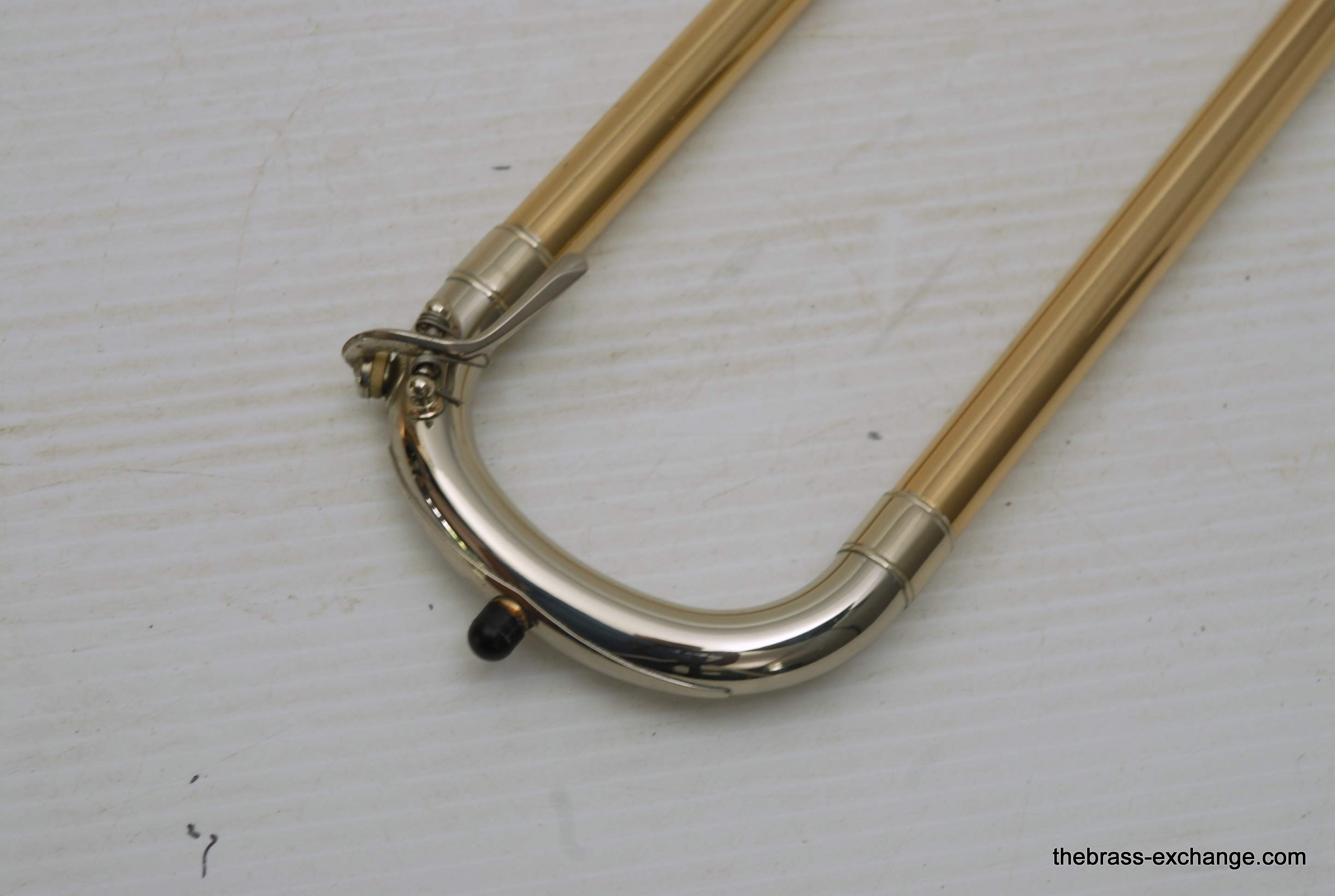
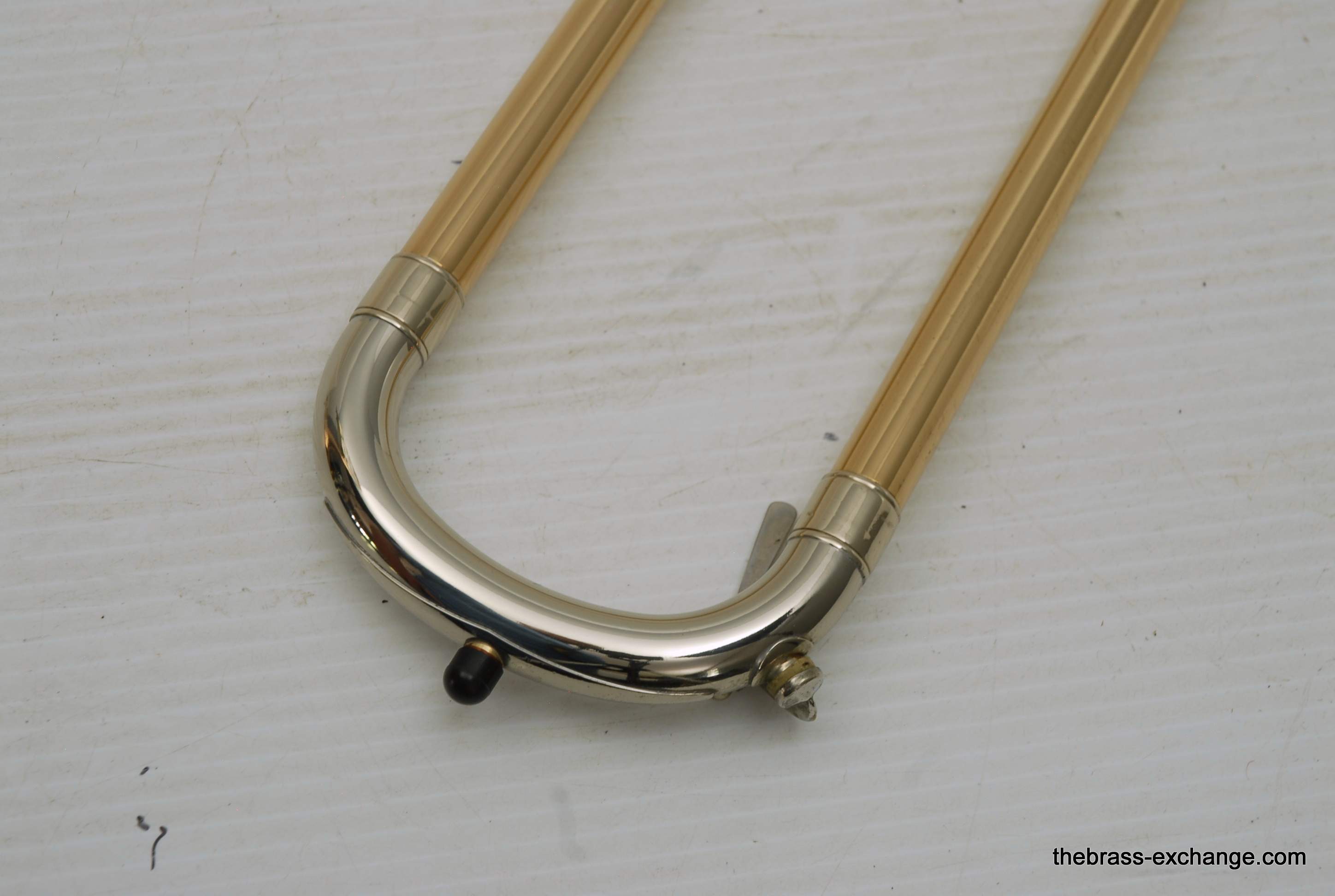
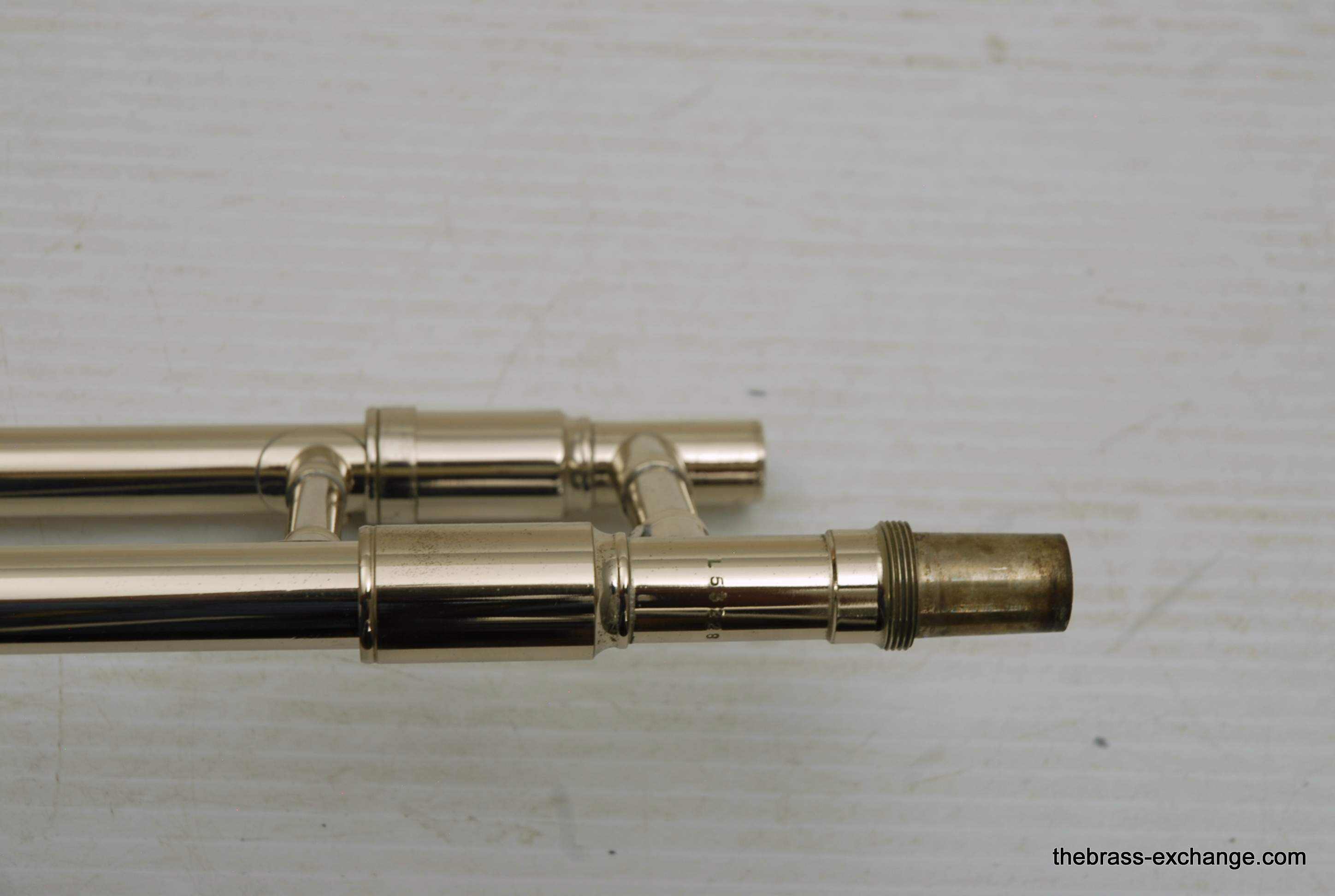
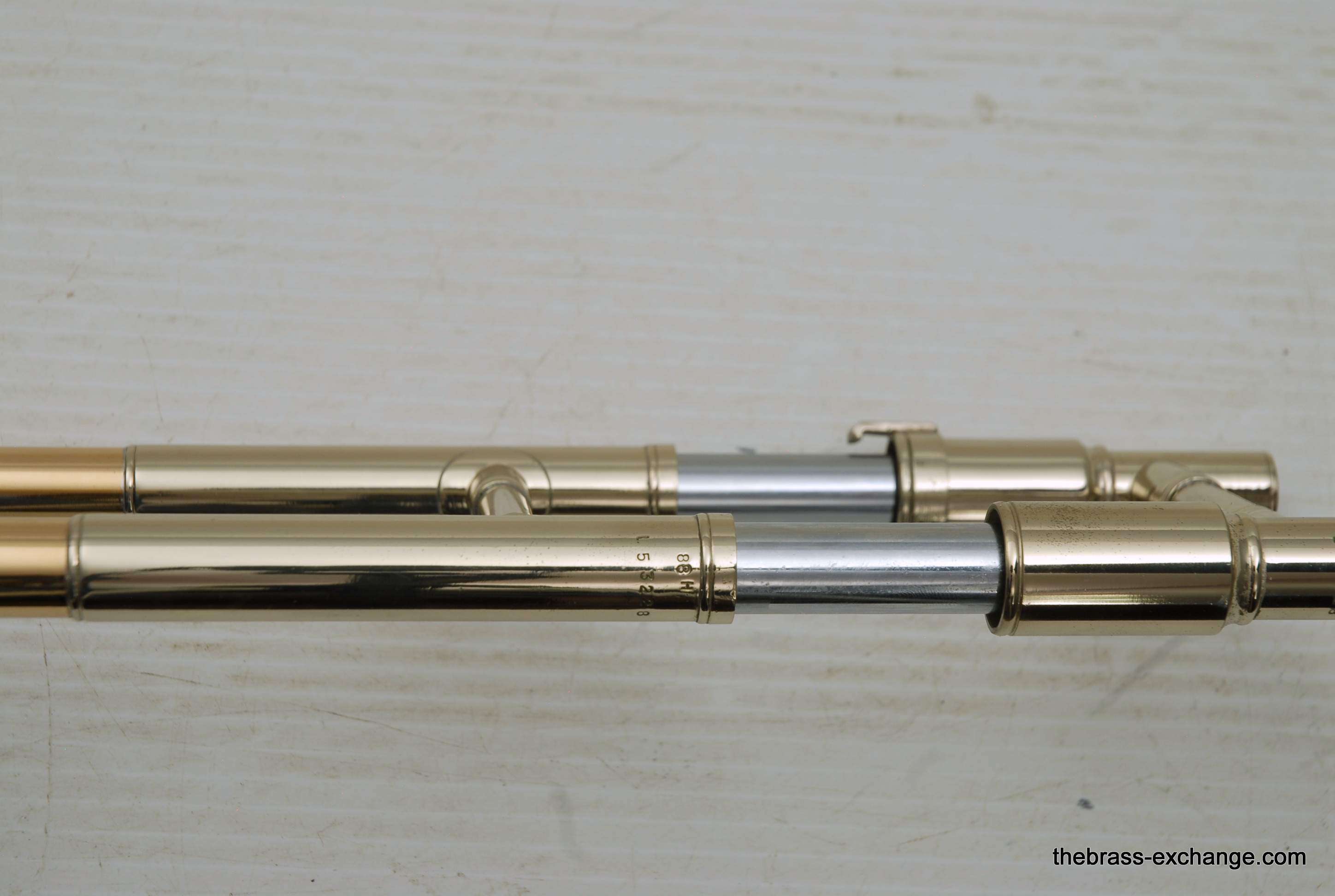
This Conn 88H Elkhart-era trombone dates to around 1968 with serial number L53228. As one of the most enduring professional tenor trombones ever produced, the Elkhart 88H represents a benchmark in orchestral design — prized for its balance of warmth, color, and reliable intonation.
This example received a professional restoration and new lacquer finish prior to its sale. The work was handled carefully: the bell engraving remained crisp, the edges clean, and the surfaces tidy, avoiding the over-buffing that sometimes diminishes vintage character. Under the bell, it still feels and responds like a proper Elkhart 88H, while presenting with a clean and elegant appearance.
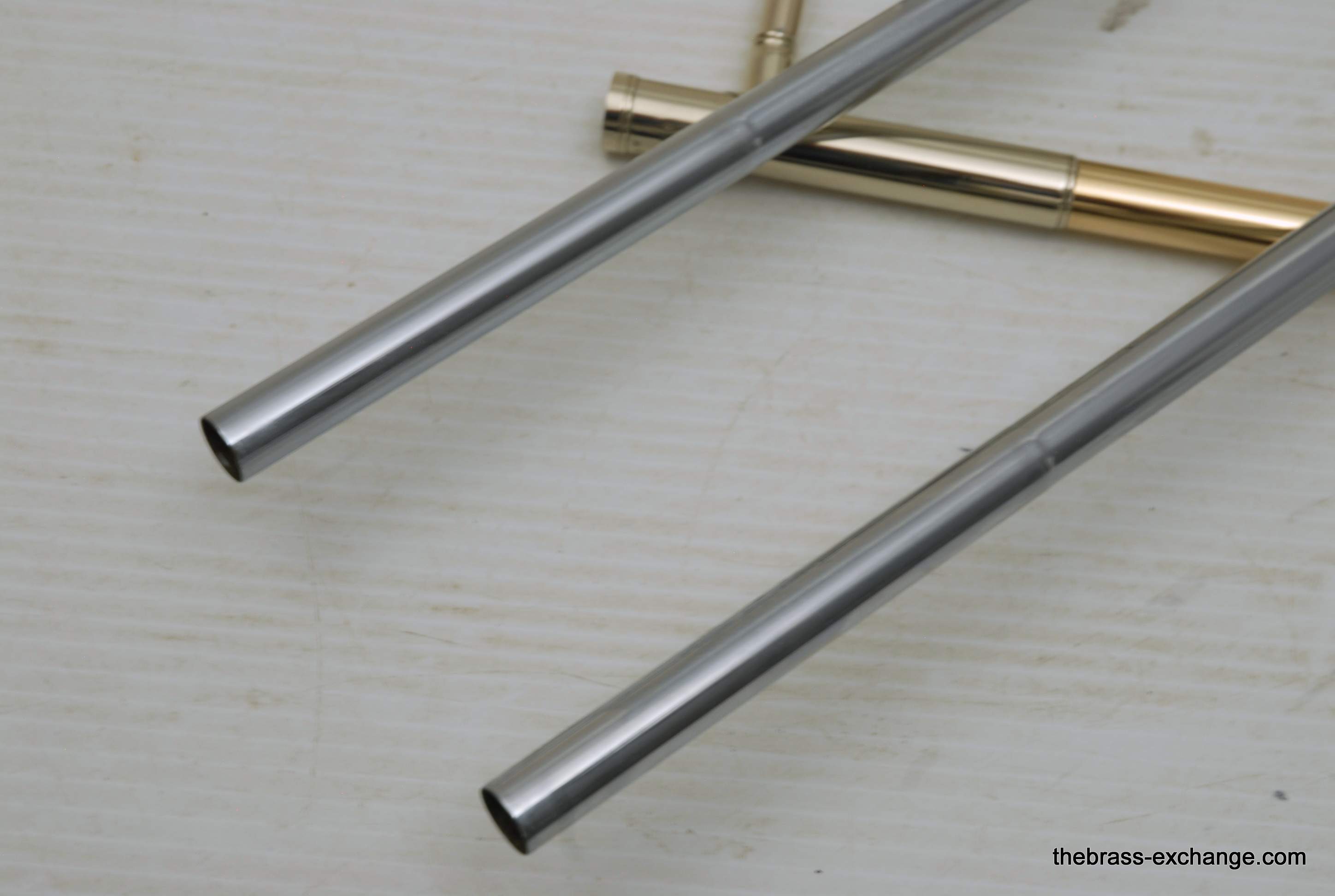
During its time on our bench, we completed full shop service, including a chemical cleaning, valve and slide setup, and play testing. At the time, a small tuning slide ding was noted but corrected before delivery — a typical detail we address to ensure the horn leaves tension-free. The slide was confirmed straight with quiet action, and the horn spoke evenly across dynamics.
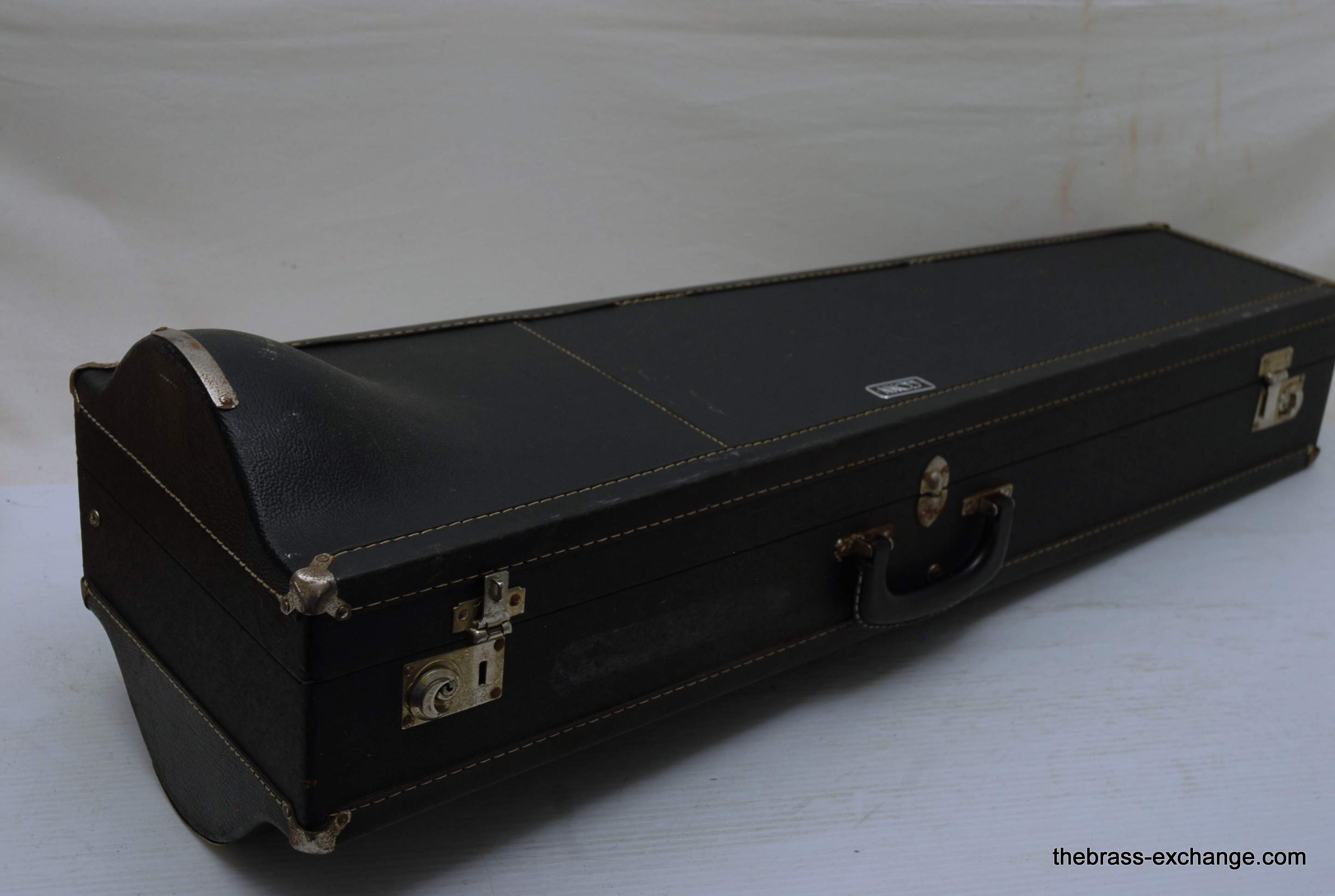
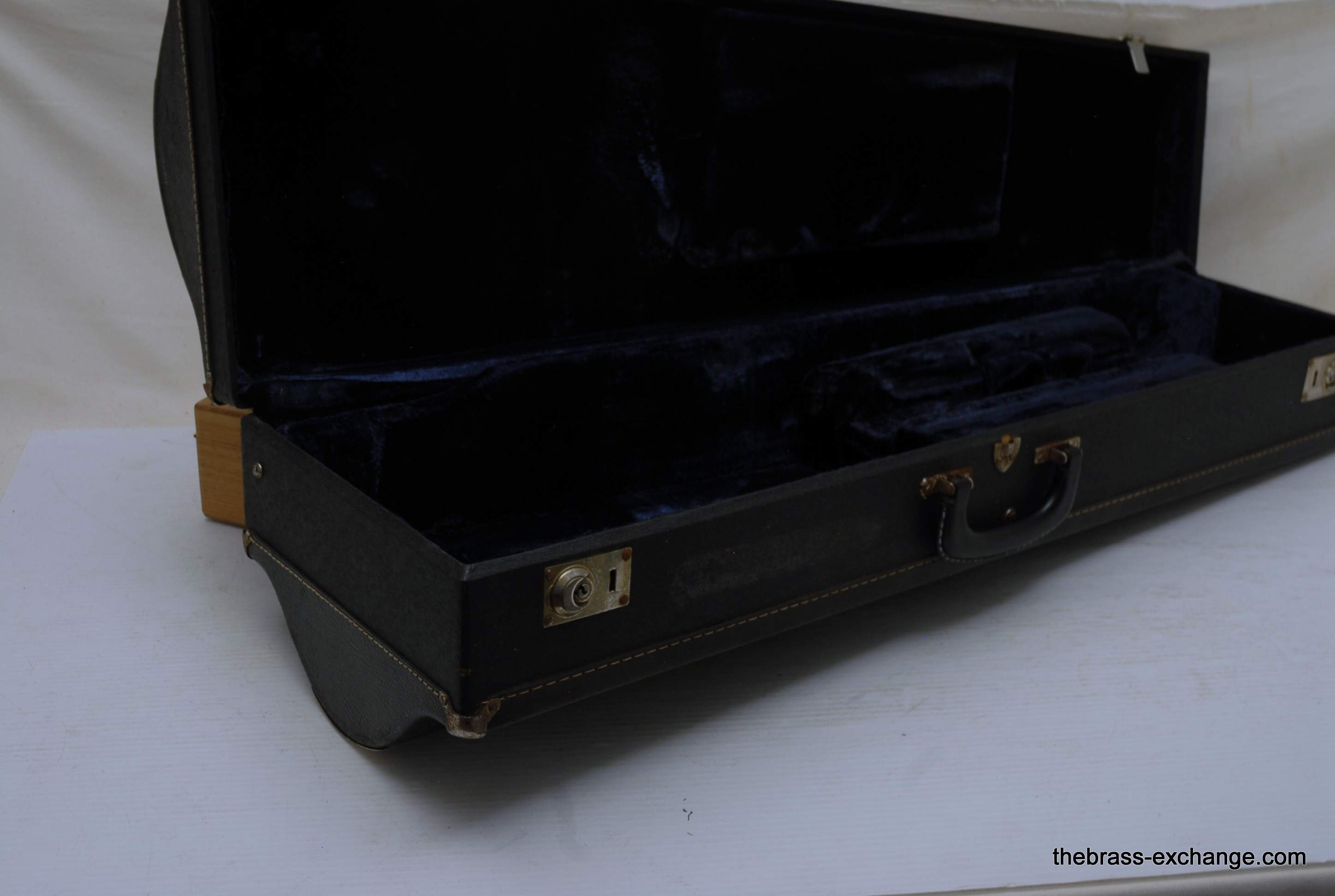
Collectors may find it interesting that this instrument had previously passed through The Brass Ark (Noah Gladstone) before being documented here. It was paired with a period Conn 88H case, not original to this serial, but era-correct and a fitting match for reference value.
In hand, the horn balanced comfortably, producing the classic Elkhart resonance: a centered core, even slotting, and a rich orchestral timbre that scales effortlessly from chamber work to full symphonic presence.
Questions 🎵
Q: Why are Conn 88H trombones from the Elkhart era so respected?
Conn’s Elkhart production years are remembered for consistency and craftsmanship. The 88H design — a .547 bore with an 8.5" rose brass bell — became the standard large bore tenor in many orchestras of the 1960s and 70s.
Q: What does the L-prefix serial mean?
The L-series serial numbers, like L53228, are associated with Conn instruments built in the late 1960s. This places the horn squarely in the Elkhart era, which collectors and players often use as a reference point for value and authenticity.
Q: Does relacquering hurt the value or sound?
When done carefully, a tasteful relacquer preserves both appearance and playability. This example maintained its engraving detail and tonal response while gaining cosmetic protection for long-term use.
This Conn 88H trombone (Elkhart, 1968) has been sold and now appears here as part of our Archive of Sold Instruments. Looking for something similar? Browse available trombones 🔎.