


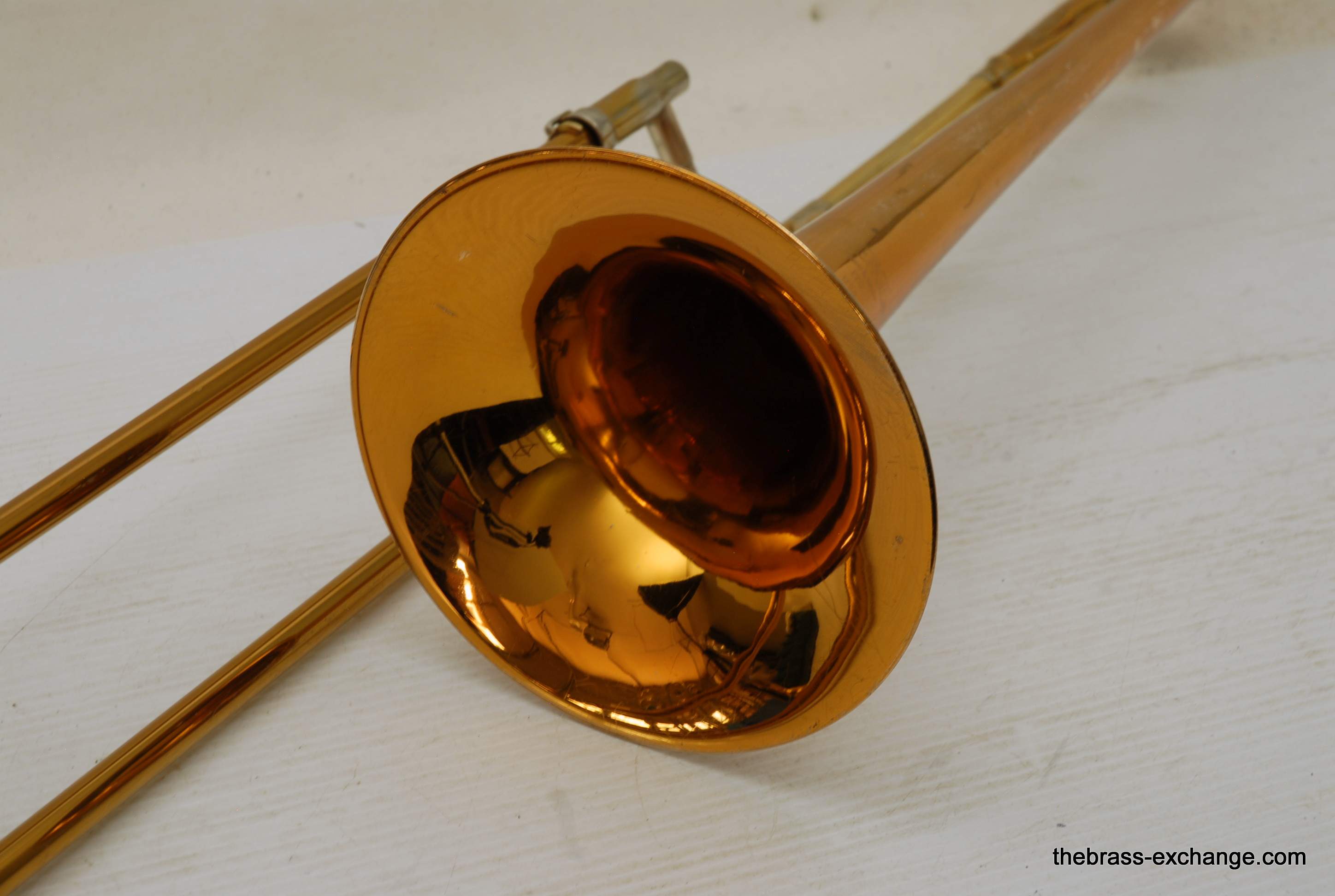

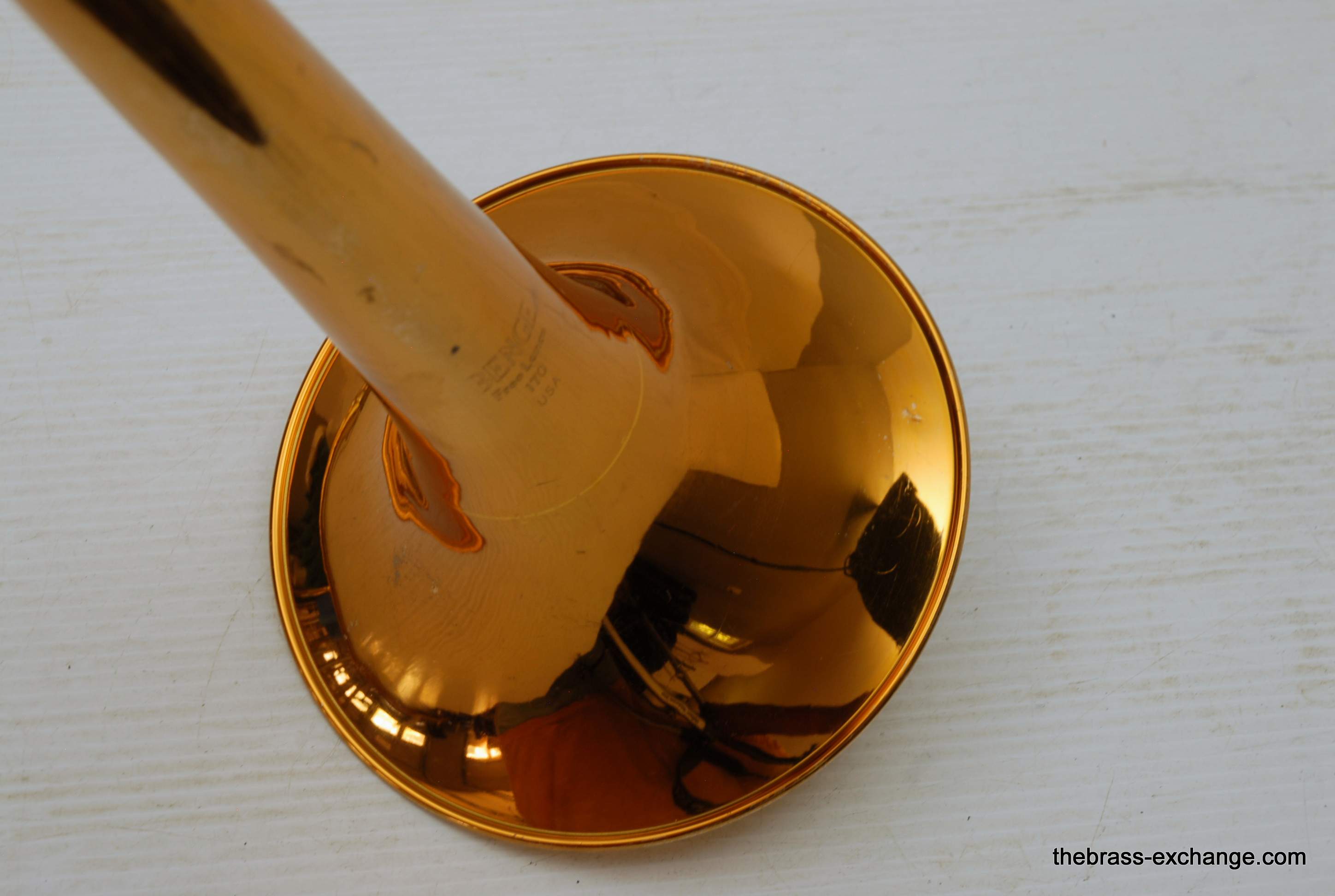

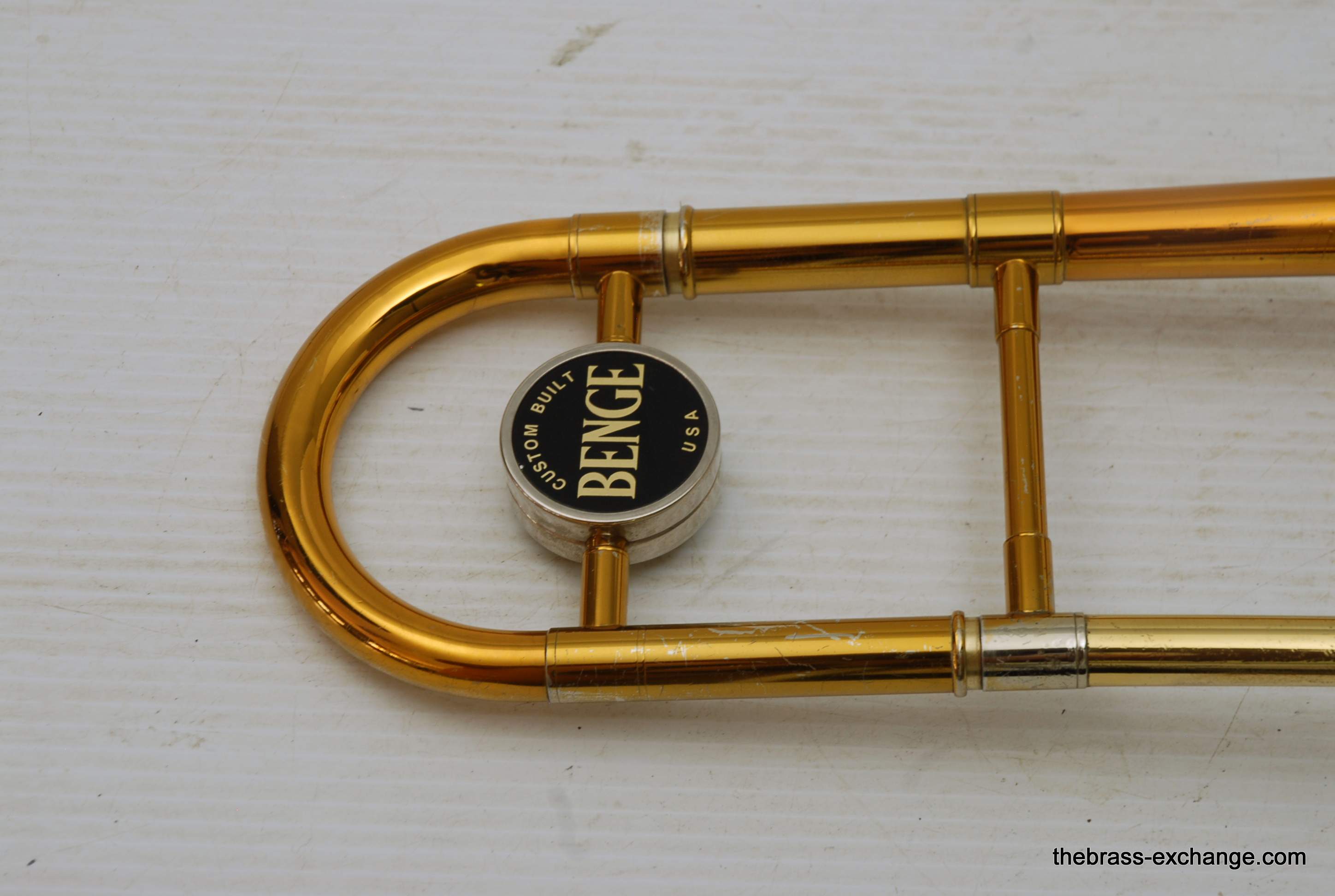


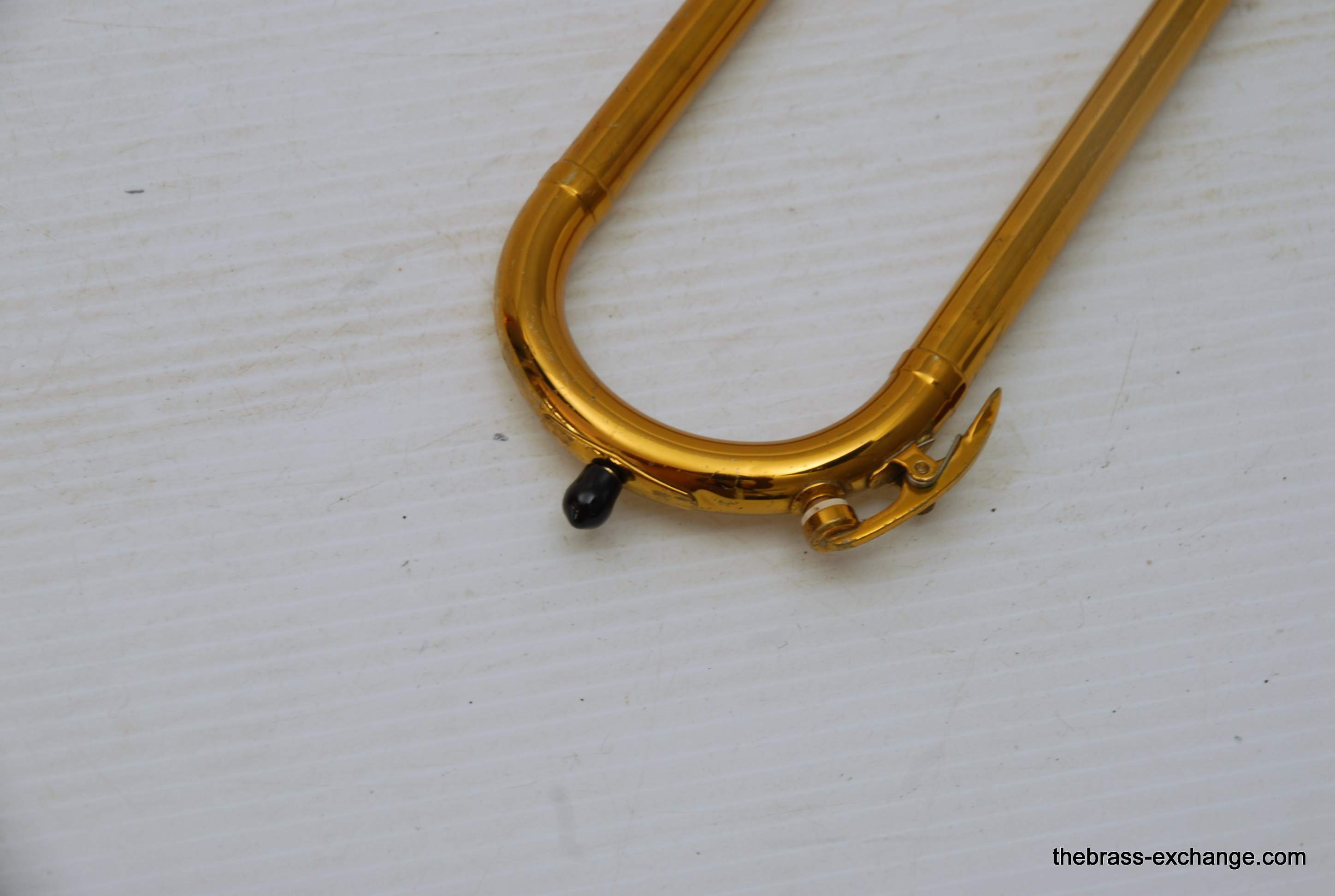


The Benge 170 Freelance .500 Bore represents an important era in small-bore American trombone design. Built in the 1980s, this model features a 7.75" yellow brass bell with warm honey-colored lacquer and a lightweight brass handslide with a trumpet-style water key. Its responsive, focused tone made it a favorite among jazz and lead players seeking a lively yet controlled sound.
This particular example was fully serviced at our shop, including a chemical bath, full mechanical inspection, and precise handslide alignment. The slide is exceptionally smooth, with no plating defects and ideal compression. The bell is clean, free of dents or structural repairs, and retains a beautiful vintage sheen with subtle lacquer wear that adds to its character.
Players who grew up on King 606 or 3B models will recognize the familiar feel of this Benge — fast, efficient response with a singing upper register and plenty of projection. It’s a perfect bridge between student and professional-level instruments, offering performance quality at a more accessible value.
Many of these horns were produced in the same facilities as King and Conn instruments during the 1980s and ’90s, using similar materials and design cues. Benge may be best known for their trumpets and flugelhorns, but their trombones share the same DNA — tight tolerances, solid craftsmanship, and a balanced tone that holds its own in any small ensemble or lead setting.
Includes a non-original case in good condition.
FAQ 🤔
Q: Who founded the Benge company and why is it significant?
Elden Eugene Benge, former principal trumpet of the Chicago Symphony, founded the Benge brand in the 1930s after a career-ending injury. His hand-built instruments quickly became legendary for their precision, artistry, and tonal balance — traits that carried forward into later trombone production.
Q: What makes Burbank-era Benge instruments special?
When operations moved to Burbank, California, in 1953, Benge instruments became synonymous with craftsmanship and studio reliability. Many L.A. players during the 1960s–70s preferred Burbank Benge horns for their intonation and build consistency.
Q: What happened to Benge after the 1970s?
In 1970, King Musical Instruments acquired Benge and shifted production to Eastlake, Ohio. While later models — like this 1980s example — remained well made, they were produced in smaller numbers and are now appreciated for their scarcity and tonal individuality.
Q: Are Benge trombones still considered professional instruments today?
Yes. Although Benge no longer produces trombones, their instruments were built to professional standards and share many design features with King and Conn models of the same era. Many jazz and studio players still seek them out for their warmth, efficiency, and expressive tone.
📣 Interested in learning the current market value of your Benge trombone—or thinking about selling or consigning one?
If you currently own a Benge trombone and would like help determining its value, or are considering selling or consigning it, we’re always glad to review instruments for our growing archive and collector network. Simply contact us here to start the conversation.
👉 View similar jazz trombones currently in stock at The Brass Exchange