



This trombone has been sold and now appears in our Historical Archive of Sold Instruments.
We keep it online as a reference for musicians and collectors researching this model.
Bach-Edwards 42GLT Tenor Trombone – a remarkable late-1990s example that bridges two iconic makers.
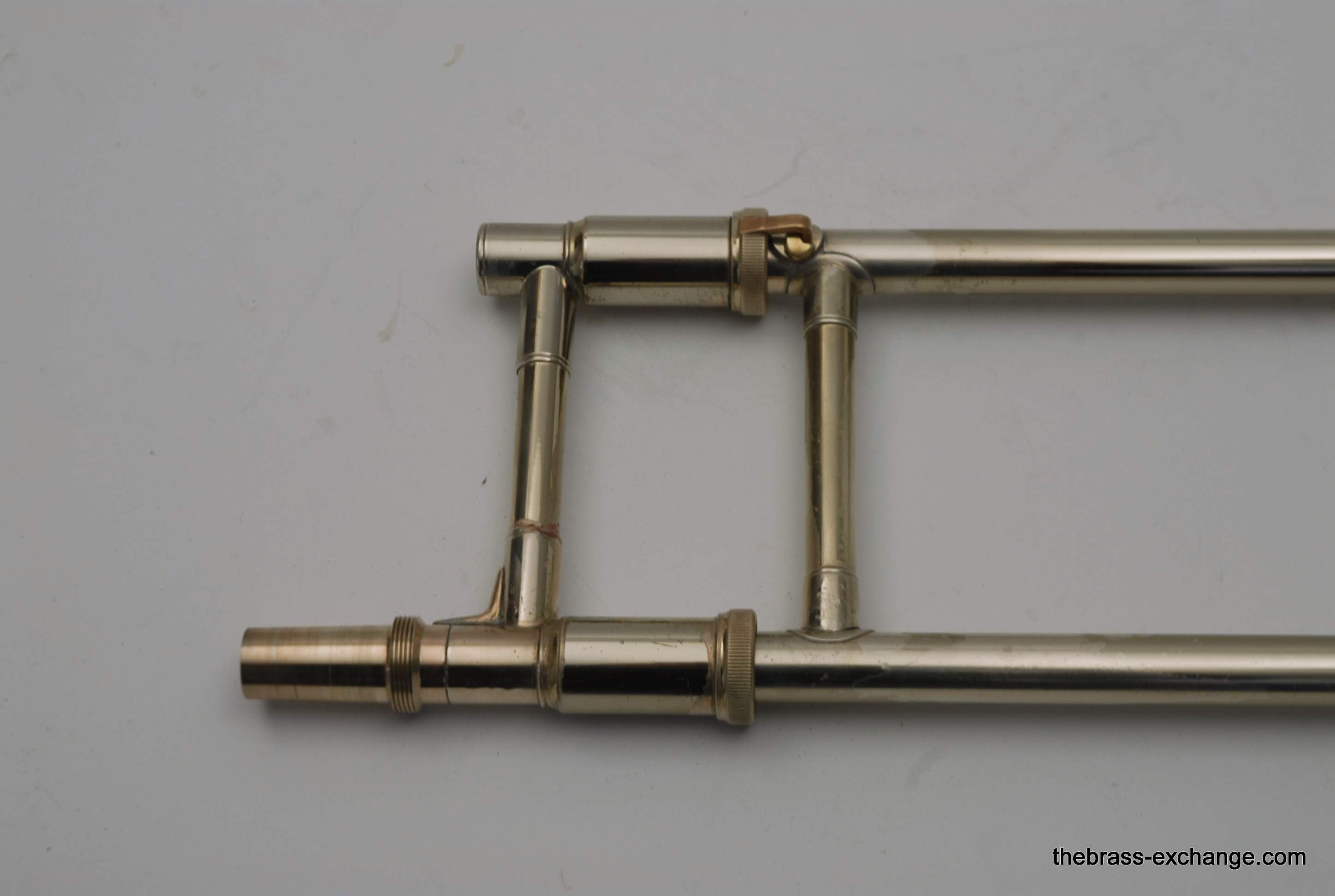
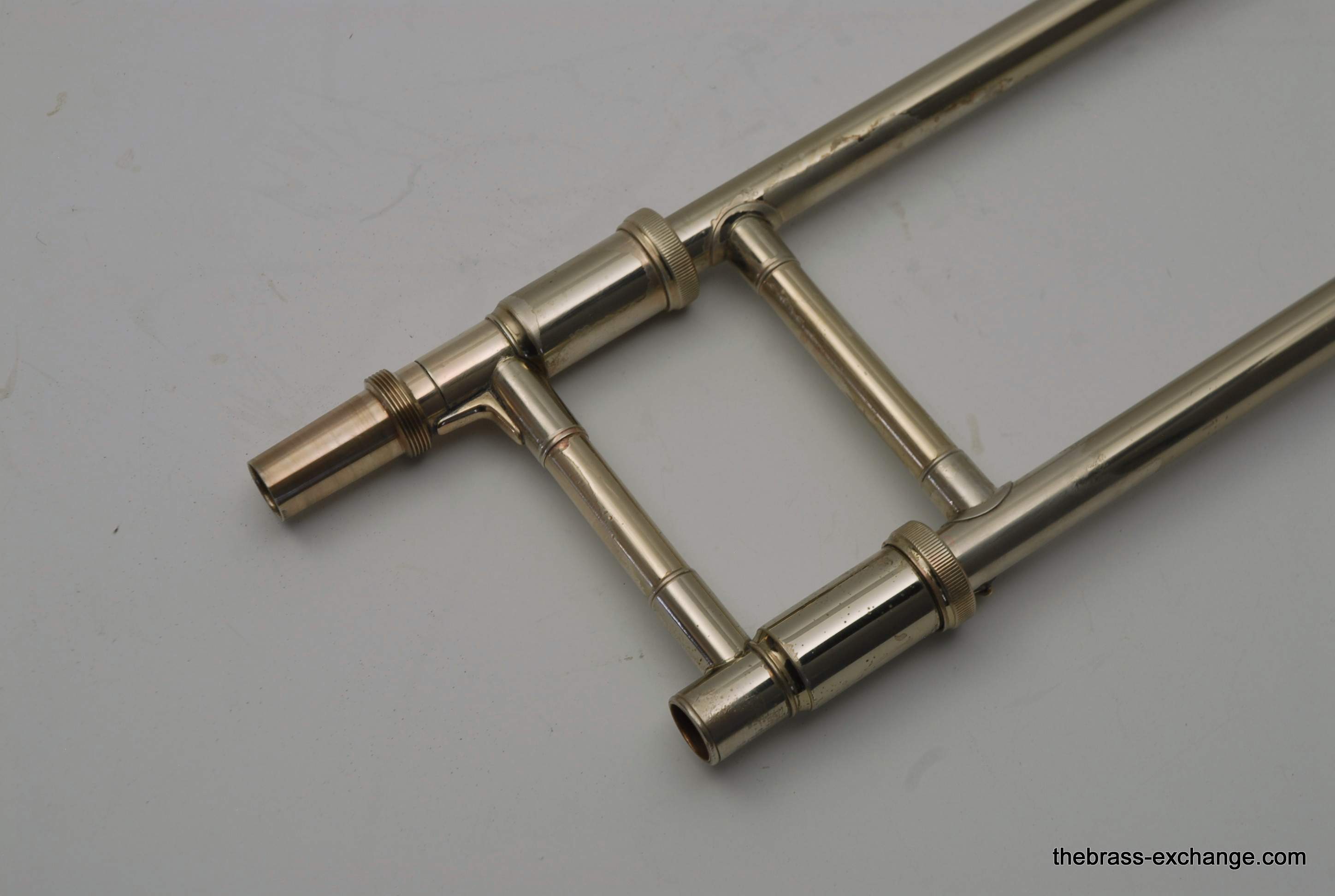
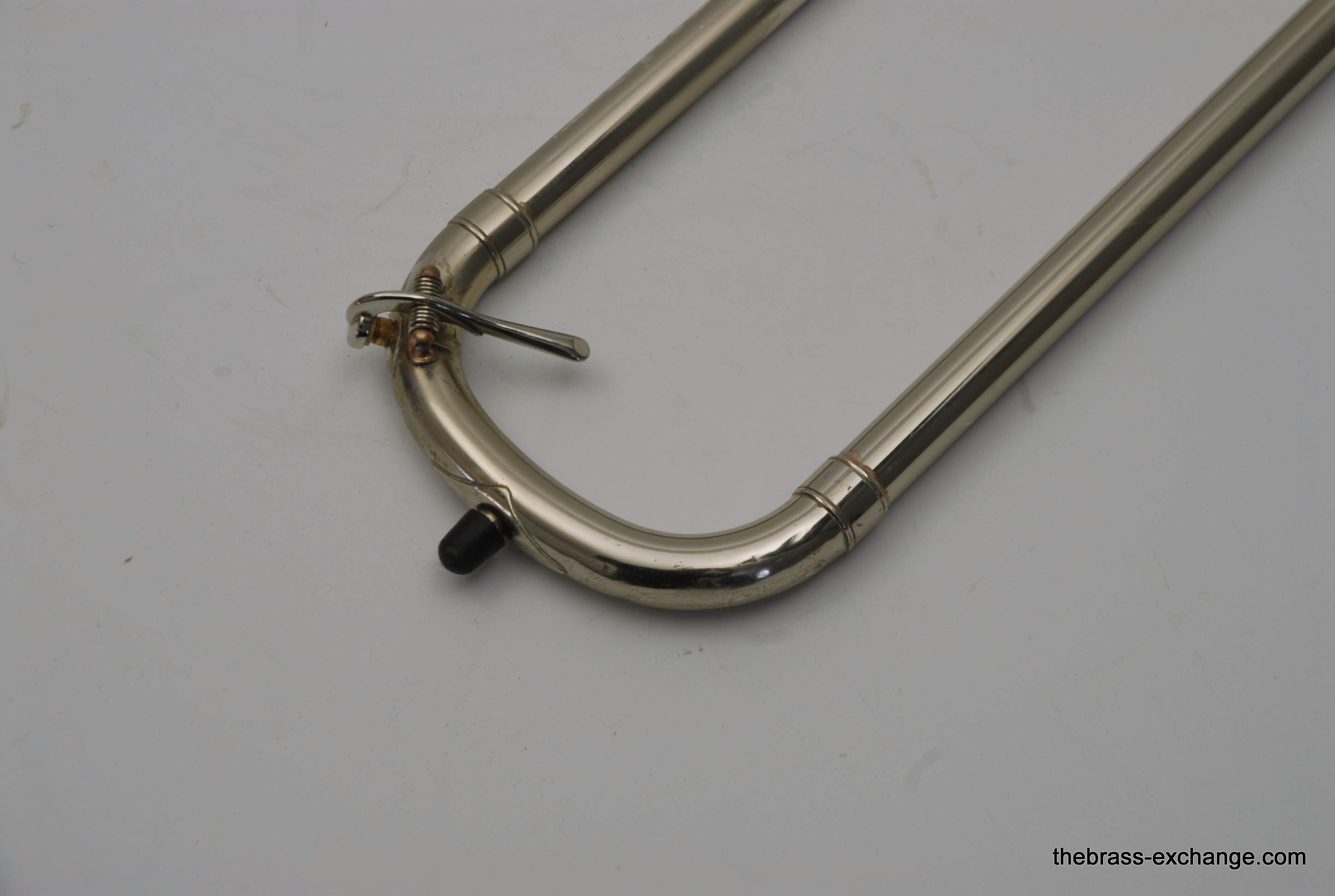
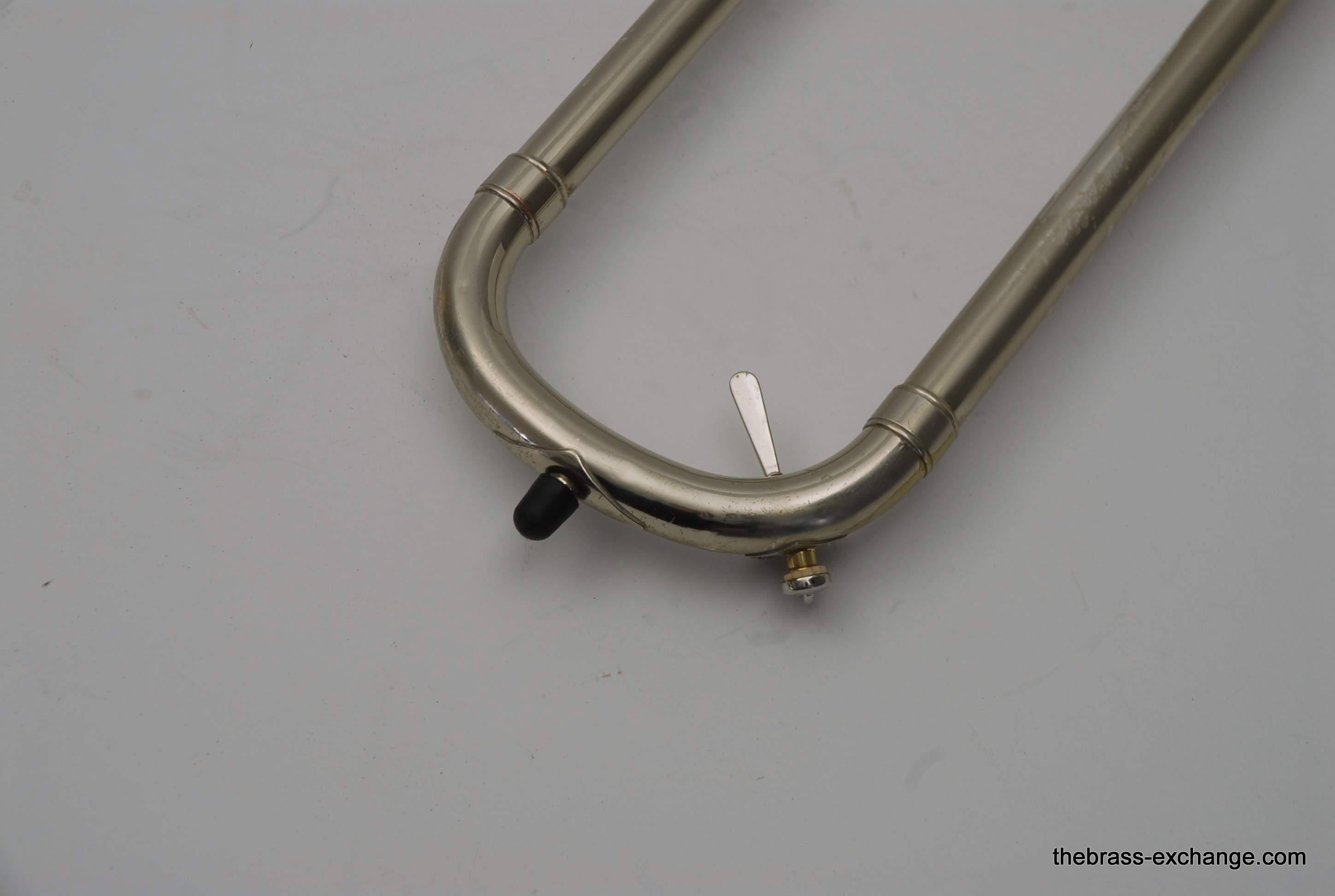
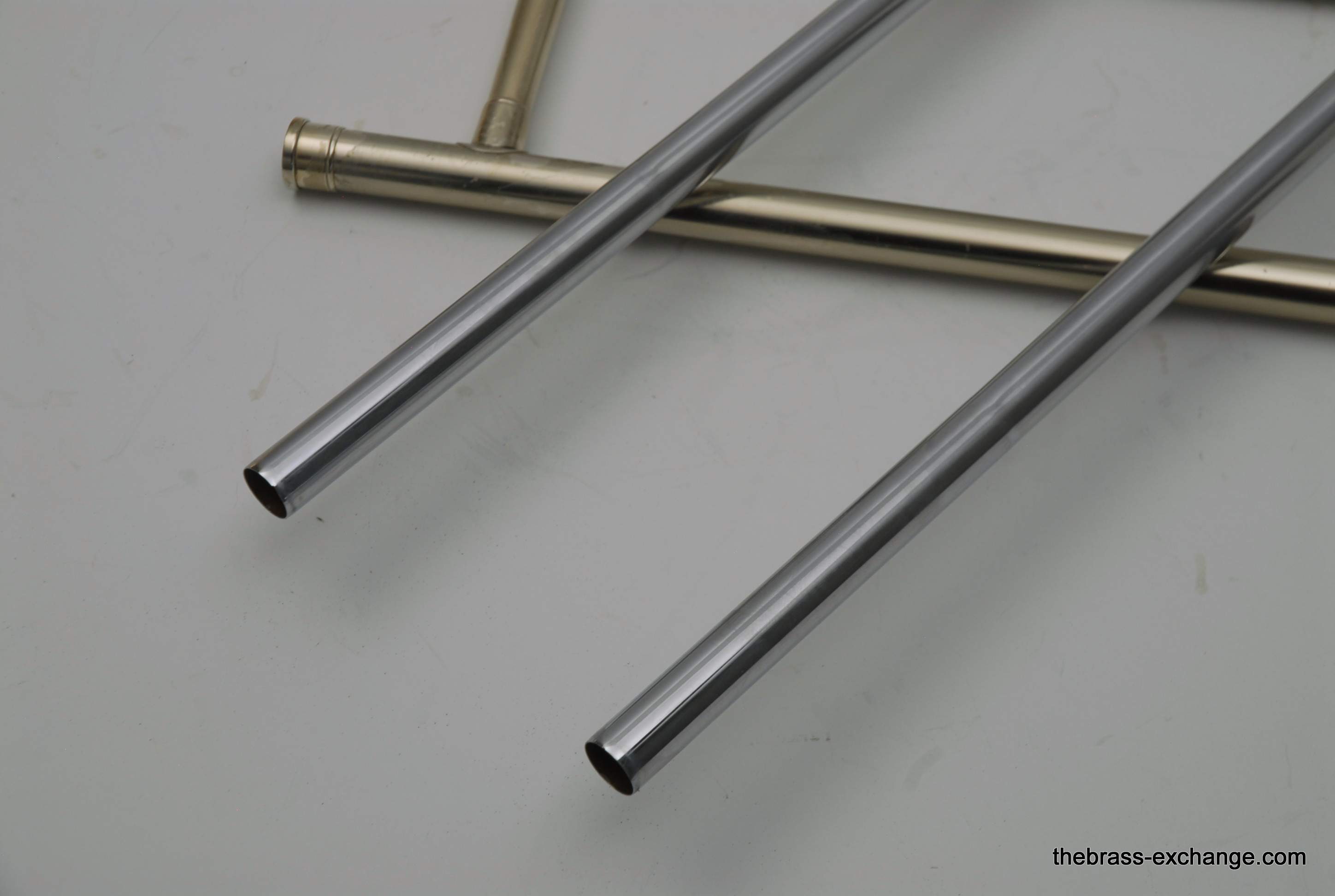
Originally built as a Bach 42G with a gold-brass bell and a lightweight nickel-silver Bach 42 slide, this horn was later professionally converted with an Edwards Thayer valve section and matching gold-brass Edwards tuning slide.
The previous owner – a professional symphony principal – used this horn from his high-school and college years and later had it upgraded to the open-wrap Thayer setup.
Its long playing history under an experienced musician likely contributed to the horn’s exceptionally open response and resonant tone.
Our shop performed a full service including chemical cleaning before it was sold.
The slide and valve both functioned at top standard with no mechanical issues.
The lacquer remains in very good condition overall, with typical Bach “acid-bleed” visible in areas of the outer-bell rim – a well-known cosmetic effect resulting from residual flux during the original factory lacquer process.
Because this defect does not affect playability or tone, and because re-lacquering can sometimes alter a bell’s character, we chose to preserve the horn in its original finish.
This 42GLT proved to be an ideal pro-level open-wrap tenor for advancing symphonic players.
Its 42G gold-brass bell offers a warm, broad orchestral voice, while the Edwards Thayer valve provides freer airflow and more consistent low-register response than traditional rotors.
The instrument was sold with its original Bach case, still in reliable condition.
FAQs
What defines the “GLT” in Bach-Edwards 42GLT?
It refers to the G (gold-brass bell), L (lightweight slide), and T (Thayer valve) configuration – a desirable combination for symphonic tenors.
Why is the Thayer valve significant?
Edwards’ original Thayer axial-flow design offers smoother airflow and less resistance than traditional rotors, improving low-register response and maintaining an even blow.
What causes the acid-bleed spots on some vintage Bach bells?
Residue from soldering flux can migrate under the lacquer over decades, producing dark streaks.
It is cosmetic only and typical of many otherwise excellent vintage Bachs.
Why keep the original lacquer instead of refinishing the bell?
Re-lacquering can sometimes change the bell’s vibration characteristics.
When a horn plays exceptionally well, we generally preserve the original finish for both tone and authenticity.
We keep this page available as a historical reference for players, educators, and collectors.
Looking for something similar? Browse our current trombone listings 🔎 or see what your own instrument might be worth 📣.