


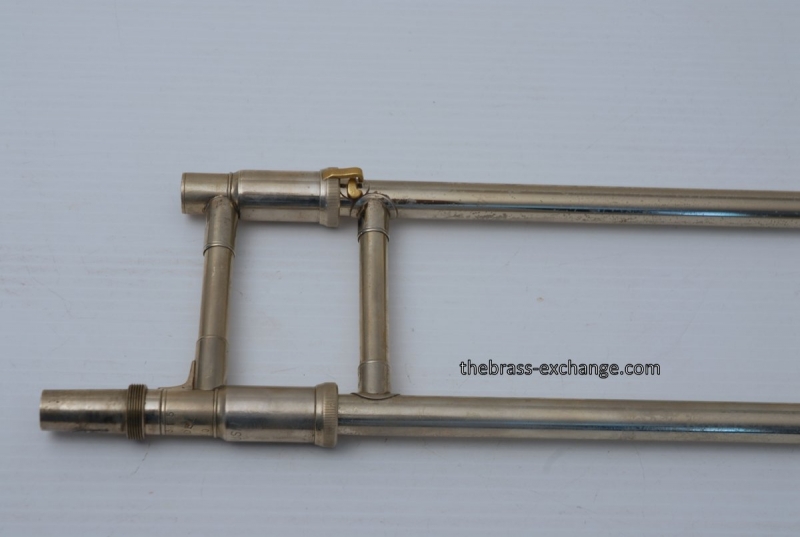
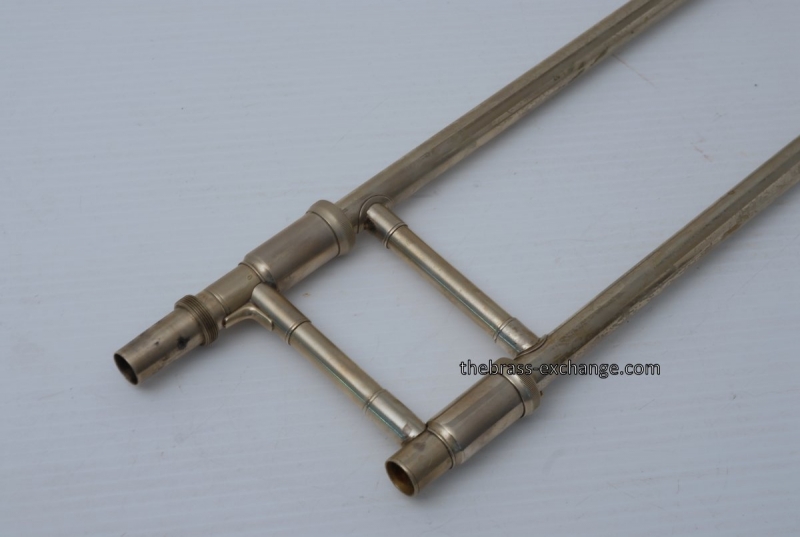
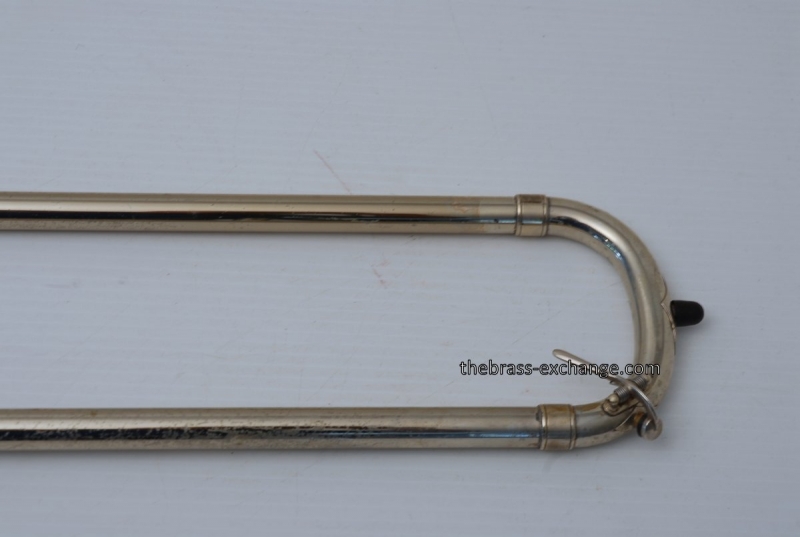
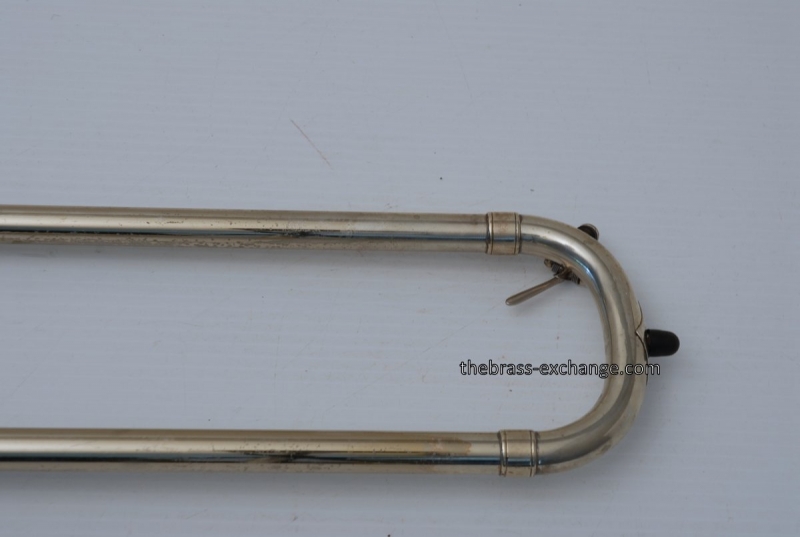
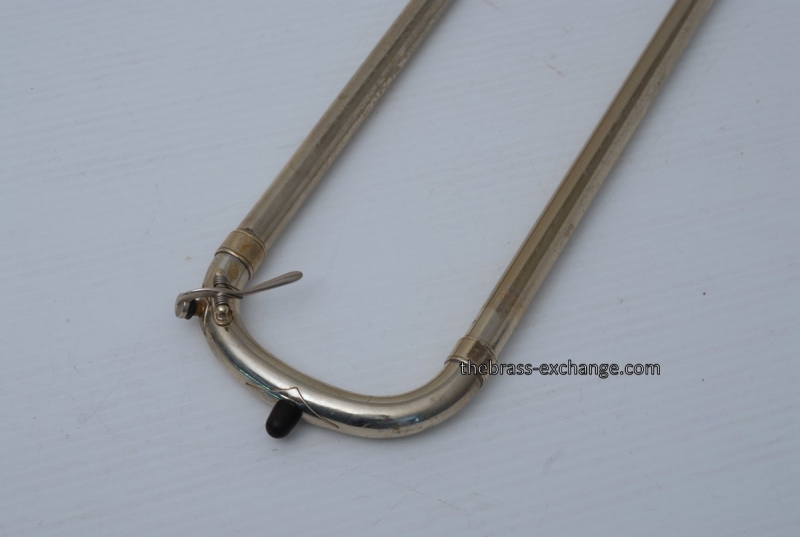
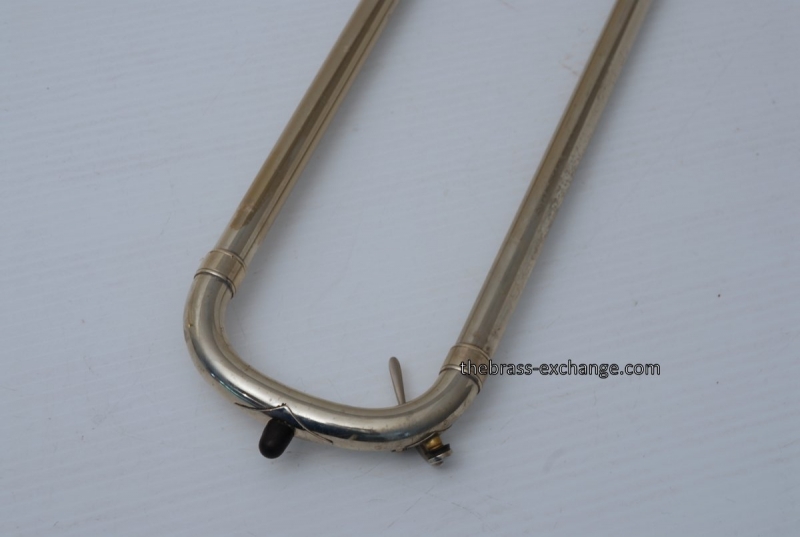
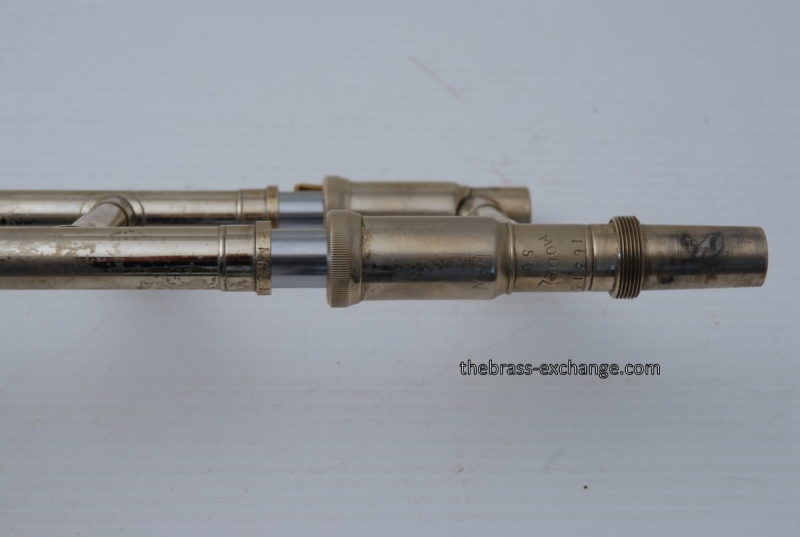
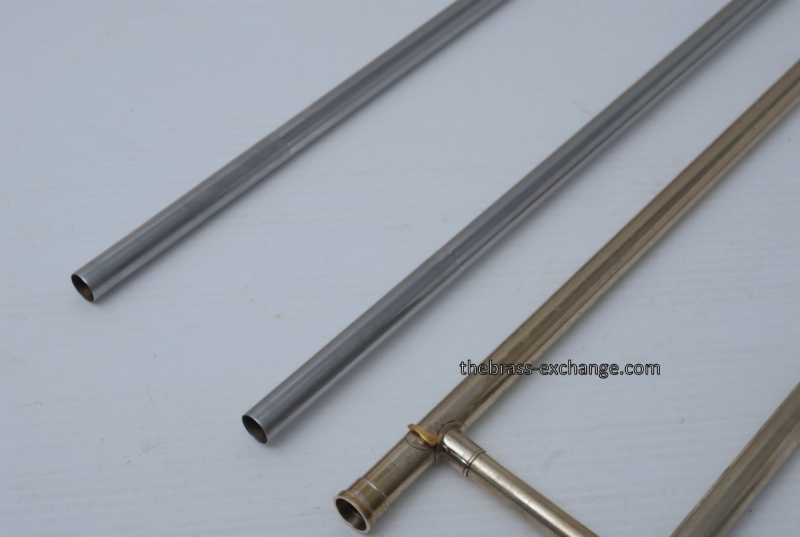
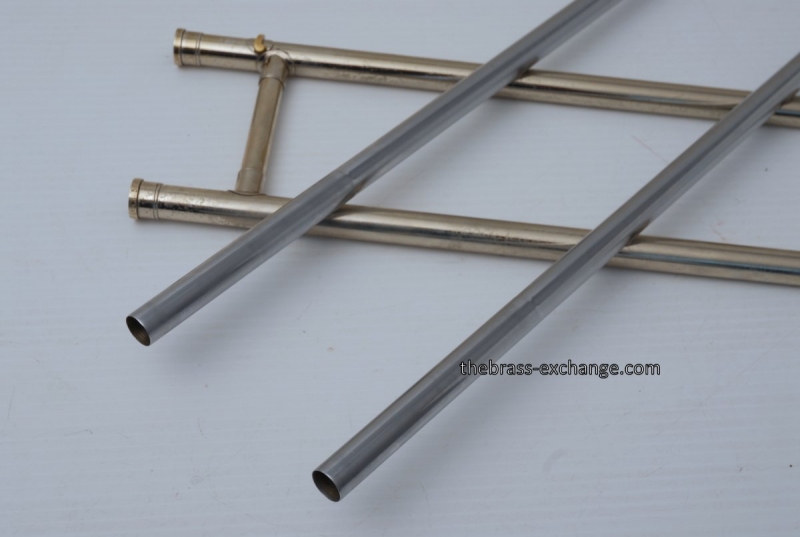
This original Bach 50LT bass trombone handslide dates to the 1970s and represents one of the most highly respected slide builds in Bach's history. Crafted with lightweight nickel silver outer tubes and a yellow brass crook, it remains a preferred option for professional trombonists seeking both responsiveness and tonal breadth.
Still in its original lacquer with factory leadpipe, the slide has super fast, clean action and requires no adjustment or repair. There are no dents, alignment issues, or plating defects — it's simply ready to play.
While designed for use with Bach 50 series bass trombones, this slide has earned a reputation beyond its original pairing. Notably, players in the Chicago Symphony Orchestra and other elite ensembles have used this exact slide with 42B bells to create a unique hybrid setup — combining projection and core with a more agile blow than a full double-valve bass.
The 50LT slide is especially attractive to principal or section players looking for a bigger presence in orchestral settings without committing to a full bass trombone. Its light weight helps keep articulation crisp, while the larger bore and crook offer added punch in larger ensembles or studio work.
Whether you're a professional seeking a versatile modular option, a builder working on a custom horn, or simply a serious player in need of a professional-grade spare — this slide delivers performance at the highest level.
Why do professional players pair a Bach 50LT slide with a tenor bell?
Mixing a 50LT bass slide with a Bach 42B bell creates a more open, resonant sound while maintaining agility. This setup is especially popular among orchestral players who need added depth and power without switching to a full bass trombone. The lightweight slide design keeps responsiveness high while broadening tonal color and projection.
This Bach 50LT slide has been sold and is now archived here as a reference for players and technicians researching premium Bach trombone components.
Looking for something similar? Browse available trombones here. 📌