


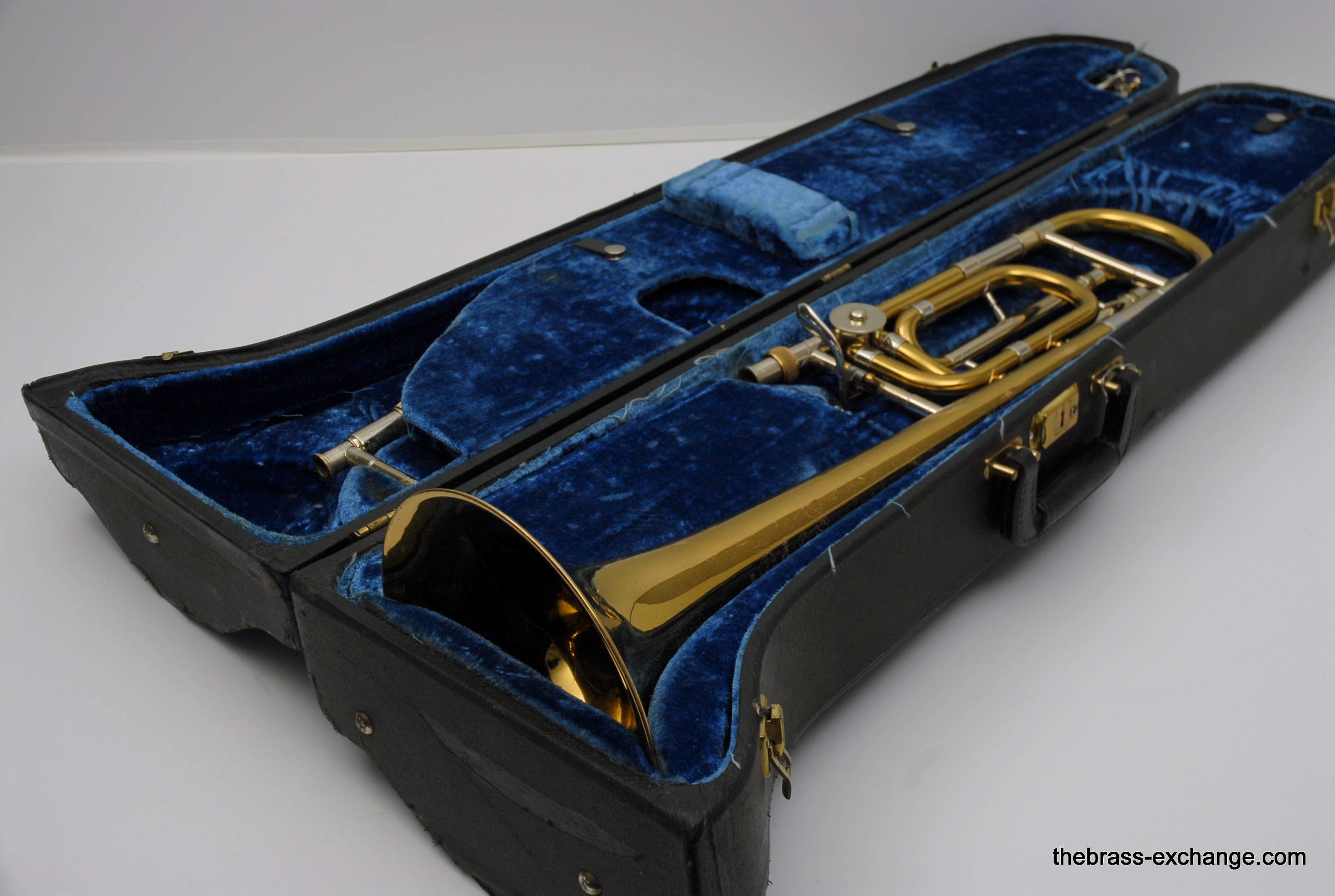
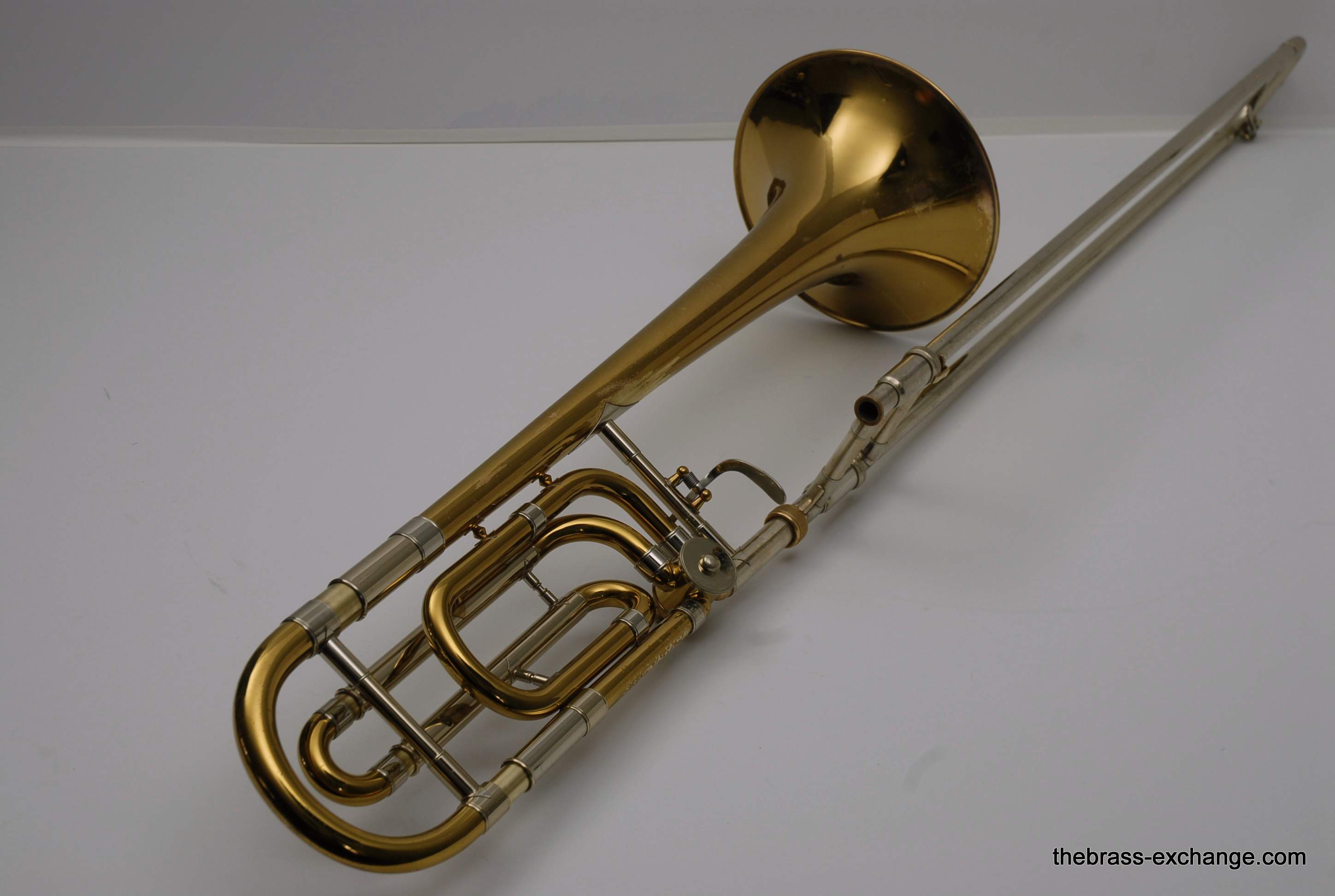
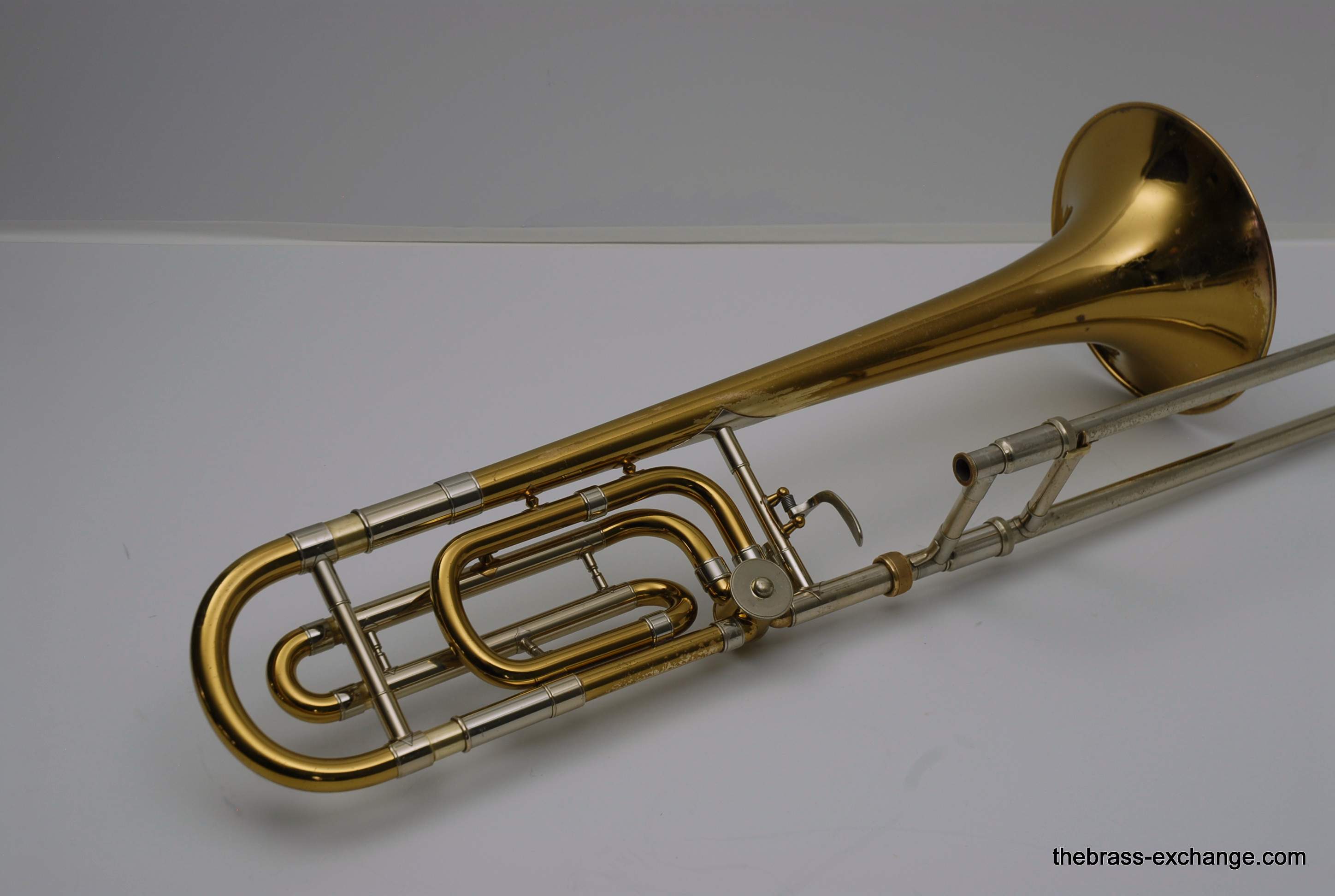
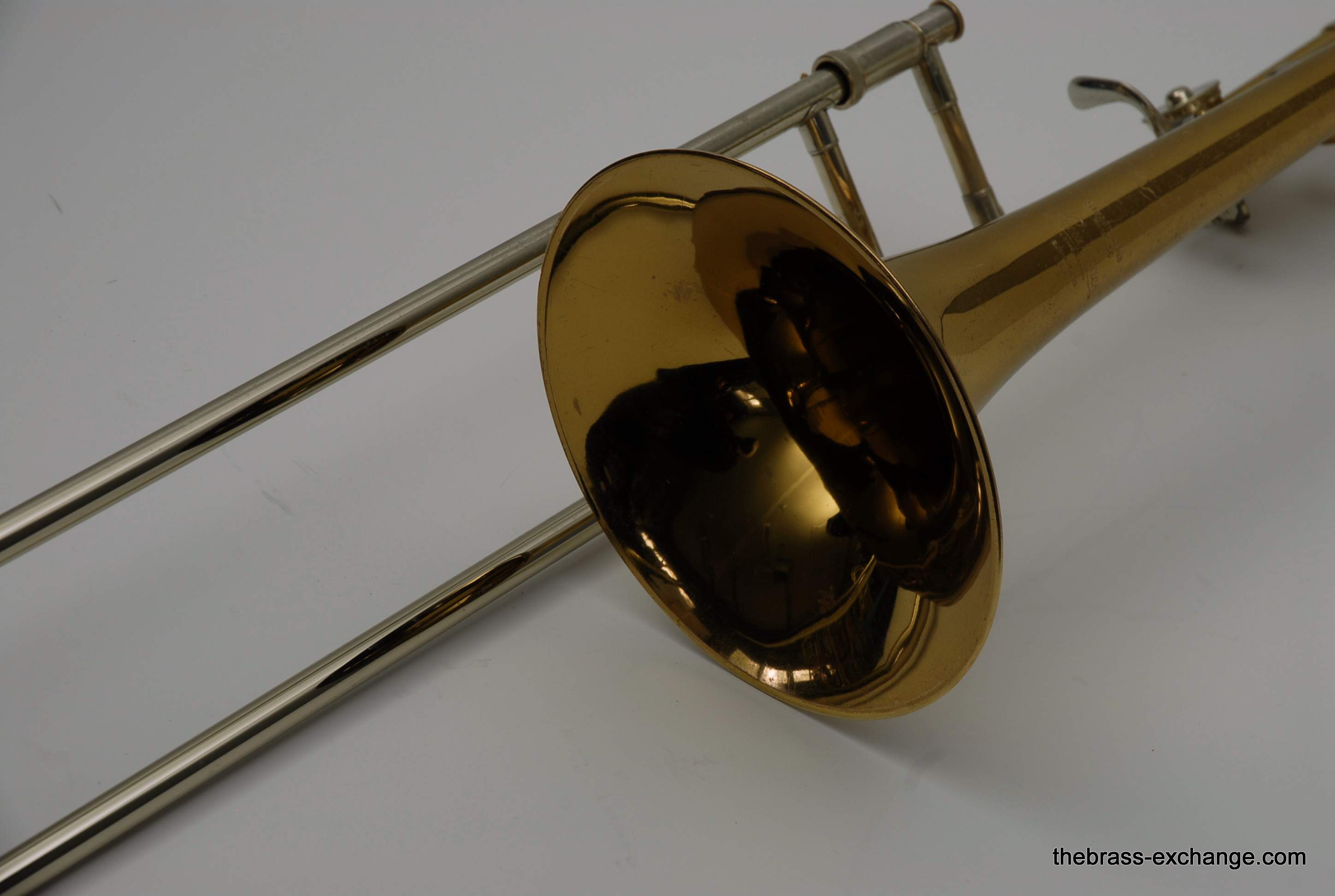
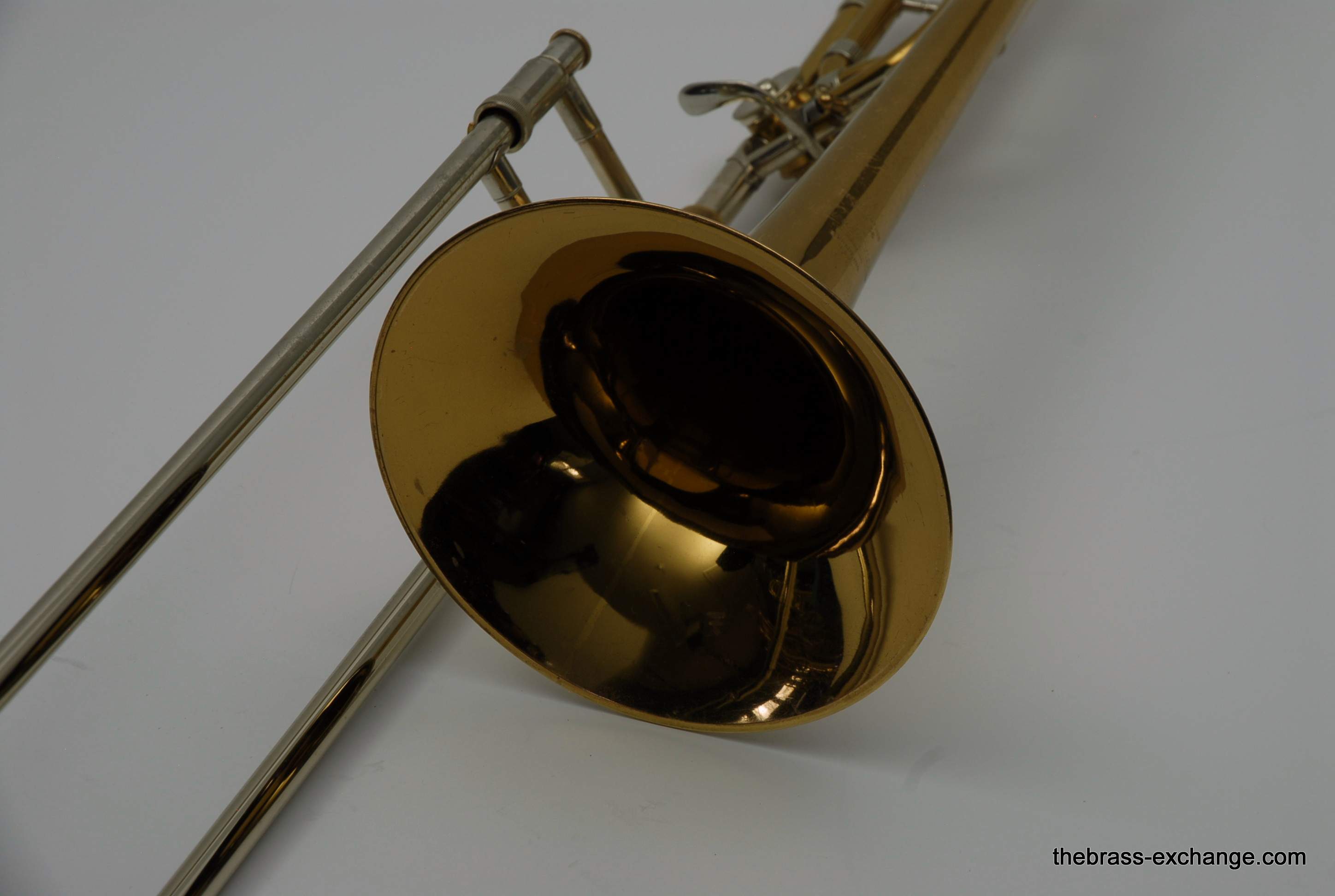
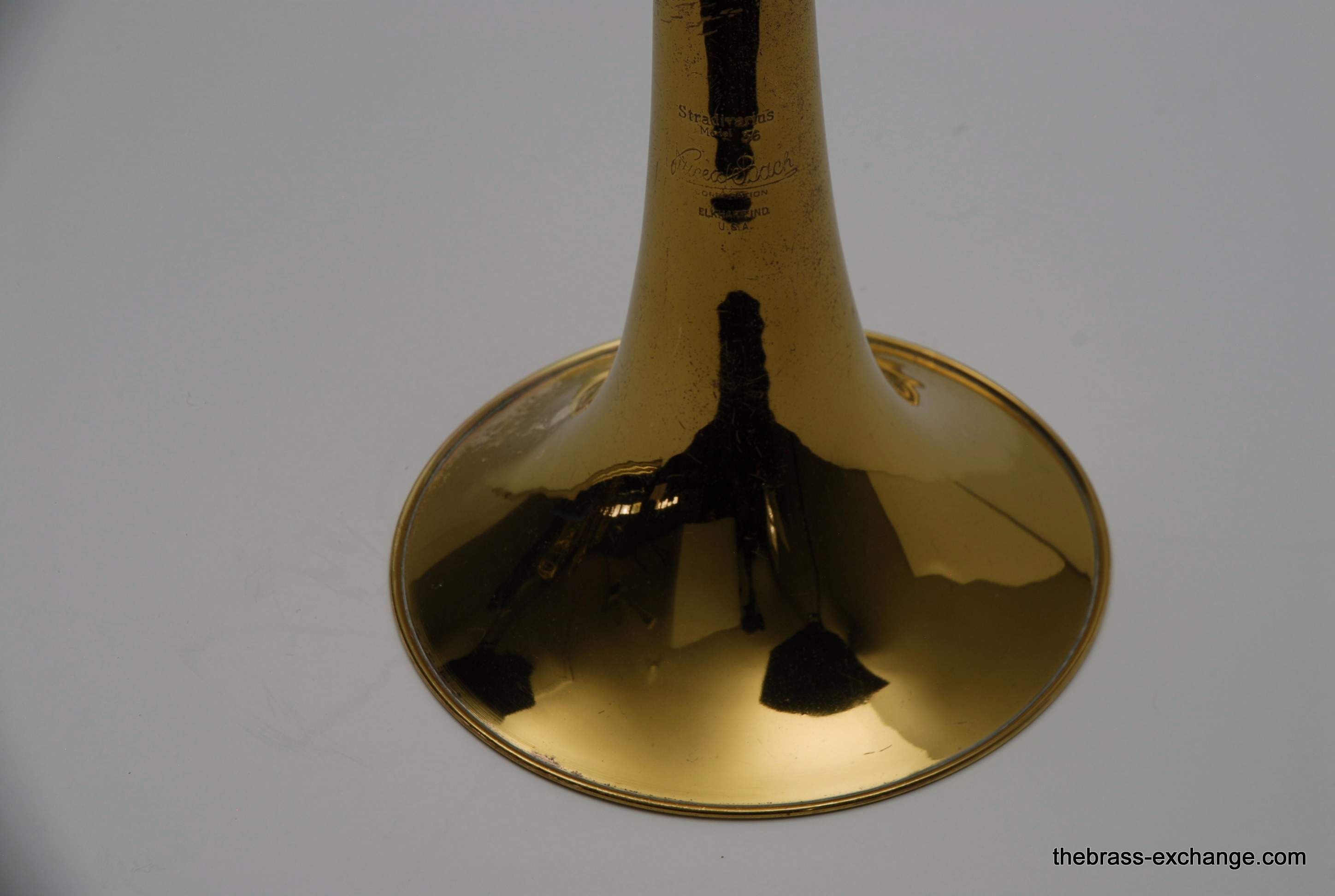
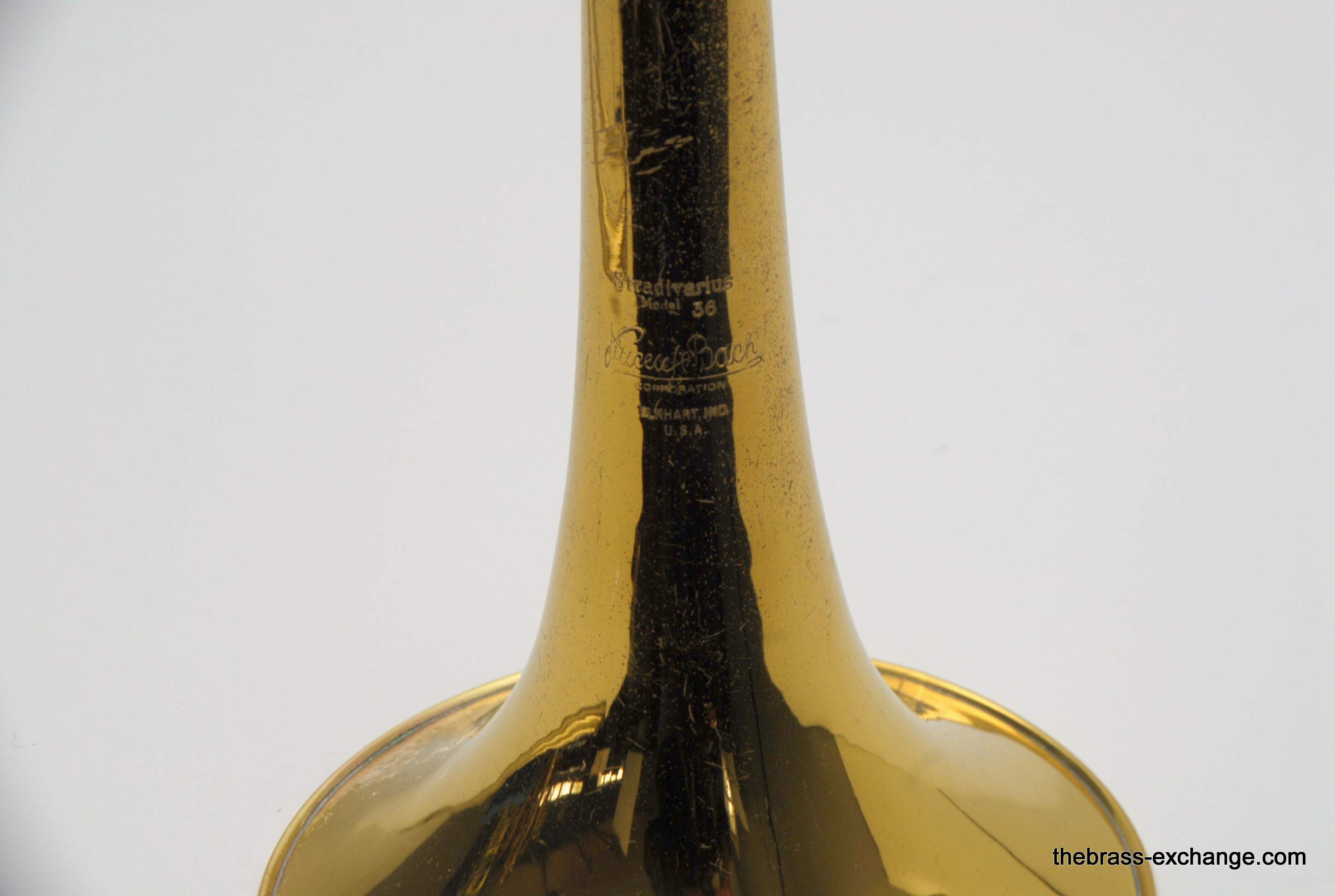
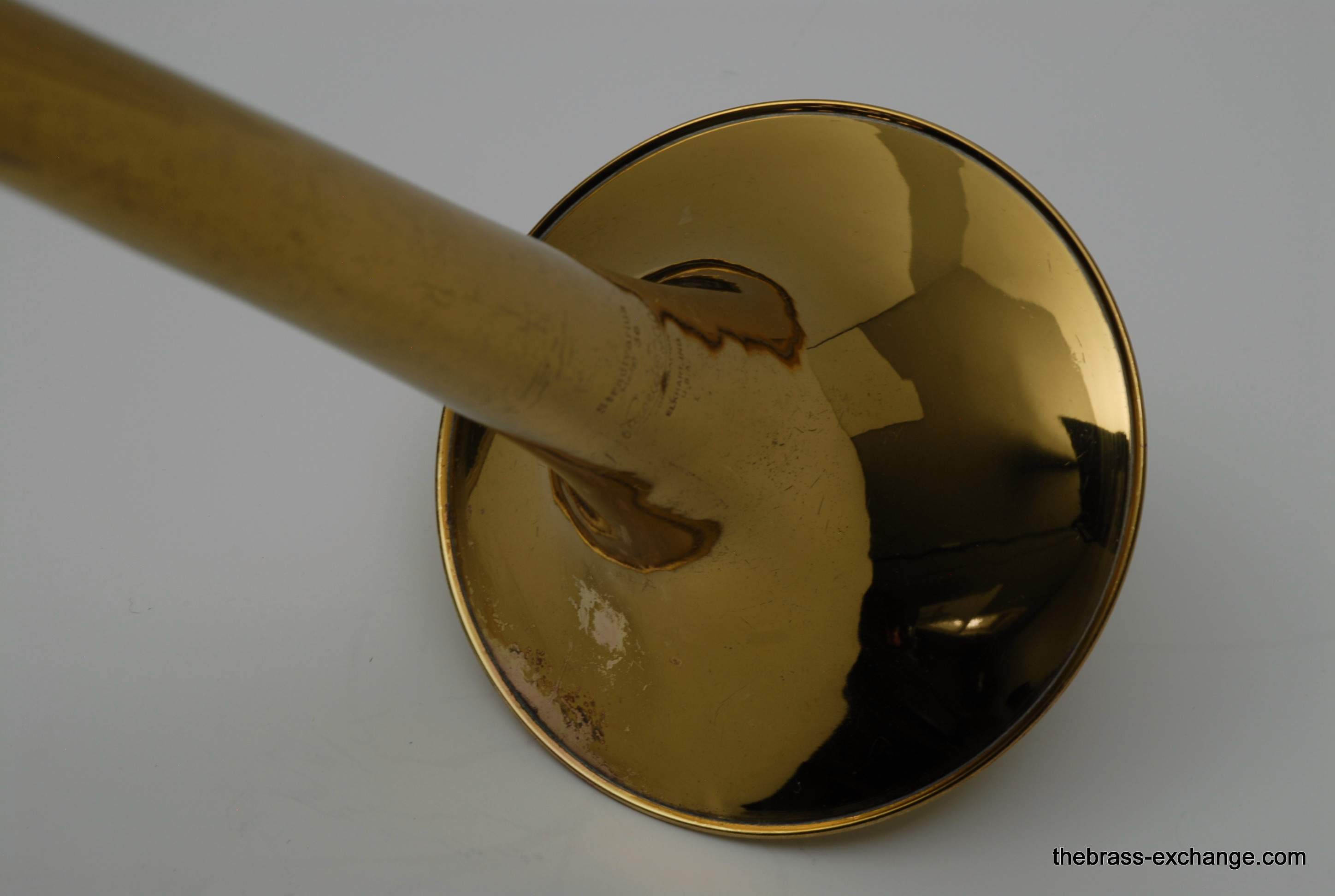
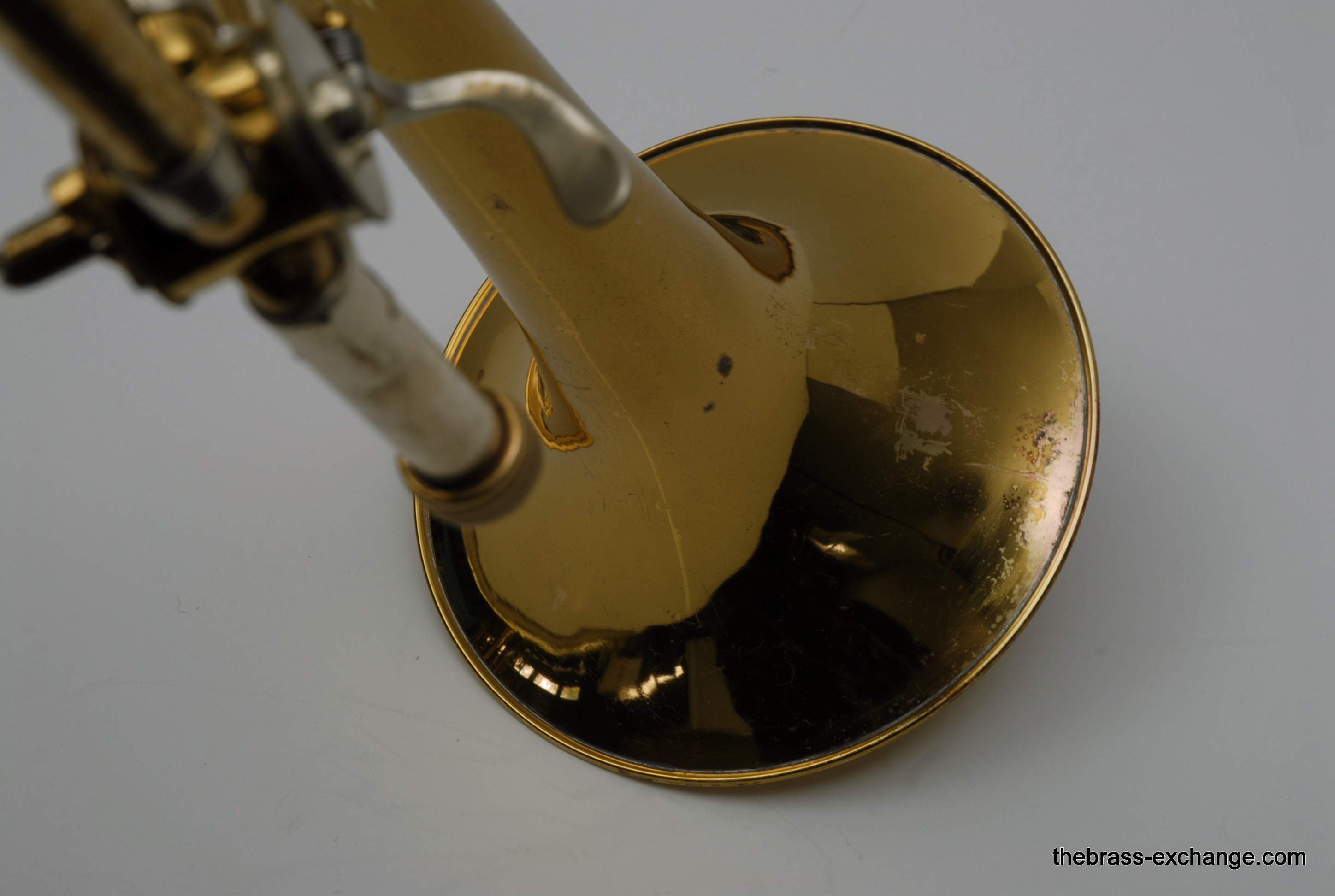
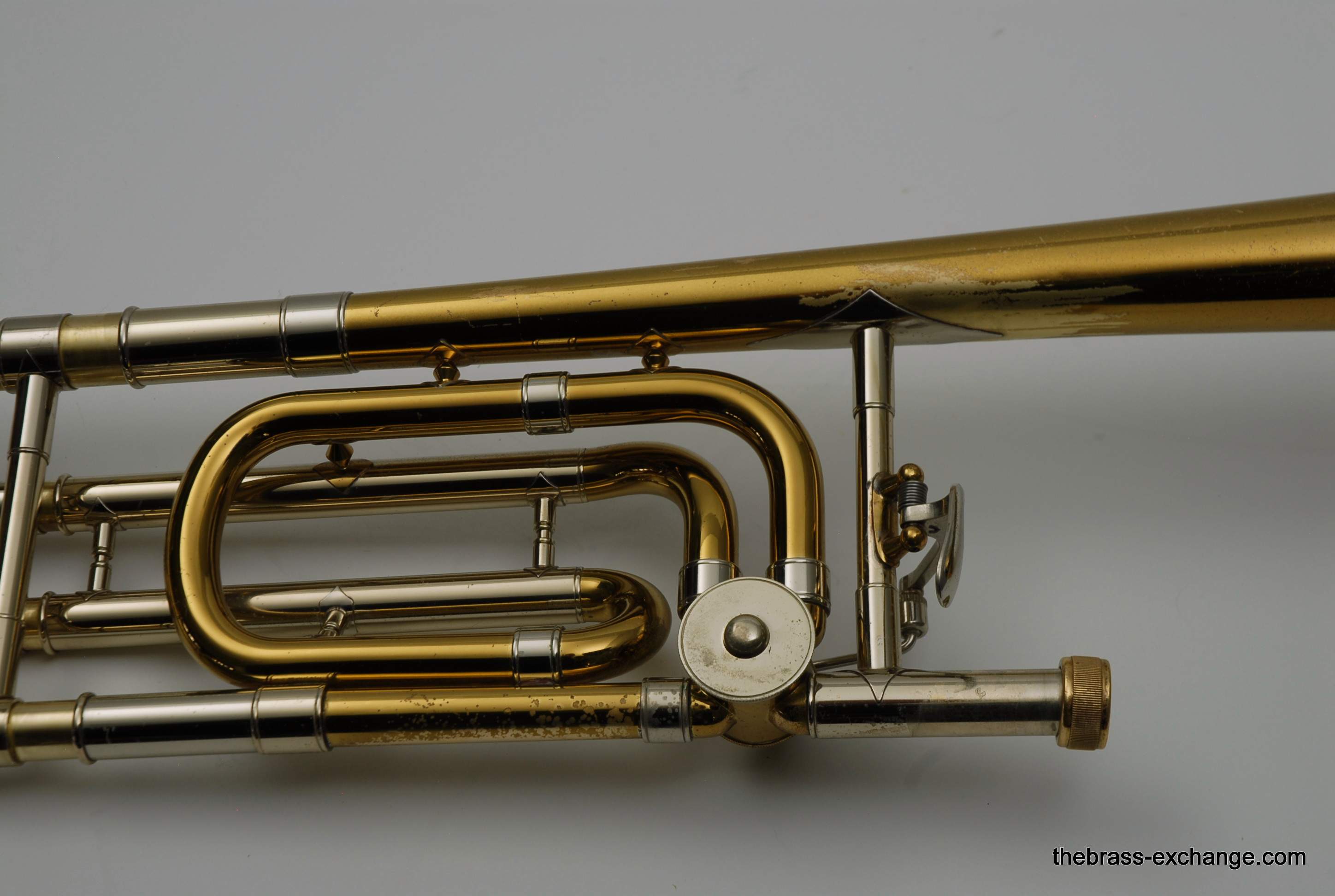
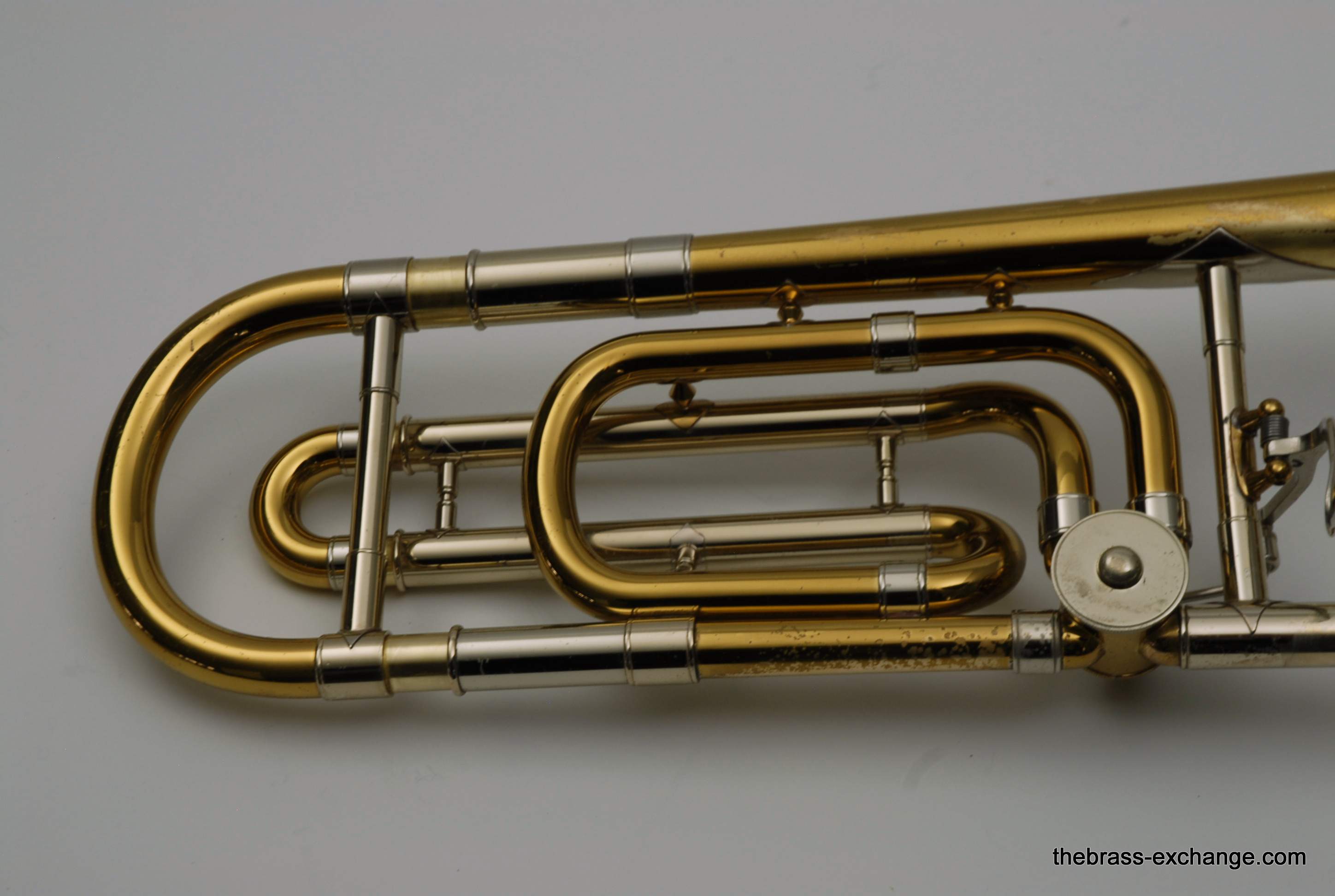
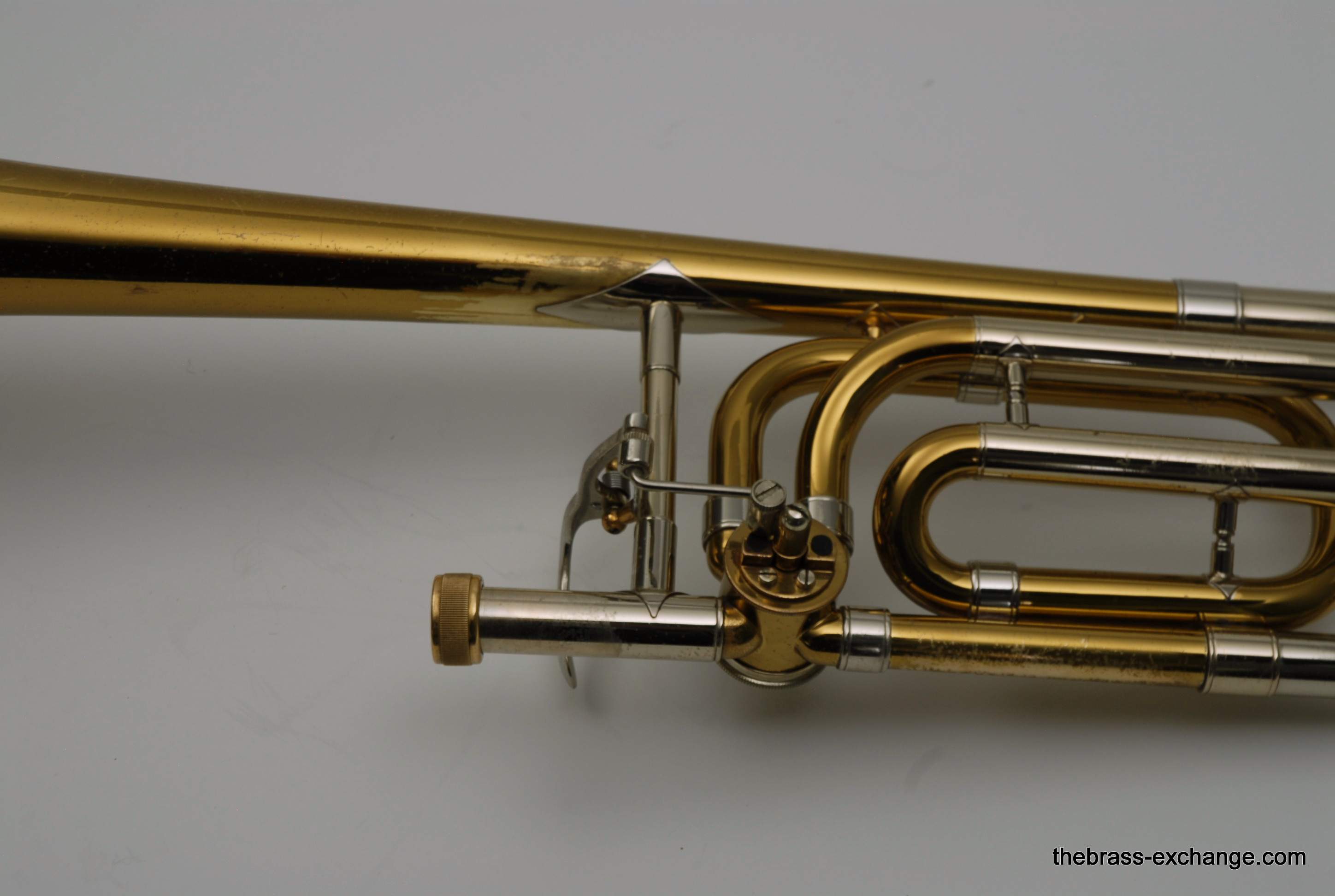
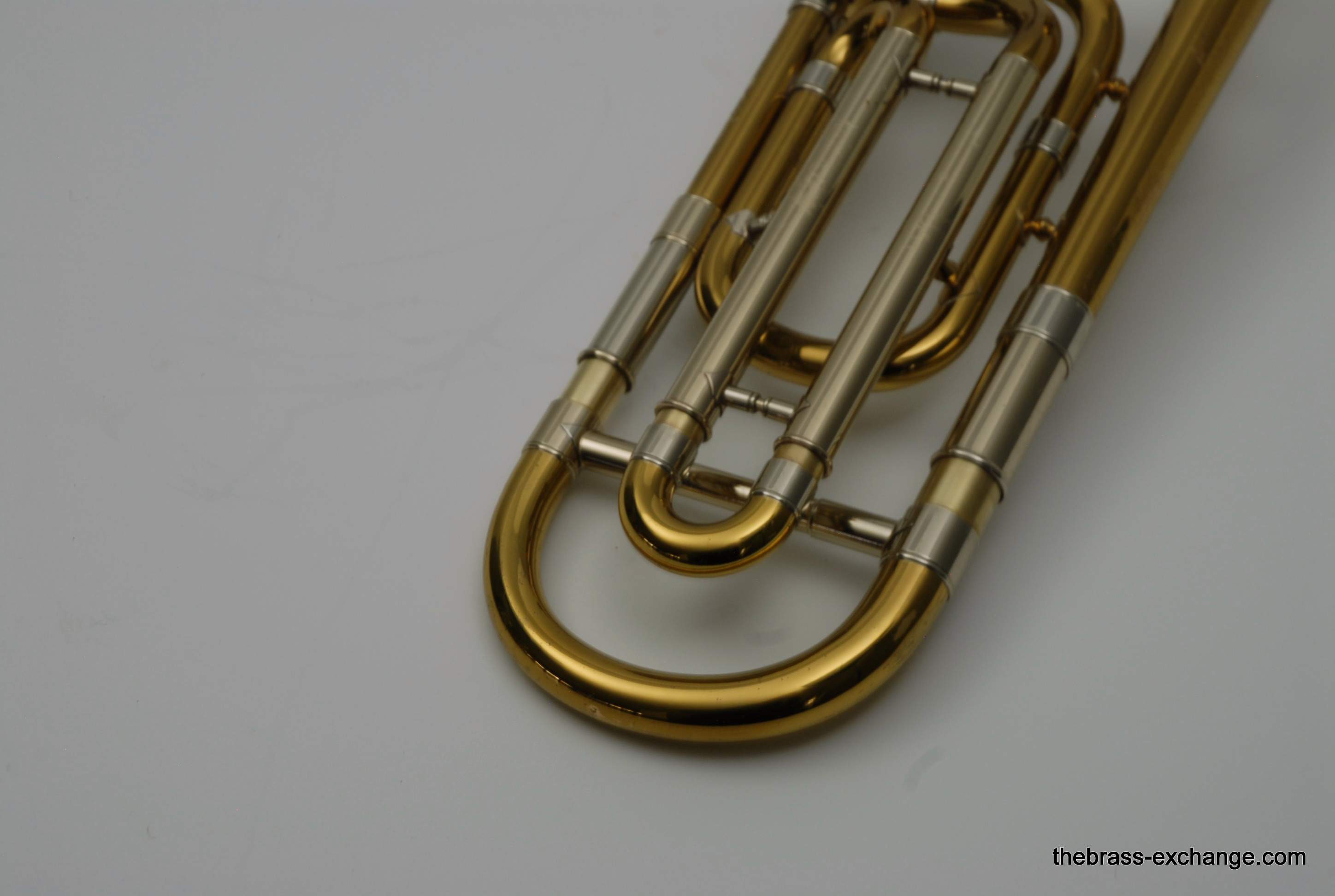
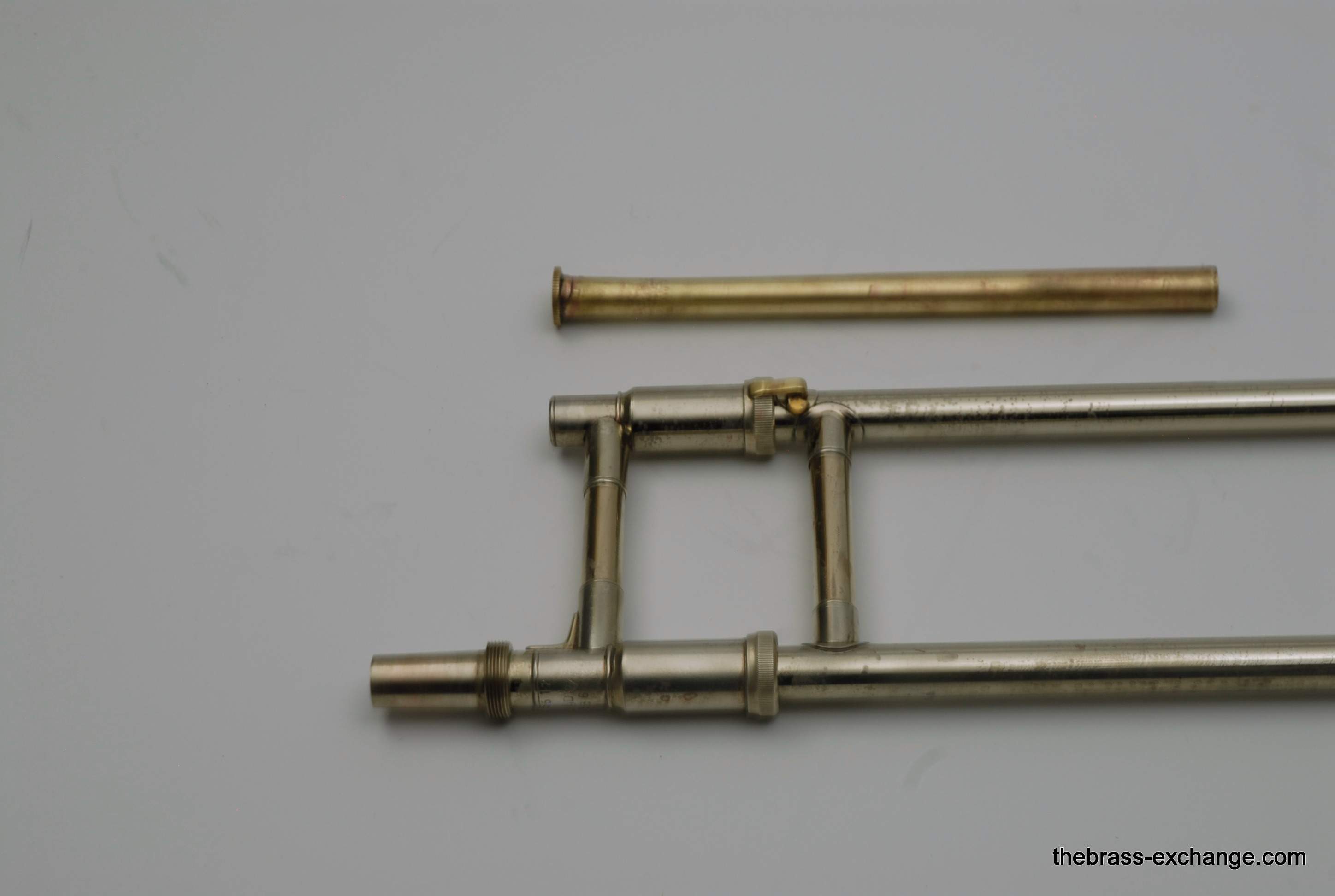
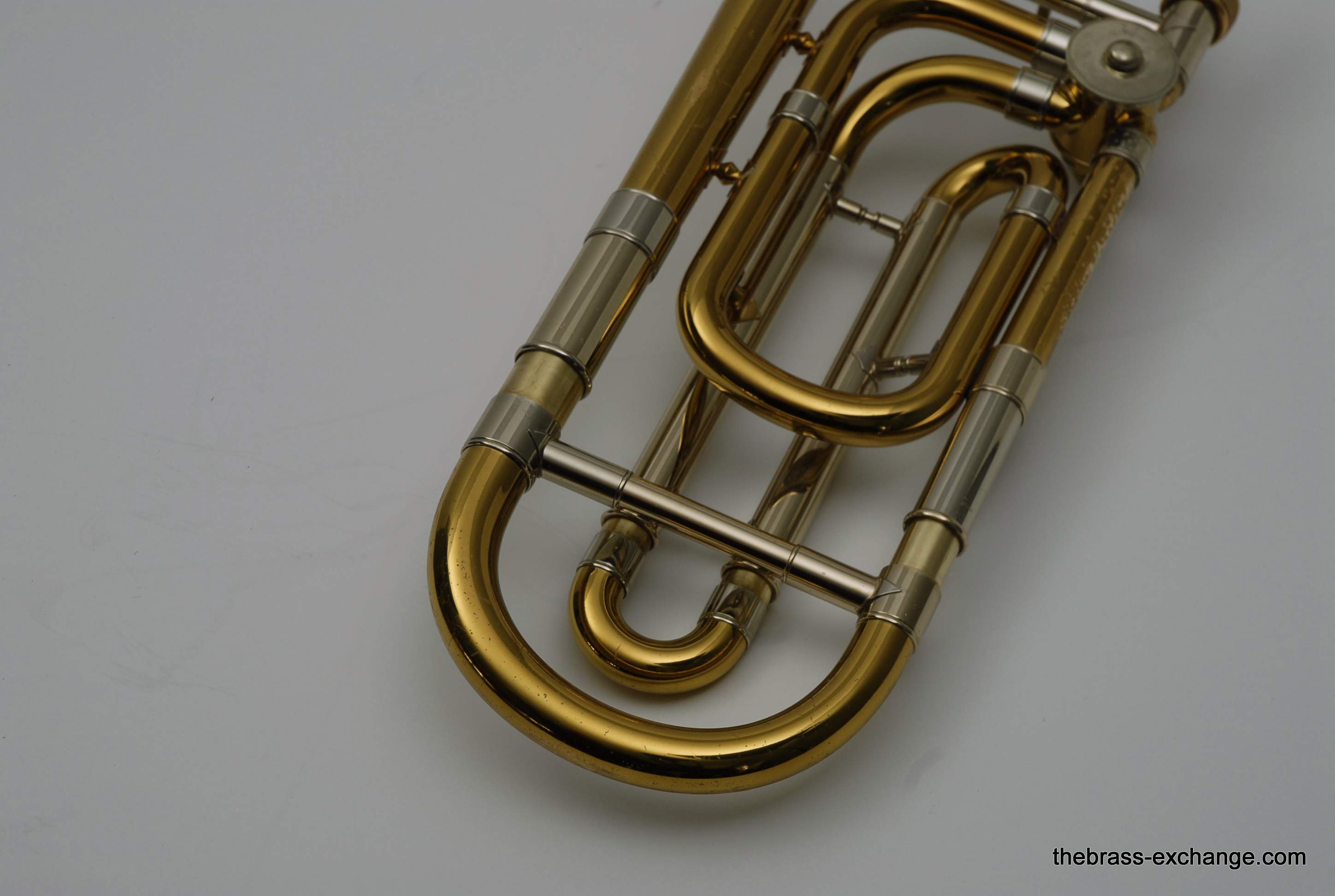
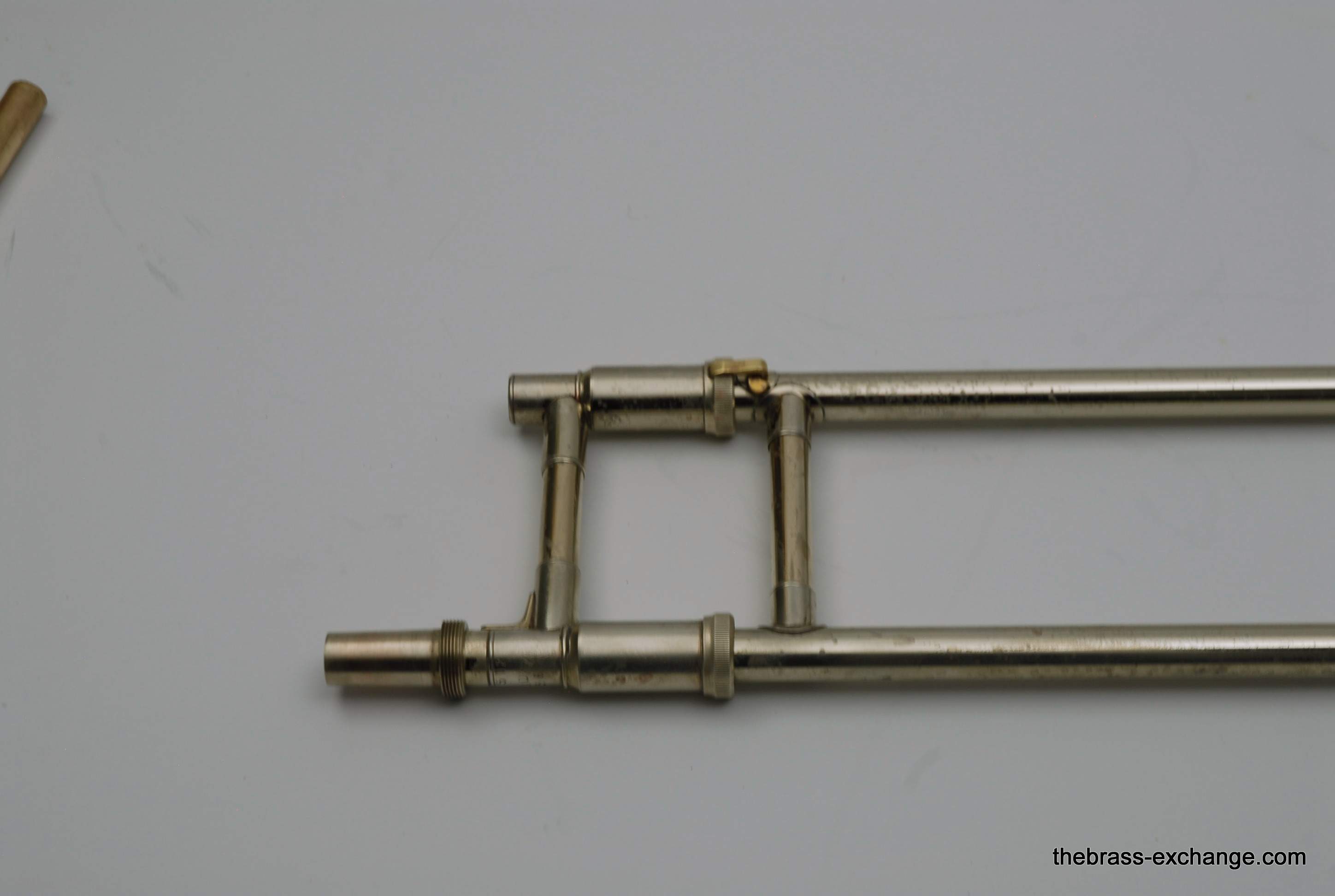
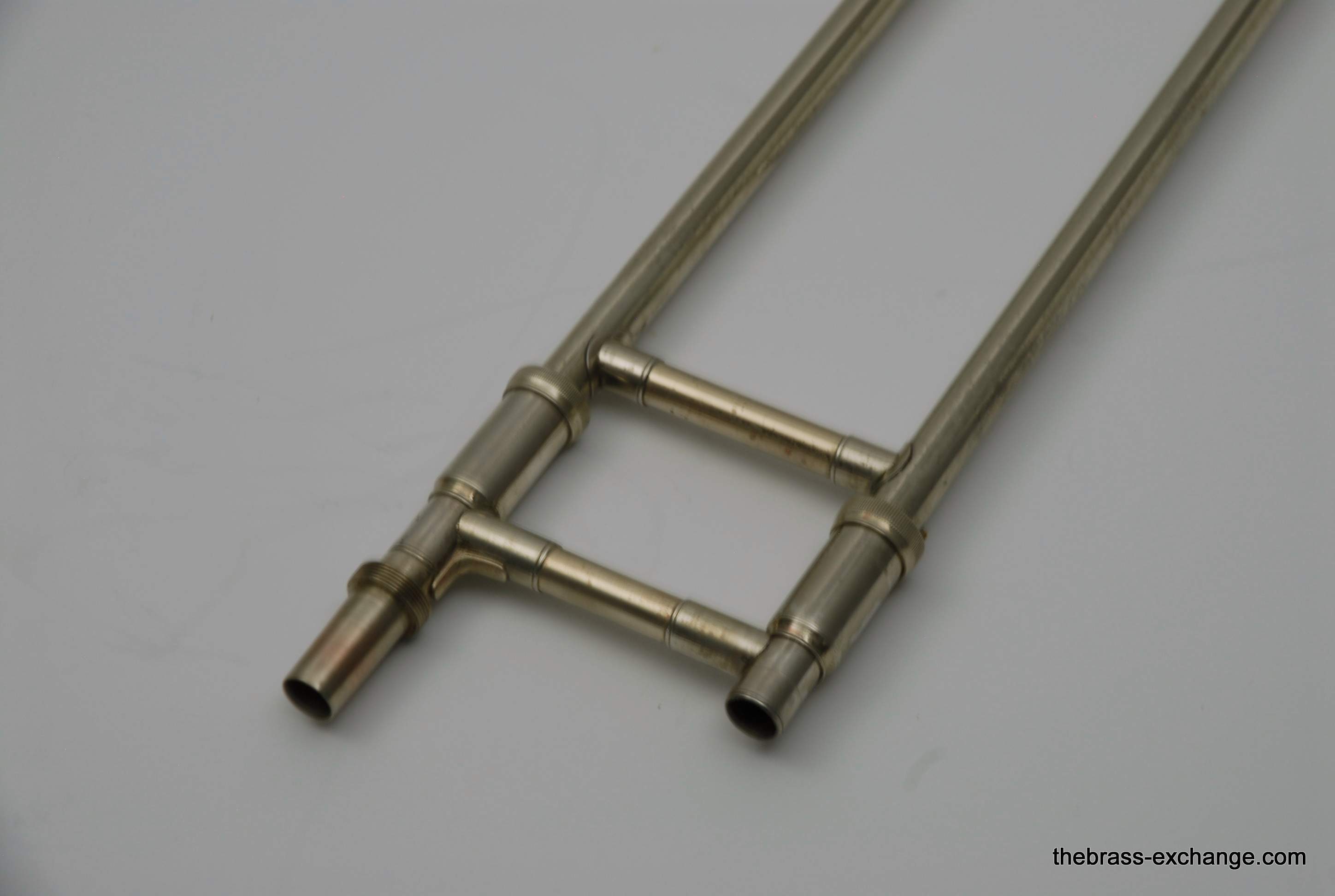
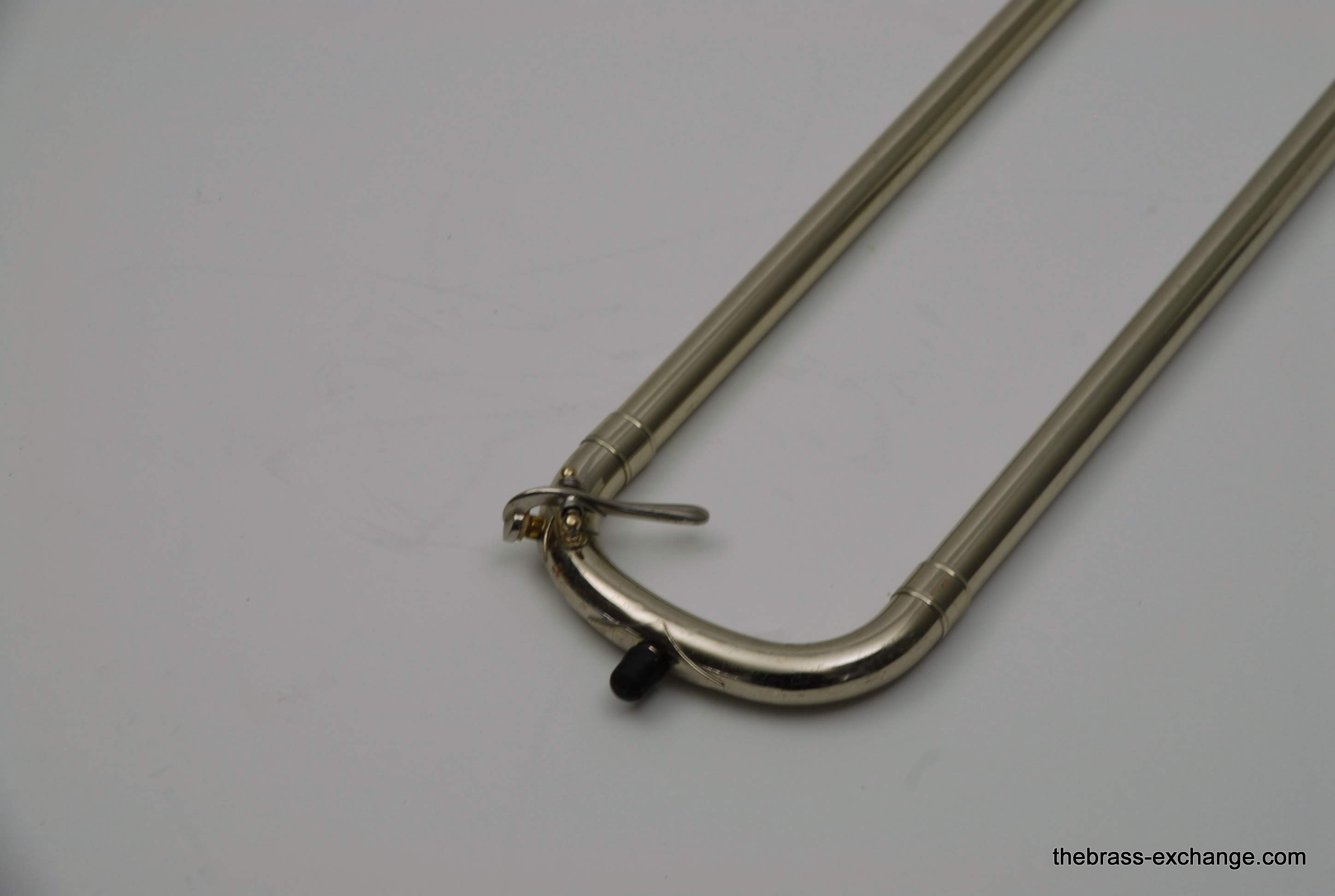
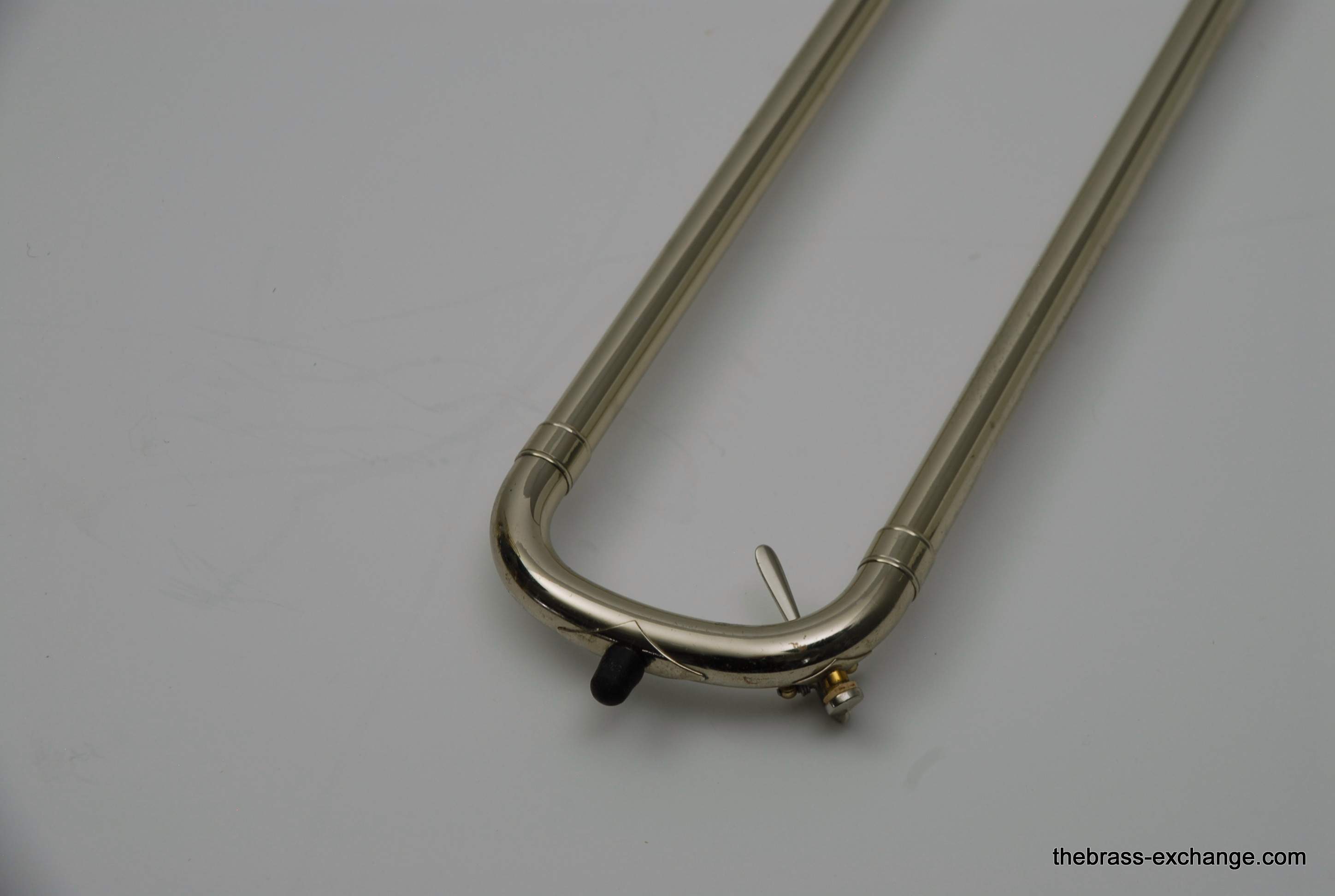
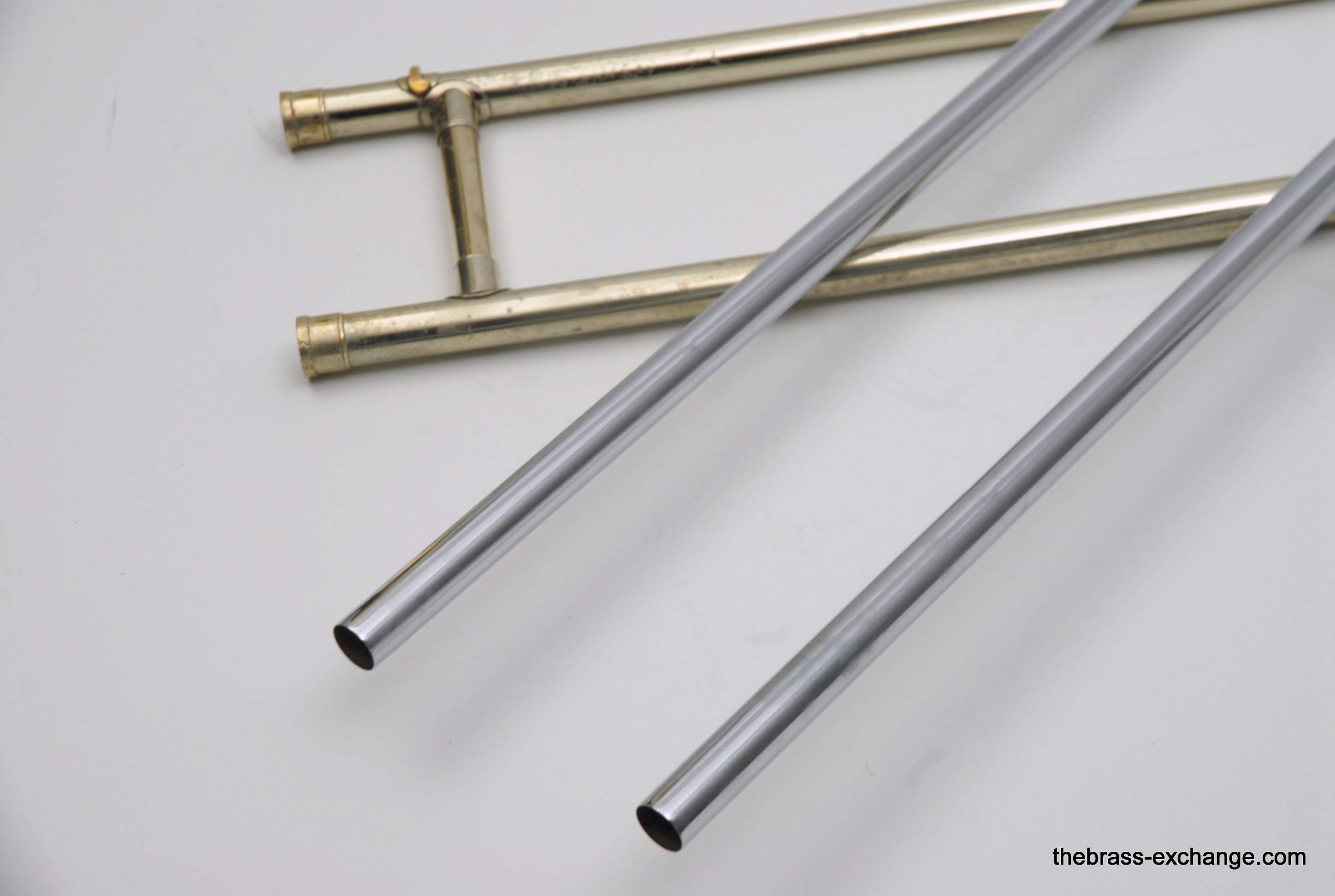
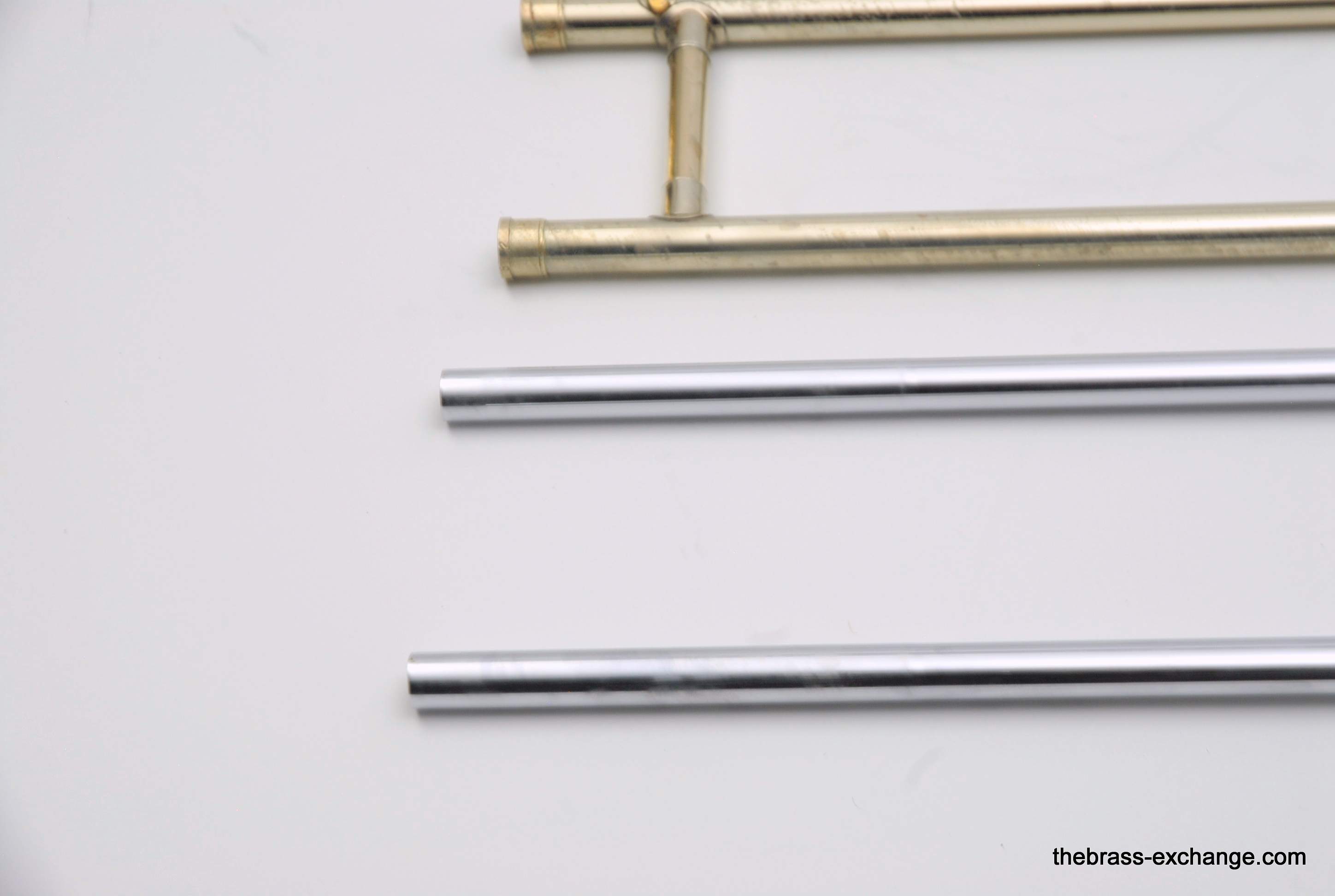
This Bach 36B Corporation Era trombone, serial number 34512, was produced in the 1970s and represents a pivotal period in American trombone design. It features an 8" yellow brass bell, a .525 bore lightweight nickel silver handslide, and the classic Bach rotor valve section.
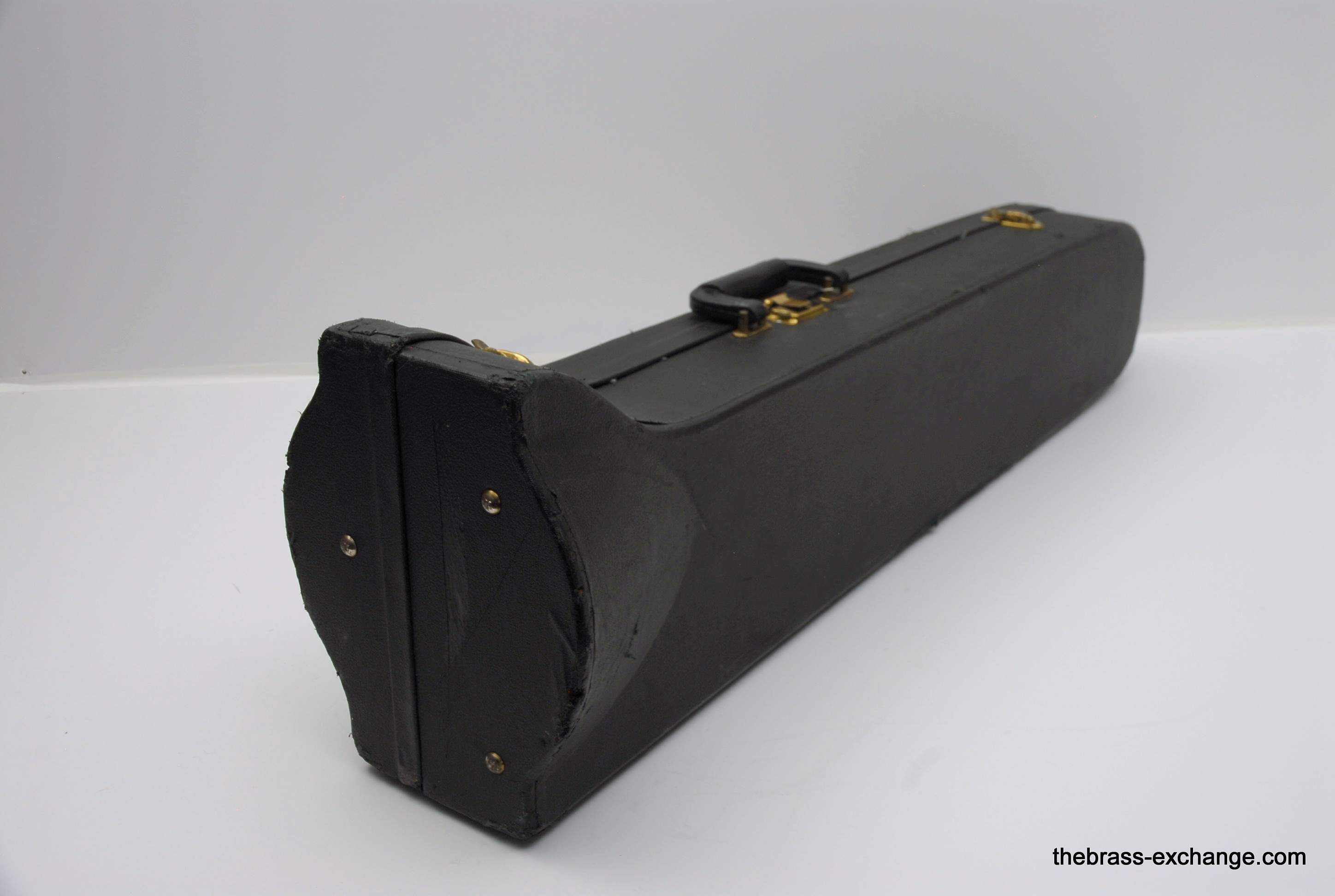
At the time of sale, the instrument retained all original parts and lacquer. The bell was very straight with minimal lacquer loss, the tuning slides were properly fitted, and the handslide showed no plating wear or corrosion. The valve was fully serviced in our shop, including removal, polishing, casing service, and linkage adjustment, leaving it quick, quiet, and properly sealed. The original .525 leadpipe had been loosened to allow for removable use. The horn was sold with its original case in excellent condition.
Historical Context: The Bach 36B vs. the 42B
Before the introduction of the 42B, the 36B was Vincent Bach’s preferred orchestra-size trombone. When Conn introduced the 88H in the 1950s, many top orchestral players began switching, a trend that grew through the 1960s.
Bach himself initially resisted the idea of a .547 bore trombone for orchestral work, believing the .525 bore of the 36B was the correct balance of power and flexibility. However, due to increasing competition and market demand, Bach eventually introduced the 42B.
What many players don’t realize is how closely related the two models are:
Bell size – the 42B bell is 8.5", while the 36B is 8", but both were spun from the same mandrel using the same materials.
Bore size – the 42B handslide is .547, compared to the 36B’s .525.
Slide width – the 42B slide is physically wider than the 36B.
Otherwise, the valve section and tuning slide are identical between the two models. In effect, the 42B was Bach’s response to the Conn 88H trend, built by scaling up the existing 36B framework.
This makes the 36B not only an outstanding trombone in its own right, but also a historically significant bridge in the evolution of Bach’s professional orchestral trombone design.
FAQ
What makes the Bach 36B different from the 42B?
The 36B has an 8" bell, .525 bore slide, and narrower slide width. The 42B expanded these dimensions to 8.5" bell, .547 bore, and wider slide—but retained the same tuning slide and valve section.
Why is the Corporation Era so highly regarded?
Horns built during the Corporation Era (1960s–70s) are often prized for their craftsmanship, consistency, and material quality—many players feel they outperform modern production equivalents.
Is the Bach 36B a good first F-attachment trombone?
Yes. With its medium bore, the 36B is often more comfortable for younger or advancing players than a full .547 bore instrument. It provides a rich, colorful orchestral sound without requiring as much air as the 42B.
How does the nickel silver lightweight slide affect playability?
The lightweight slide provides faster response and added brilliance, making the horn agile for both orchestral and solo work while maintaining the warm core of the Bach sound.
This Bach 36B is now preserved in our Archive of Sold Instruments, serving as both a historical reference and a resource for players researching the evolution of Bach trombones.
🎯 Looking to trade or sell your Bach trombone? Start here.
📌 Considering consignment for a Corporation Era or vintage trombone? Learn more ✍️.
🔎 Browse our current trombone inventory.