


Band directors, private teachers, and music-store representatives frequently recommend open-wrap trombones to advancing students. The conversation often begins when a student is moving from middle school into high school and the family is ready to purchase a better instrument.
The parents ask, “What kind of trombone should we buy?” The answer is frequently, “Get an open wrap.”
Over time, open wrap has become shorthand for a more advanced, more professional, or better-playing trombone. The name itself reinforces that perception. If an instrument is called open wrap, it seems reasonable to assume that it must play more openly.
But that conclusion is not necessarily true.
An open wrap describes how the F-attachment tubing is routed around the bell section. It does not tell us whether the complete trombone will play more openly, produce a better sound, or be the right instrument for a particular player.
“Open wrap” describes the tubing layout. “Open blowing” describes how a trombone feels to the player. The two expressions sound related, but they are not interchangeable.
What Is an Open-Wrap Trombone?
An open-wrap trombone routes the F-attachment tubing along a longer and more gradual path around the bell section. The tubing generally extends farther behind the bell and avoids some of the compact turns found in a traditional-wrap design.
A traditional-wrap trombone routes the attachment tubing more compactly within the bell section. These terms describe the physical arrangement of the tubing. They do not, by themselves, describe how the complete trombone will play.
Open Wrap, Closed Wrap, and Traditional Wrap: What Is the Difference?
Open-wrap designs became increasingly visible during the 1990s and are now offered by nearly every major professional trombone manufacturer.
Once one design is called “open,” simple human logic suggests that the opposite must be “closed.” The term “closed wrap” is therefore commonly used for the more compact F-attachment arrangements found on many earlier trombones.
The terminology can be misleading. “Open” sounds free and unrestricted. “Closed” sounds resistant or constricted. A student or parent may naturally assume that an open-wrap trombone plays openly while a closed-wrap trombone plays with restricted airflow.
That is not what the terms establish.
- Open wrap: The attachment tubing follows a longer, more gradual path around the bell section.
- Traditional wrap: The attachment tubing is routed more compactly within the bell section.
- Closed wrap: A commonly used name for traditional-wrap construction, not a separate third design.
The Brass Exchange prefers the term traditional wrap because “closed wrap” can imply a playing characteristic that may not exist. We are not comparing a trombone that plays “open” with one that plays “closed.” We are comparing two ways of routing the F-attachment tubing.
The F Attachment Is Not Being Used Most of the Time
There is an important fact frequently overlooked in discussions about wrap design: tenor trombone players perform most notes without engaging the F attachment.
In typical band, orchestra, and practice literature, an estimated 90 to 95 percent of the notes can be played on the straight B-flat side of the trombone. The F attachment remains valuable for extending the lower range, providing alternate positions, and improving technical facility in certain passages, but it is not in continuous use.
When the valve is not engaged, the player’s air does not travel through the F-attachment tubing. The instrument is playing through its straight B-flat air path.
If the player is not using the attachment tubing for most of the music, how can its visible routing make the trombone play more openly all of the time?
The open or traditional routing becomes most directly relevant when the valve is engaged. Even then, it remains only one element of the complete valve and attachment design.
Why Are So Many Students Told to Buy an Open Wrap?
The recommendation frequently reaches families through the school music system. Parents ask a band director what kind of trombone an advancing student should buy. The director may be an excellent educator and musician but is often not a trombone specialist.
Much of the available product information may come from local music stores, school vendors, manufacturer representatives, and recommendations repeated throughout the band-instrument market. Open-wrap models have consequently become associated with the expected next step for an advancing trombone student.
Families may then begin shopping for one highly visible feature rather than evaluating the complete instrument:
- Does the trombone respond evenly?
- Does it produce a centered and resonant sound?
- Are the valve and handslide properly fitted and maintained?
- Is the bore size appropriate for the player?
- Is the instrument comfortable and well balanced?
- Is the mouthpiece appropriate for both the trombone and the student?
Open wrap is only one part of a much larger design.
Professional Trombonists Did Not Wait for Open Wrap
For much of the twentieth century, professional trombonists performed at the highest levels on traditional-wrap instruments. These trombones were used in major orchestras, concert bands, universities, studios, and professional ensembles long before open-wrap designs became commonplace.
The Conn 88H is one of the clearest examples. Introduced during the 1950s, the traditional-wrap 88H became one of the most important professional large-bore tenor trombones of its era. It worked exceptionally well then, and a good Conn 88H still works exceptionally well today.
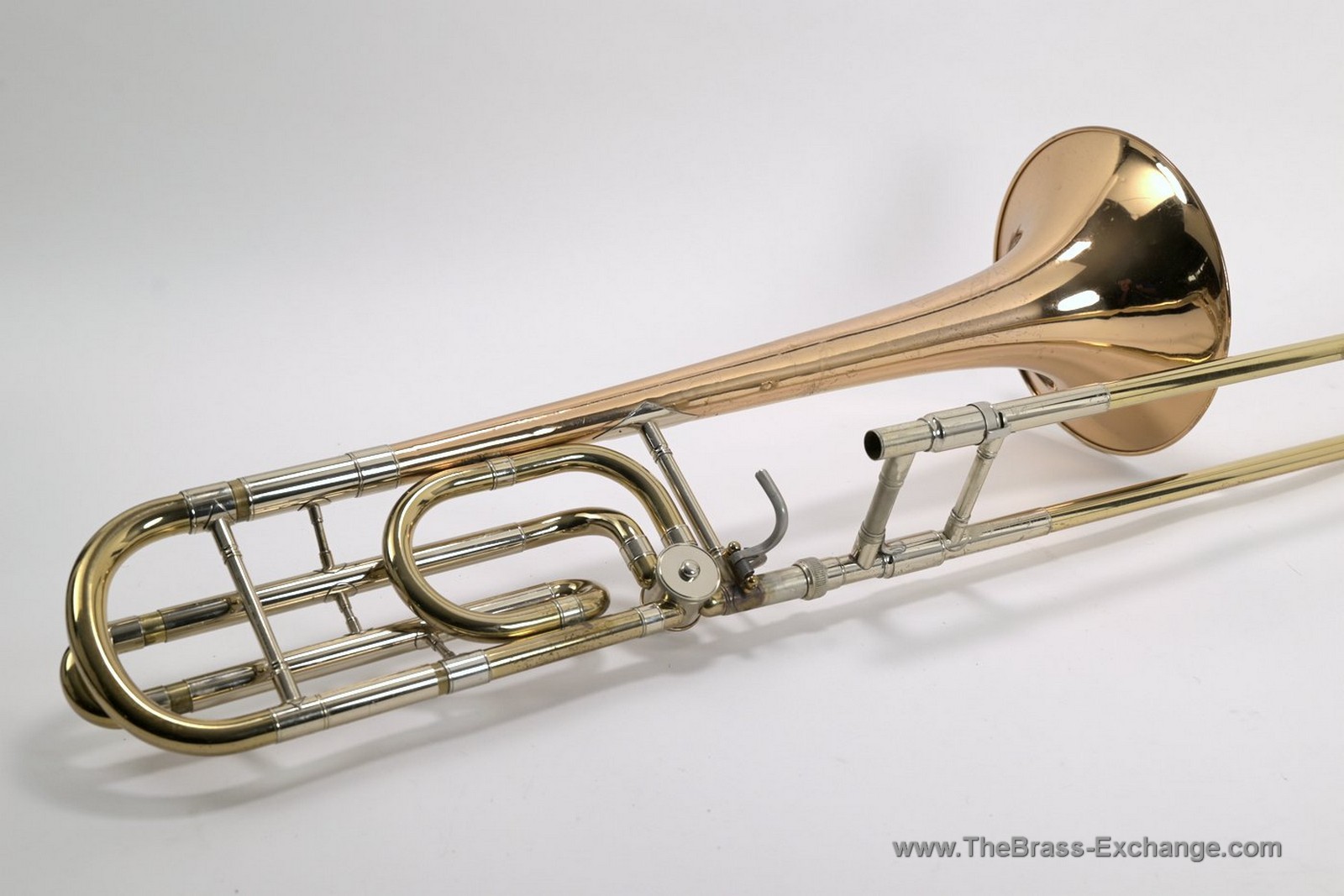
The traditional-wrap Conn 88H has served professional and advanced players since the 1950s. Its compact attachment routing became part of one of the most successful large-bore tenor trombone designs ever produced.
The Bach 42B is another enduring example. Generations of professional and advanced players used the traditional-wrap 42B before the open-wrap 42BO became widely recognized in the marketplace.
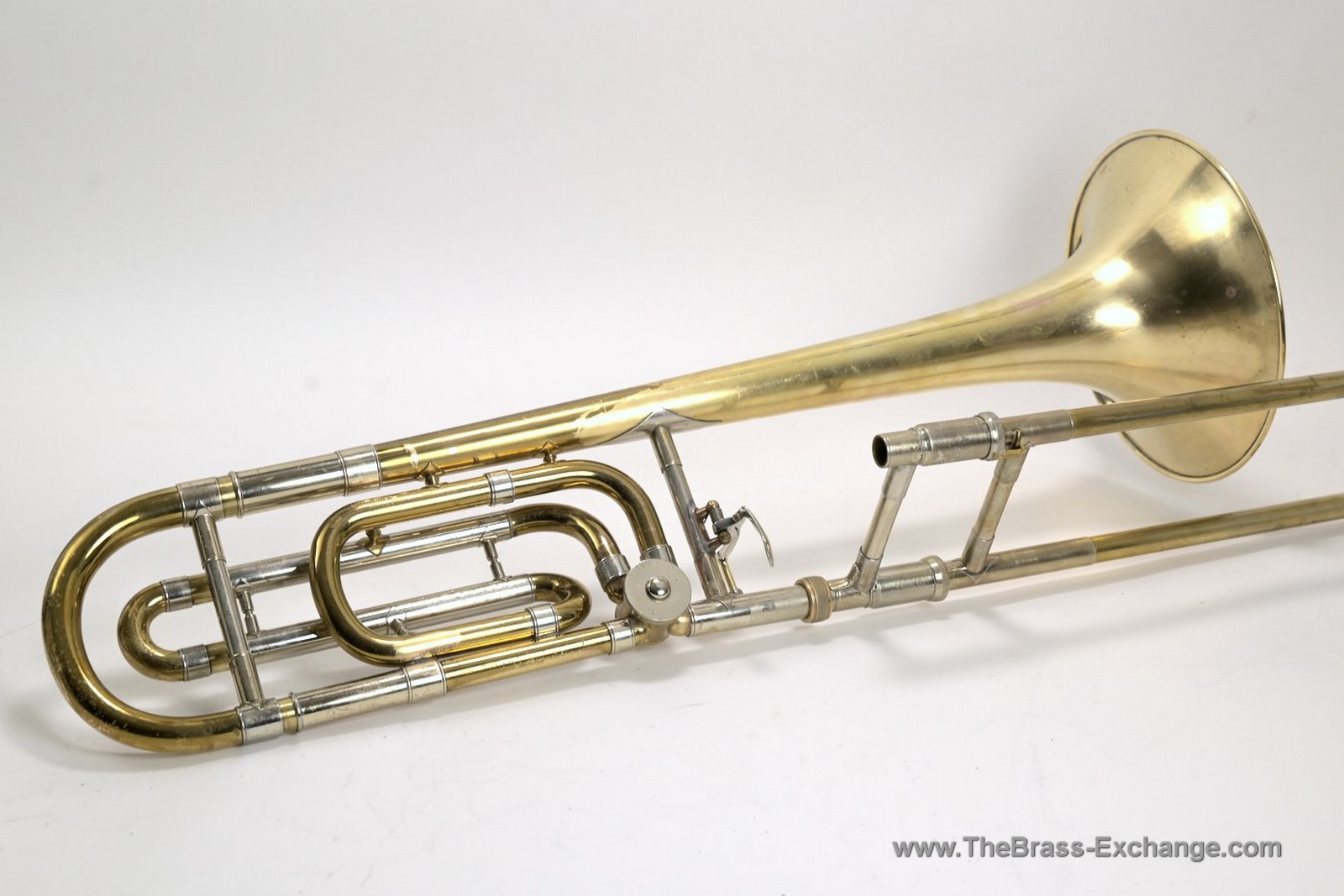
The Bach 42B became a professional standard decades before open-wrap trombones became widely recommended to advancing students.
These instruments did not become inferior when open-wrap models appeared. Their professional histories demonstrate that traditional attachment routing does not prevent a trombone from producing excellent response, projection, tonal center, or musical results.
Why Were Open-Wrap Designs Developed?
Open-wrap construction was not introduced merely to make a trombone appear modern. The design addressed practical concerns within the F-attachment tubing.
One important consideration was condensation. Moisture could accumulate in portions of some traditional attachment layouts. More gradual routing gave designers another way to manage the tubing path and reduce areas where condensation might collect.
Manufacturers also continued experimenting with valves, tubing dimensions, ports, braces, and complete bell-section designs. Open wrap became one part of that continuing development.
The mistake is not believing that tubing design matters. It can matter. The mistake is assuming that fewer visible turns automatically produce more efficient airflow or a better-playing trombone.
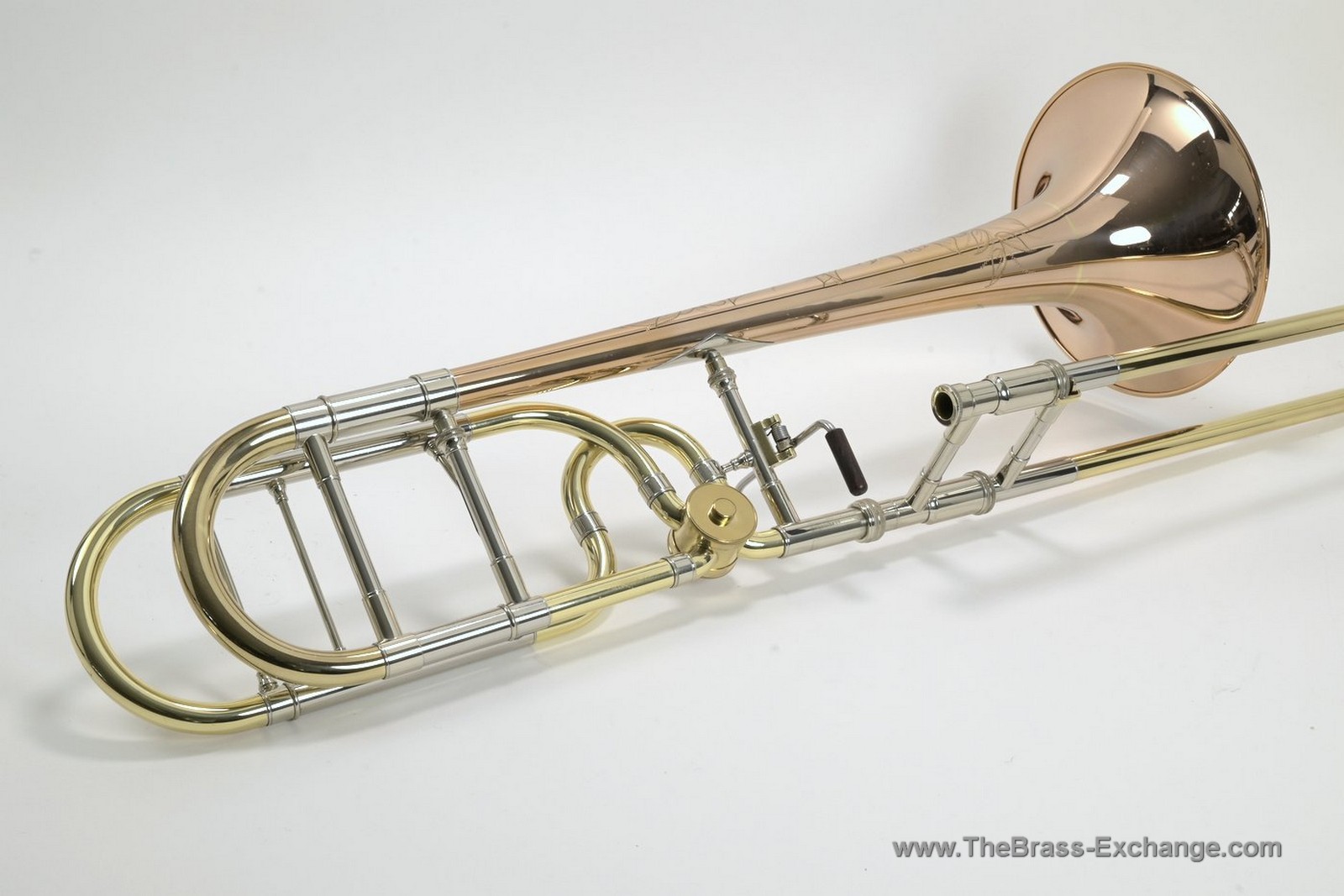
This early S.E. Shires open-wrap tenor reflects the influence of the classic Conn 88H while showing how later builders continued experimenting with attachment routing and complete bell-section design.
What Actually Determines How a Trombone Plays?
A trombone is an interconnected acoustic and mechanical system. Wrap design is only one variable among many. Playing characteristics may also be affected by:
- mouthpiece size, cup depth, backbore, and shank;
- leadpipe design;
- slide bore, construction, and condition;
- valve type, fit, alignment, and internal port design;
- attachment tubing dimensions;
- bell material, construction, and bracing;
- balance and ergonomics;
- maintenance; and
- the individual player.
Two open-wrap trombones can play very differently from one another. The same is true of two traditional-wrap instruments. A well-designed traditional-wrap trombone may feel more responsive or open to one player than an open-wrap instrument. Another player may prefer the open-wrap model. Neither result can be predicted simply by looking at the tubing.
Mouthpiece Choice Matters
Mouthpiece choice is especially important when a younger player moves from an entry-level student trombone to a .547-bore F-attachment tenor. Most student trombones use a small-shank mouthpiece. A large-bore tenor normally requires a large-shank mouthpiece with a cup and backbore appropriate for the larger instrument.
If the mouthpiece is too small or shallow, the trombone may sound thin and fail to resonate as expected. The student may incorrectly blame the instrument or its wrap design when the mouthpiece is a more important part of the problem.
The goal is not to choose the largest available mouthpiece. It is to find an appropriate match among the player, mouthpiece, and trombone.
One Model Family, Two Different Approaches
The Bach 42B and Bach 42BOF provide a useful visual comparison. The traditional-wrap 42B uses compact attachment tubing with a conventional rotary valve. The 42BOF combines an open-wrap layout with a different European-style valve.
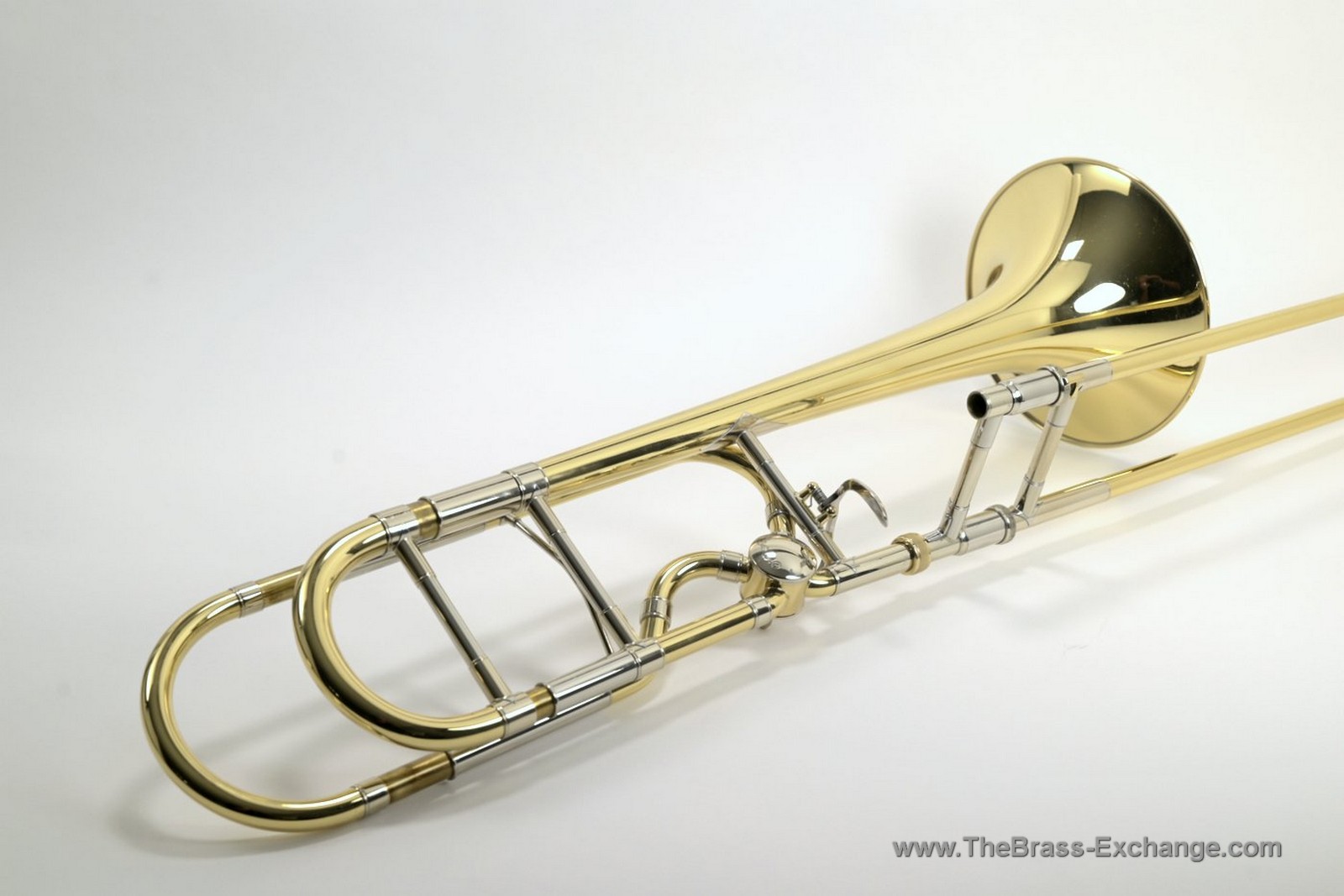
The Bach 42BOF combines open-wrap attachment tubing with a different European-style valve design. Because both the valve system and tubing layout differ from the traditional 42B, a change in playing response cannot be attributed to the wrap alone.
If Open Wrap Were Universally Better, Why Is Traditional Wrap Still Made?
Open-wrap trombones have been widely available for more than three decades. Manufacturers have had ample time to discontinue traditional-wrap models if the newer arrangement were universally superior.
That has not happened.
Conn-Selmer, the company behind Bach, C.G. Conn, King, and other well-known brands, continues to offer the traditional-wrap Bach 42B and Conn 88H alongside open-wrap alternatives. These are not merely vintage instruments preserved in collections. They remain current professional models because players continue to value their sound, response, balance, and familiar playing characteristics.
The continued existence of the traditional-wrap Bach 42B and Conn 88H does not prove that traditional wrap is better. It demonstrates that open wrap is not universally better.
Is Open Wrap Better for an Advancing Student?
Not automatically.
An open-wrap trombone may be an excellent choice, but it should be selected because the complete instrument fits the player—not because the tubing layout satisfies a visual requirement.
A traditional-wrap professional trombone in excellent condition may be a better choice than an open-wrap instrument with a poorly fitted valve, damaged slide, unsuitable mouthpiece, or unbalanced design. Ideally, the player should compare several instruments with the assistance of a knowledgeable trombone teacher, professional trombonist, or specialist who understands the differences among specific models.
Does Open Wrap Improve Tone or Reduce Resistance?
Not by itself.
A player may perceive a particular open-wrap trombone as freer blowing, but this is not a dependable rule. Valve design, port geometry, tubing dimensions, mouthpiece choice, maintenance, and the complete instrument all contribute to the result.
Resistance is not automatically undesirable. What one player calls free blowing, another may describe as lacking focus. What one calls resistant, another may describe as centered or secure. The goal is not necessarily to find the trombone with the least resistance. It is to find the instrument whose response works best for the player.
Open Wrap Is a Design Choice, Not a Quality Grade
Open-wrap trombones deserve their place in the modern market. Many are excellent instruments used successfully by students, educators, and professional musicians.
Traditional-wrap trombones also remain fully capable professional instruments. Their long history does not make them outdated. It demonstrates that successful complete designs can withstand the test of time.
Do not judge a trombone’s quality, response, or professional capability by the visible routing of its F-attachment tubing.
Play the trombone. Examine its condition. Evaluate the mouthpiece, valve, slide, response, sound, and balance. Consider the complete design and the needs of the individual player.
The best trombone is not necessarily the one whose tubing looks the most open. It is the one that helps the player produce the best musical result.
Research More Trombones
Browse current professional trombones available from The Brass Exchange.
Explore the Archive of Sold Trombones to compare professional instruments from different manufacturers, periods, and configurations.
Need Help Selecting an F-Attachment Tenor Trombone?
Choosing the right trombone involves more than comparing visible features. Contact The Brass Exchange for experienced, player-focused guidance when selecting an F-attachment tenor trombone for an advancing student or developing player.